Seamless.AI is great at contacting prospects at scale. But it isn't right for every team. Some find it too complex, focused on static data, and lacking first-party website intent tracking. These 12 alternatives address one or more of these gaps. RB2B, in particular, solves the intent tracking issue by showing you real people visiting your website in real time.
Looking for Alternatives to Seamless.AI?
Seamless.AI has earned its reputation as a popular B2B lead intelligence platform. It helps teams find prospects at scale and streamline outbound sales.
Still, no tool is perfect for every team. Your budget, workflow, or prospecting strategy might make it feel too complex. It may also not be the most cost-effective choice.
In this guide, we'll introduce 12 Seamless.AI alternatives, including RB2B.We'll break down each tool based on its core features, pricing, pros, cons, and ideal use case so you can find another platform that best suits your needs.
Why Trust This Alternatives Article?
RB2B serves over 100,000 B2B businesses, many of which use contact databases and sales prospecting platforms like Seamless.AI alongside our platform.
This article is informed by what we've learned from interacting with those customers.
Why Users Look for Seamless.AI Alternatives
Seamless.AI is a leading sales prospecting platform. It combines a large B2B contact database with prospecting, enrichment, buyer intent, and outreach features. Seamless.AI lets teams manage much of the outbound sales process from a single platform.
However, it doesn't fit every team equally well. Some users move away from it due to:
Unscalable Pricing Model: Costs can increase quickly as usage grows, especially for teams running high-volume prospecting workflows.
Steep Learning Curve: Seamless.AI can feel overwhelming for users who only need a simple sales engagement workflow.
Limited First-Party Intent Visibility: The platform does not track on-site behavioral signals, like pricing page visits or repeat website activity, which are often the strongest indicators of buying intent.
Together, these factors lead many teams to explore alternatives that better match their budget, workflow simplicity, or need for real-time buyer intent.
The 12 Best Seamless.AI Alternatives: In-Depth Review
Here's an at-a-glance comparison, here's a comparison table.
Free plan available, paid plans start at $99/month
High-intent inbound prospecting
2.
Apollo.io
High (large database
High
Full outbound prospecting + sequencing
Free plan available, paid plans start at $49/month
All-in-one outbound sales teams
3.
ZoomInfo
Very high (enterprise-grade)
Very high
Advanced enterprise prospecting + intent data
Custom pricing
Enterprise sales teams
4.
Cognism
High (GDPR-compliant focus)
High
Global prospecting + intent data + outreach triggers
Custom pricing
International outbound teams
5.
RocketReach
Medium–High
Medium
Contact lookup + enrichment
Free plan available, paid plans start at $48/month
Fast contact discovery
6.
Hunter.io
High (email-focused)
Medium
Domain-based email search + verification
Free plan available, paid plans start at $34/month
Email outreach campaigns
7.
Lusha
Medium–High
High
Simple contact prospecting + enrichment
Free plan available, paid plans start at $29/month
SMB sales prospecting
8.
Lead411
High
High
Contact data + sales triggers
Free trial available, paid plans start at $99/month
Trigger-based outbound outreach
9.
Snov.io
Medium
High
Email outreach + automation workflows
Free plan available, paid plans start at $30/month
Email-led outbound campaigns
10.
Clearbit
High
Very High (HubSpot-native)
Lead enrichment + website visitor insights
Custom pricing (HubSpot-based)
Hubspot users
11.
UpLead
High (verified data)
High
Targeted B2B prospecting + verified emails
Free trial available, paid plans start at $99/month
Data-accurate outbound lists
12.
LinkedIn Sales Navigator
High (social data)
Medium
Social selling + relationship prospecting
No free trial, paid plans start at $119.99/month
Relationship-based outbound
1. RB2B
Best For: Identifying high-intent website visitors
RB2B takes a fundamentally different approach to lead generation compared to traditional tools like Seamless.AI. Instead of relying on static contact databases, RB2B identifies real people actively visiting your website in real time and then provides you with their behavior, job details, and contact data.
This spares your team from working with leads that may or may not be interested in your brand or guessing who to reach out to.
Key Features
Person-Level Visitor Identification: Identify the exact individuals visiting your website, including their names, companies, job titles, emails, and LinkedIn profiles.
Real-Time Intent Tracking: Find the pages your website visitors engage with and how often they return
Custom High-Intent Triggers: Define behaviors that indicate readiness to buy, such as repeated pricing page visits or demo page activity.
Instant Alerts: Sends qualified leads directly to Slack, CRM, or other tools your team already uses.
Traffic Filtering and Suppression: Automatically filters out internal traffic, bots, and unwanted visitors so your team focuses only on relevant buying activity.
50+ Integrations: Connects with over 50 marketing and sales platforms, so you can fit it seamlessly into your existing GTM stack.
Pros
Identifies 70–80% of your website traffic
Captures warm, in-market leads instead of cold contacts
Enables faster outreach based on real behavior
Reduces reliance on outdated or incomplete databases
Simple setup with immediate visibility into website traffic
Routes high-intent visitors into your existing sales workflows automatically
Cons
U.S.-only website visitor identification
Pricing
RB2B has a free plan that lets you identify up to 150 website visitors per month. Paid plans include:
Starter: $79/month
Pro: From $149/month
Pro+: From $199/month
2. Apollo.io
Best For: All-in-one outbound sales prospecting and engagement
Apollo.io is one of the closest alternatives to Seamless.AI, offering a similar combination of B2B contact data and outbound sales tools. Whereas Seamless.AI focuses heavily on AI-powered contact discovery, Apollo expands further into end-to-end outbound execution.
It allows teams to both find prospects and run full email campaigns within the same platform. This makes it a strong fit for teams that want more control over the entire outbound workflow, not just lead discovery.
Key Features
Large B2B Contact Database: Get access to millions of verified emails, phone numbers, and company profiles
Advanced Search and Filtering: Do granular prospecting using firmographic, demographic, and intent-related filters to build targeted lists
Email Sequencing and Outbound Automation: Build, automate, and manage multi-step cold outreach campaigns directly in-platform
Chrome Extension For LinkedIn and Web Prospecting: Capture leads directly from LinkedIn and company websites
CRM Integrations and Workflow Sync: Sync prospect data into major CRMs to support pipeline management and follow-ups
Pros
Broader outbound execution capabilities than Seamless.AI
Strong contact database with global coverage
Combines prospecting + outreach in one platform
Useful for teams that want a full sales engagement stack
Cons
Can feel complex because of the robust features
Pricey for large or high usage teams
Requires lengthy onboarding time to fully leverage features
Pricing
Apollo offers a free plan and 3 paid tiers:
Basic: $49/user/month
Professional: $79/user/month
Organization: $119/user/month
3. ZoomInfo
Best For: Enterprise-grade B2B contact data and outbound sales intelligence
ZoomInfo is a comprehensive sales intelligence platform with an extensive B2B database, advanced prospecting tools, and workflow automation features that support end-to-end sales outreach.
It is particularly well-suited for enterprise sales teams that require structured data, segmentation, and integrated outreach capabilities across multiple channels. However, most teams require significant onboarding time and investment to fully pay off.
Key Features
Extensive B2B Database: Access millions of verified contacts and company profiles with deep firmographic and demographic data.
Intent Data Signals: Identify companies actively researching relevant solutions based on behavioral signals across the web.
Advanced Search Filters: Segment prospects using hundreds of criteria, including industry, role, tech stack, and buying stage.
Sales Automation Workflows: Build multi-step outreach sequences across email, phone, and LinkedIn.
Chrome Extension: Capture and enrich contact data directly from LinkedIn and company websites.
Pros
Strong intent data capabilities for prioritizing outreach
Powerful filtering and segmentation options
Deep integrations with enterprise sales stacks
Scales well across large sales and revenue operations teams
Cons
High cost compared to lighter tools
More suited to enterprise teams than small businesses
Setup and onboarding can be time-intensive
Pricing
ZoomInfo uses custom pricing determined by team size, data access level, and feature requirements. Plans are typically expensive, with online reviews suggesting the average cost is around $15,000 annually.
4. Cognism
Best For: International B2B prospecting and GDPR-compliant contact data
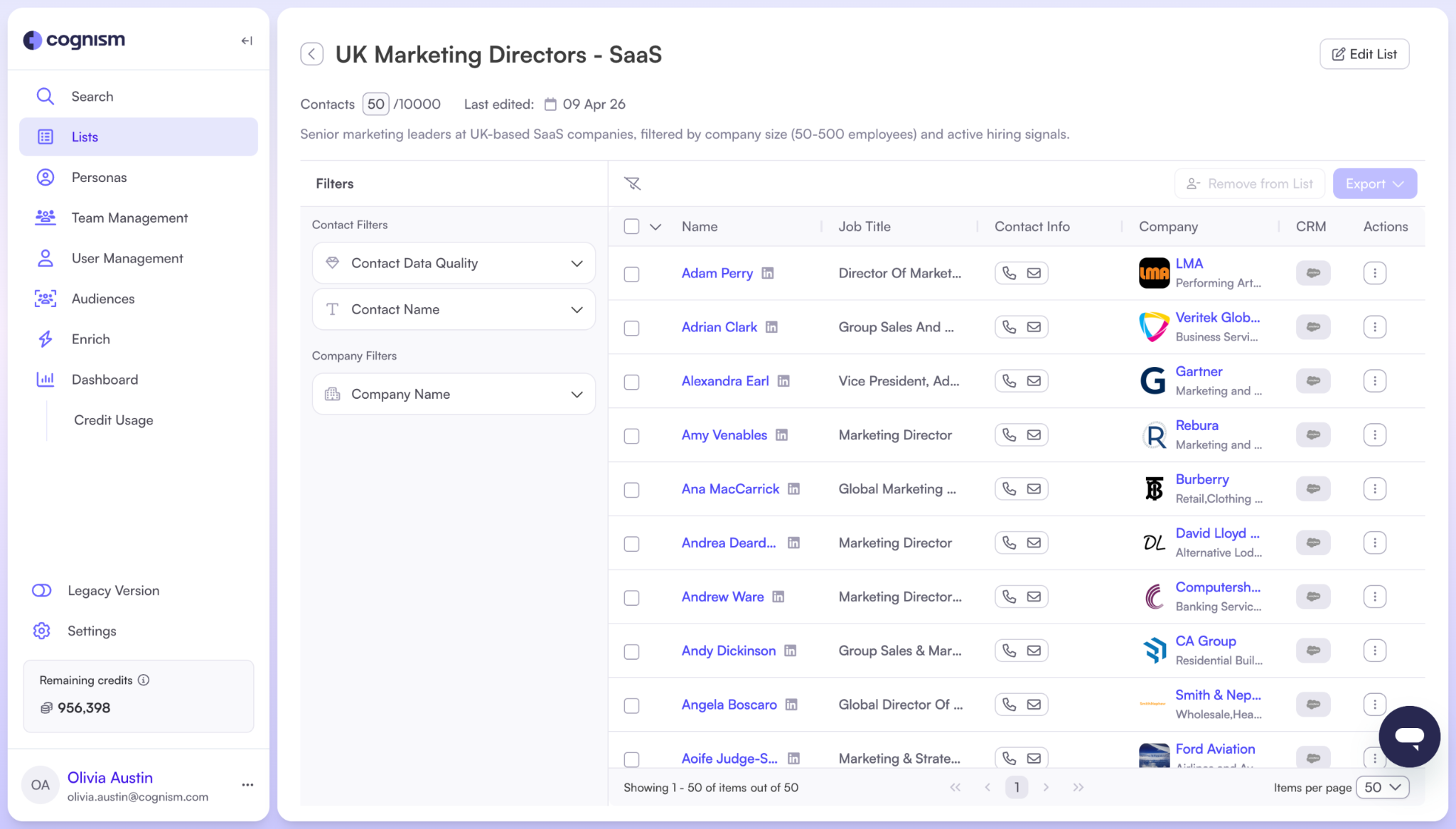
Cognism is built for teams prospecting across Europe, North America, and other international markets. It combines verified contact data with buyer-intent signals and sales-trigger events, making it particularly valuable for businesses that prioritize compliance and global coverage.
For organizations expanding into new markets, Cognism offers a strong balance of data quality and regulatory compliance. But as its Diamond credits run out fast during high-volume outreach, making it less ideal for large-scale campaigns.
Key Features
Global B2B Database: Access verified contact and company records across North America, EMEA, and other international markets.
Buyer Intent Data: Identify companies actively researching products and services related to your offering.
Sales Trigger Events: Receive alerts for events like funding rounds, executive hires, company expansion, and technology adoption.
Prospecting Extension: Find and enrich prospects directly from LinkedIn and company websites.
CRM and Sales Engagement Integrations: Sync contacts and workflows with leading CRM and outbound platforms.
Pros
Strong international data coverage, particularly across Europe
Emphasis on data accuracy through continuous verification
Built with GDPR compliance and privacy regulations in mind
High-quality mobile phone data for connecting with decision-makers
Cons
Some features are available only on higher-tier plans
Smaller contact coverage in certain regions compared to the largest databases
Custom pricing makes costs difficult to evaluate before speaking with sales
Pricing
Cognism uses custom pricing.
5. RocketReach
Best For: Finding verified professional contact information quickly
RocketReach is a contact discovery platform that helps sales, recruiting, and business development teams find verified email addresses, phone numbers, and social profiles for professionals across millions of companies. Its simple interface and browser extension make it a popular choice for users who want fast contact lookup without the complexity of a full sales intelligence suite.
While it offers some company insights, RocketReach is primarily designed to help users identify and connect with the right people.
Key Features
Professional Contact Database: Search for verified business email addresses, direct dials, and company information.
Advanced Search Filters: Narrow prospects by job title, company, industry, location, company size, and more.
Browser Extension: Find contact information directly while browsing LinkedIn, company websites, or other online profiles.
Bulk Lookup: Upload lists to enrich multiple contacts simultaneously.
CRM Integrations: Export contacts directly into leading CRM and sales engagement platforms.
Pros
Fast and intuitive interface with minimal learning curve
Reliable email coverage across a wide range of industries
Flexible plans suitable for individuals and small sales teams
Robust API for custom integrations and large-scale data enrichment
Cons
Focuses on contact discovery rather than buyer intent
Limited account intelligence compared to enterprise sales platforms
Phone number coverage can be inconsistent outside major markets
Pricing
RocketReach has 3 paid plans:
Essentials: $27/month
Pro: $69/month
Ultimate: $142/month
6. Hunter.io
Best For: Email discovery and verification
If your prospecting workflow revolves around finding and verifying professional email addresses, Hunter.io is one of the most straightforward tools available. Rather than trying to be an all-in-one sales platform, it focuses on helping teams discover business emails, verify their accuracy, and launch outreach campaigns with minimal setup.
Its simplicity makes it especially popular among freelancers, agencies, startups, and smaller sales teams. However, its limited data coverage and usage caps make it harder to rely on for high-volume outreach.
Key Features
Domain Search: Find publicly available email addresses associated with a company's domain.
Email Finder: Locate individual business email addresses using a person's name and company.
Personalized Campaigns: Create and send personalized cold email sequences directly from the platform.
Bulk Processing: Search for and verify hundreds of email addresses simultaneously.
Integrations and API: Connect with popular CRM, outreach, and productivity tools or build custom workflows.
Pros
Simple, beginner-friendly interface
Excellent email verification capabilities
Supports email outreach without requiring additional software
Transparent pricing with a generous free plan for getting started
Cons
Limited contact data beyond email addresses
Minimal buyer intent or sales intelligence features
Less suitable for enterprise prospecting at scale
Pricing
Hunter.io offers a free plan with limited monthly searches. Paid plans include:
Starter: $34/month
Growth: $104/month
Scale: $209/month
Enterprise: Custom pricing
7. Lusha
Best For: Simple B2B contact prospecting for sales teams
Lusha helps users find verified business contact information for prospects. The platform provides business email addresses, phone numbers, and company data. Its browser extension also lets users access contact information while viewing LinkedIn profiles or company websites. For teams that prioritize speed and ease of use, Lusha is a clean alternative to more complex prospecting tools.
Key Features
Verified Contact database: Access business email addresses, direct phone numbers, and company information.
Browser Extension: Capture prospect details directly from LinkedIn and company websites.
Advanced Prospect Search: Filter contacts by company, industry, location, seniority, job title, and company size.
Suitable for individuals, SMBs, and growing sales teams
Cons
Intent data is less comprehensive than dedicated intent platforms
Contact coverage can vary by region and industry
Limited account intelligence compared to enterprise solutions
Pricing
Lusha offers a free plan, and paid plans start at $37.45/month.
8. Lead411
Best For: Sales teams that rely on verified contact data and sales triggers
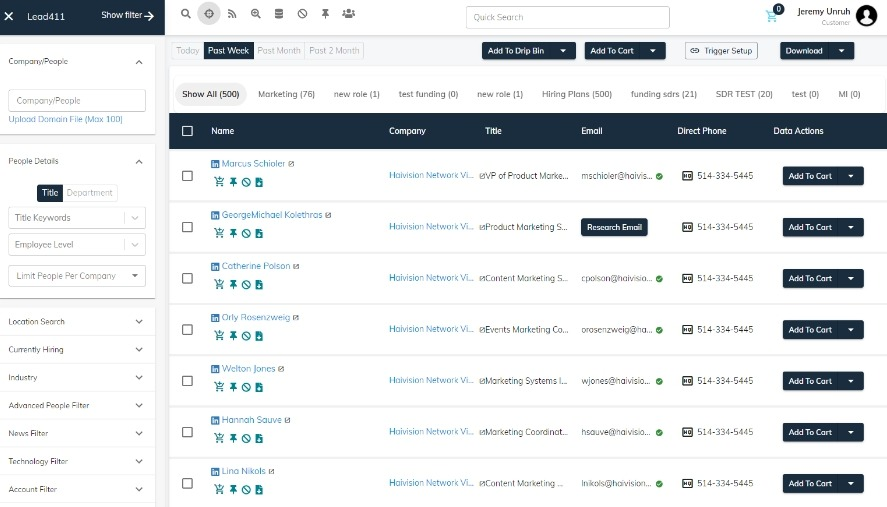
Lead411 is a sales intelligence platform that combines a B2B contact database with sales trigger data. In addition to providing verified contact information, it tracks events such as funding rounds, executive hires, and company growth, helping sales teams identify both who to contact and when to reach out.
The platform is well suited to outbound sales teams that prioritize timely, event-driven prospecting. But it offers a smaller contact database and less extensive global coverage than platforms such as ZoomInfo, Apollo, and Lusha, making it less suitable for large enterprise sales teams.
Key Features
Verified B2B Contact Database: Access business emails, direct dials, and company information.
Sales Triggers: Monitor events such as funding announcements, hiring activity, leadership changes, and company growth.
Intent Data: Identify companies actively researching products and services in your category.
CRM Integrations: Sync prospect data with popular CRM and sales engagement platforms.
List Building: Create highly targeted prospect lists using firmographic and technographic filters.
Pros
Combines contact data with actionable sales triggers
Good email accuracy and verification capabilities
Easy-to-use interface with a relatively short learning curve
Helpful filtering options for targeted prospecting
Cons
Smaller contact database than some enterprise competitors
Interface can occasionally feel dated
International coverage is less comprehensive than U.S. coverage
Pricing
Lead411 offers a free trial and 2 paid plans:
Spark: $49/month
Ignite: $150/month
9. Snov.io
Best For: Combining email prospecting with automated outreach
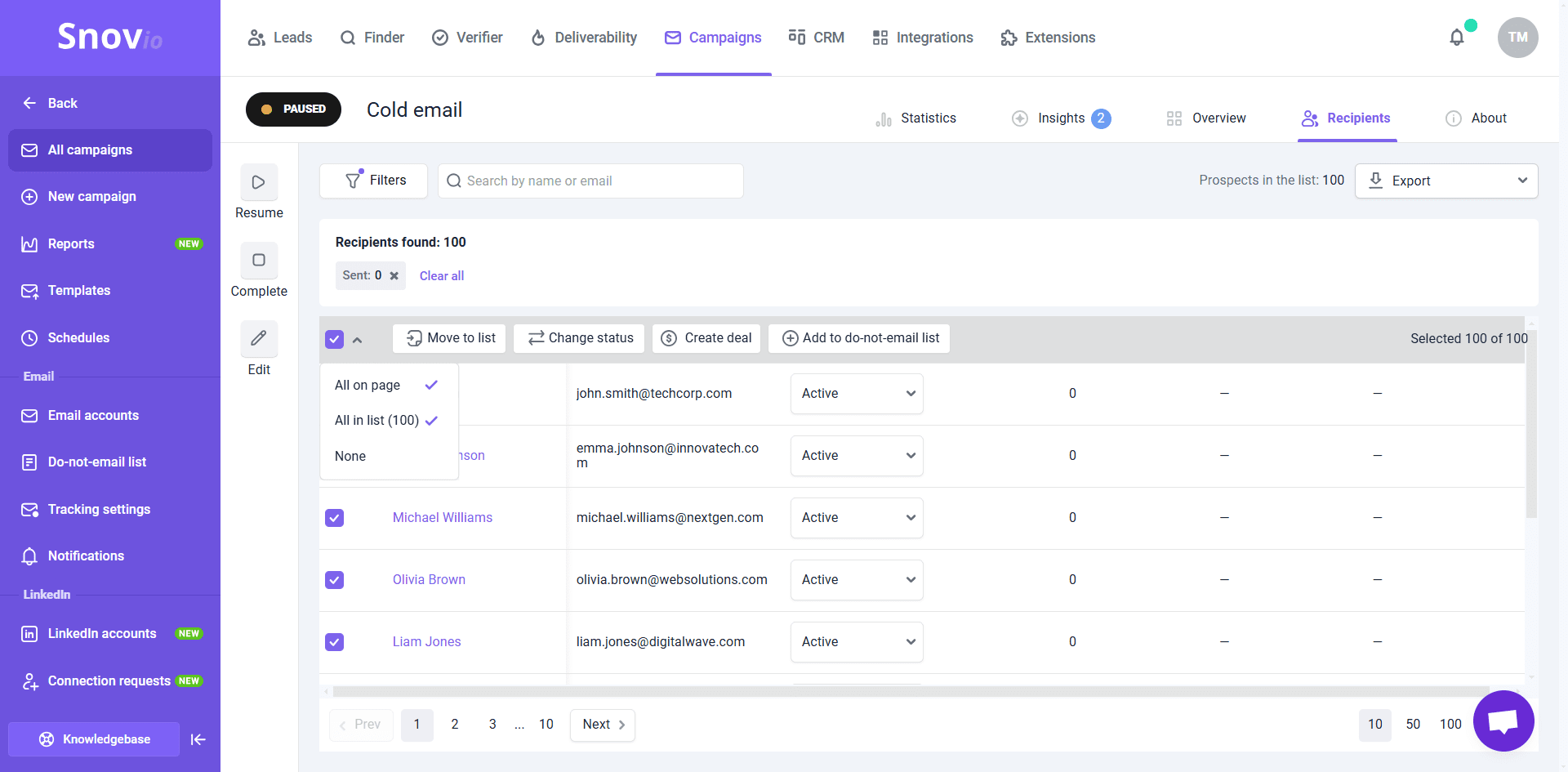
Snov.io is built for teams that want to manage more of their outbound workflow from a single platform. Alongside its contact discovery tools, it includes email verification, drip campaign automation, a lightweight CRM, and AI-powered writing features.
This makes it a practical option for startups and growing sales teams that want to prospect and engage leads without juggling multiple tools.
Key Features
Email Finder & Verifier : Discover and confirm business email addresses using names, companies, or domains.
Drip Campaign Automation: Create personalized email sequences with automated follow-ups.
Sales CRM: Track prospects and manage deals within the platform.
Browser Extension: Find prospects directly from LinkedIn and company websites.
AI Email Assistant: Generate and refine outreach emails using built-in AI tools.
Pros
Combines prospecting, outreach, and CRM in one platform
User-friendly interface with a relatively short learning curve
Broad integration ecosystem and API support
Affordable entry pricing for small businesses
Cons
Credit-based pricing can become limiting for high-volume users
Contact database is smaller than leading enterprise platforms
Buyer intent capabilities are relatively limited
Pricing
Snov.io offers a free trial. Paid plans include:
Starter: $39/month
Pro: $99/month
10. Clearbit (HubSpot Breeze Intelligence)
Best For: HubSpot users who want built-in lead enrichment and company intelligence
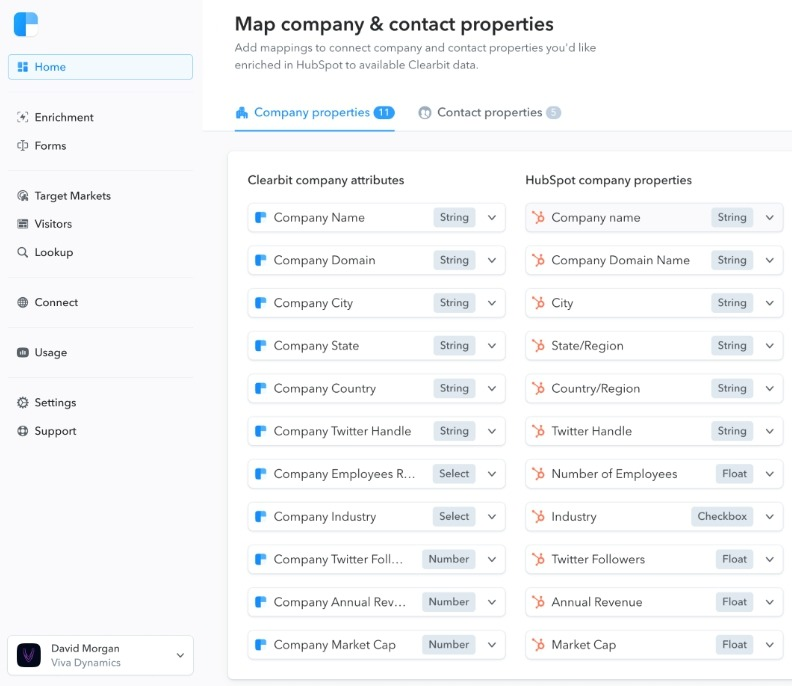
Clearbit is now part of HubSpot Breeze Intelligenceand is used to enrich inbound leads and website visitors with real-time company and contact data directly inside the HubSpot CRM. It helps teams identify who is engaging with their website, add context to leads, and improve qualification and routing without relying on external enrichment tools.
It is best suited for teams already operating within the HubSpot ecosystem who want enrichment and buyer intelligence embedded in their workflow. But its contact coverage is less consistent for smaller businesses.
Key Features
Real-Time Lead Enrichment: Adds company and contact details to inbound leads automatically
Website Visitor Identification: Reveals companies visiting your website
CRM Enrichment: Keeps HubSpot records updated with fresh firmographic data
Lead Qualification Data: Improves scoring and routing accuracy
Audience Segmentation: Enables more precise targeting using enriched attributes
Pros
Improves lead quality and qualification
Reduces manual data entry and enrichment work
Strong for inbound-focused teams
Easy setup for existing HubSpot users
Cons
Only usable within HubSpot
Not designed for outbound prospecting or cold outreach
Limited standalone functionality
Pricing
Included within HubSpot, with pricing depending on subscription tier and usage-based enrichment credits.
11. UpLead
Best For: High-accuracy B2B contact data with real-time email verification
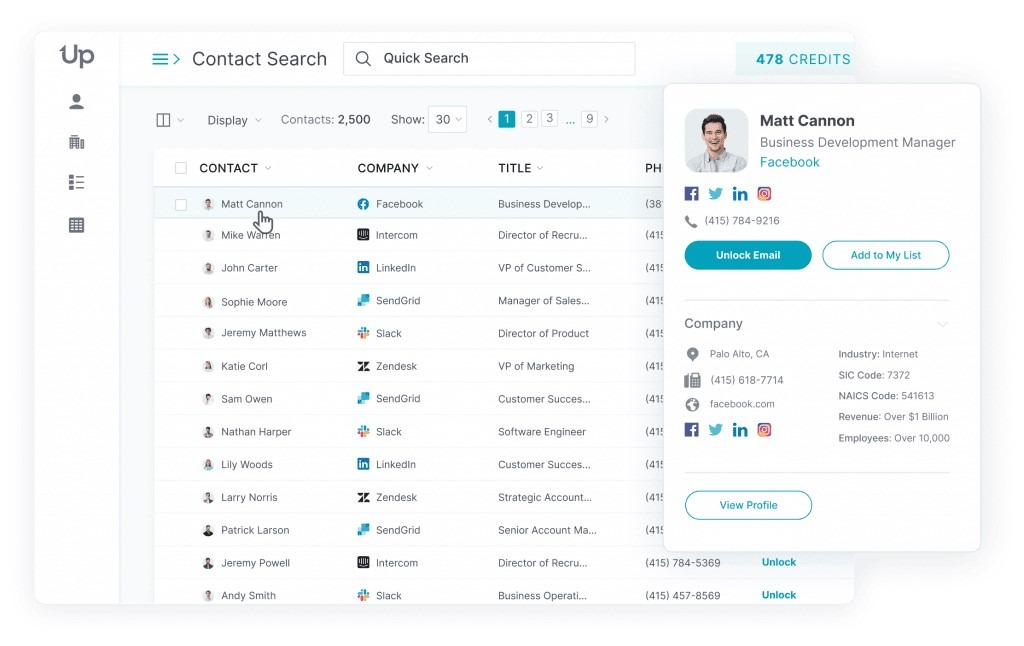
UpLead is a B2B lead generation platform focused on delivering verified contact data with a strong emphasis on accuracy. It’s particularly useful for teams that prioritize data quality over sheer database size.
Key Features
Real-Time Email Verification: Ensures emails are valid before export
B2B Contact Database: Access decision-makers across industries and regions
Advanced Filtering: Search by company size, industry, location, revenue, and more
Technographic Data: Identify tools and technologies companies are using
CRM Integrations: Sync leads directly into Salesforce, HubSpot, and other CRMs
Pros
High accuracy due to real-time email verification
Simple and intuitive interface
Good data freshness compared to many databases
Strong data enrichment capabilities for improving existing lead lists
Cons
Smaller database compared to enterprise platforms
Limited buyer intent capabilities
Fewer advanced workflow automation features
Pricing
UpLead offers:
Free Trial (limited credits)
Essentials Plan: From $99/month
Plus Plan: From $199/month
Professional Plan: Custom pricing
12. LinkedIn Sales Navigator
Best For: Social selling and relationship-based B2B prospecting
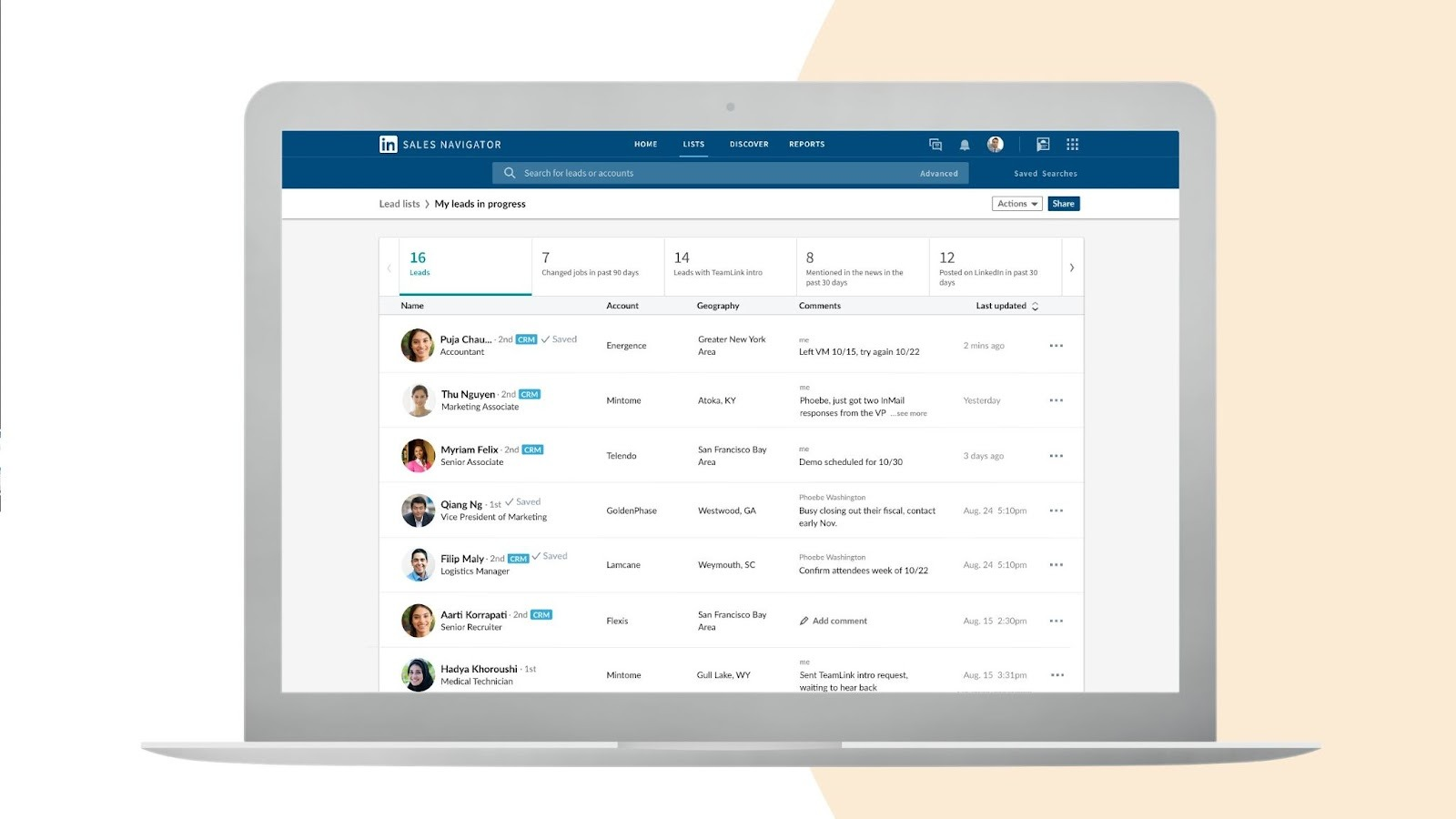
LinkedIn Sales Navigator is a prospecting tool built on top of LinkedIn’s professional network. Instead of relying on external databases, it gives sales teams advanced access to LinkedIn’s user base, allowing them to find, track, and engage decision-makers based on role, company, and intent signals.
It is a strong fit for relationship-based sales, although smaller businesses may find it more expensive than tools like RB2B.
Key Features
Advanced Lead Search: Filter prospects by job title, company, seniority, location, and industry
Account Tracking: Monitor updates from target companies in real time
Lead Recommendations: Suggests relevant prospects based on saved searches and activity
InMail Messaging: Directly message prospects outside your network
CRM Integrations: Sync lead activity and notes with major CRM platforms
Pros
Direct access to the world’s largest professional network
Strong for warm outreach and relationship-based selling
Excellent for account-based marketing strategies
Real-time professional updates (job changes, moves, promotions)
Cons
No traditional email/phone contact database
Limited automation compared to outbound-focused tools
Can be time-intensive for high-volume prospecting
Pricing
Plans include:
Core: From $119.99/month
Advanced: From $159.99/month
Advanced Plus: Custom pricing
How to Choose The Right Seamless.AI Alternative
Choosing the right alternative depends less on feature count and more on how your team actually generates pipeline. That’s because, different motions require different types of data and workflows:
High-Volume Outbound Prospecting: Teams running cold outreach at scale need large contact databases, strong filtering, and CRM integrations. Tools like Apollo.io and UpLead work best in this case.
Enterprise Sales and Account Intelligence: Larger teams need access to deep company data and strong segmentation to execute account-based selling effectively.
Fast, Lightweight Prospecting: Hunter.io and Snov.io suit smaller teams or founders who need quick access to verified emails and simple outreach workflows without heavy setup.
Inbound and CRM-Driven Workflows: If you’re working with inbound leads, CRM fit matters more than cold sourcing. Prioritize tools with strong enrichment and qualification capabilities.
Intent-Driven Prospecting: This approach focuses on identifying real people actively visiting your website. Rather than relying on static lists, teams need tools like RB2B that surface live buying signals for higher-intent outreach.
In practice, these categories rarely exist in isolation. Most teams combine tools depending on their motion. The choice ultimately comes down to what you want to act on.
If you just want to find more prospects for campaigns, database tools like Apollo do the job. But if you want to go beyond traditional prospecting, RB2B offers a different approach through real-time website visitor identification.
For most brands, a website is where prospects first demonstrate interest. RB2B shows you who’s actively engaging with your site as it’s happening, helping your sales team prioritize warmer opportunities and reach out at the right time. That’s why RB2B’s a great tool to add to your stack, regardless of the GTM model you run.
Replace Static Contact Databases With Real-Time Tracking Using RB2B
Seamless.AI solves an important part of the sales process: helping you find people to reach out to. But more contact data doesn't automatically mean better results.
The real difference in performance comes down to whether you're reaching out to cold prospects or people already showing intent. And you can’t reliably make that distinction without accurate, real-time, first-party intent data. RB2B provides this, with a free plan to get started and affordable options as you scale.
Sign up today to start identifying real buyers visiting your website and turn intent into pipeline.
Frequently Asked Questions
1. What Is the Best Seamless.AI Alternative Overall?
There isn't a single "best" tool for everyone. It depends on your workflow. Platforms like Apollo.io and UpLead are strong for outbound prospecting, ZoomInfo and Cognism are better for enterprise sales teams, while tools like Hunter.io and Snov.io work well for lightweight outreach.
For teams that want to go beyond static contact data and focus on real buying behavior, RB2B adds a different layer by showing who is actively visiting your website in real time.
2. What’s the Difference Between Seamless.AI and Intent-Based Tools?
Seamless.AI is focused on helping teams build lists of potential buyers from its databases. But intent-based tools, like RB2B, focus on identifying real people already engaging with your brand. Instead of guessing who might be interested, you’re responding to actual website activity and buying signals.
3. Is Seamless.AI Still Worth Using?
Yes, it can still be useful for teams that rely heavily on large contact databases and outbound prospecting. However, its effectiveness depends on how well you can identify timing and intent. That’s why many modern teams supplement it with tools like RB2B to capture first-party intent data and improve conversion rates.
4. Can Small Businesses Use These Seamless.AI Alternatives Effectively?
Yes. Many tools in this list are designed for small teams. Hunter.io, Snov.io, and Lusha are especially accessible due to lower pricing and simpler workflows. RB2B is also useful for smaller teams that want to focus limited resources on the highest-intent website visitors instead of broad cold outreach.
5. Why Is Intent Data Becoming More Important in 2026?
It is because buyers are spending more time researching independently before speaking to sales teams. This makes timing critical. Tools that capture real-time behavior—like RB2B—help teams engage prospects during active research instead of after the buying decision has already been made.
This guide covers ten sales prospecting techniques for B2B sales and marketing teams, from referrals and account-based prospecting to website visitor identification. Learn when each method works, how to apply it, and which signals deserve a closer look. The goal is more qualified conversations and booked demos, with less time spent on poor-fit contacts.
Lead routing best practices go beyond assigning leads to reps. The goal is to route the right leads with the right priority. Score on ICP fit and real-time intent, then act fast. High-intent buyers reach a rep first, and conversion rates climb.
High-intent B2B leads need follow-ups tied to their behavior, not a fixed cadence. This library gives you seven sales follow-up email templates for real buying signals. Each one maps to an action like a pricing visit or repeat session. Match the message to the moment, and replies climb.