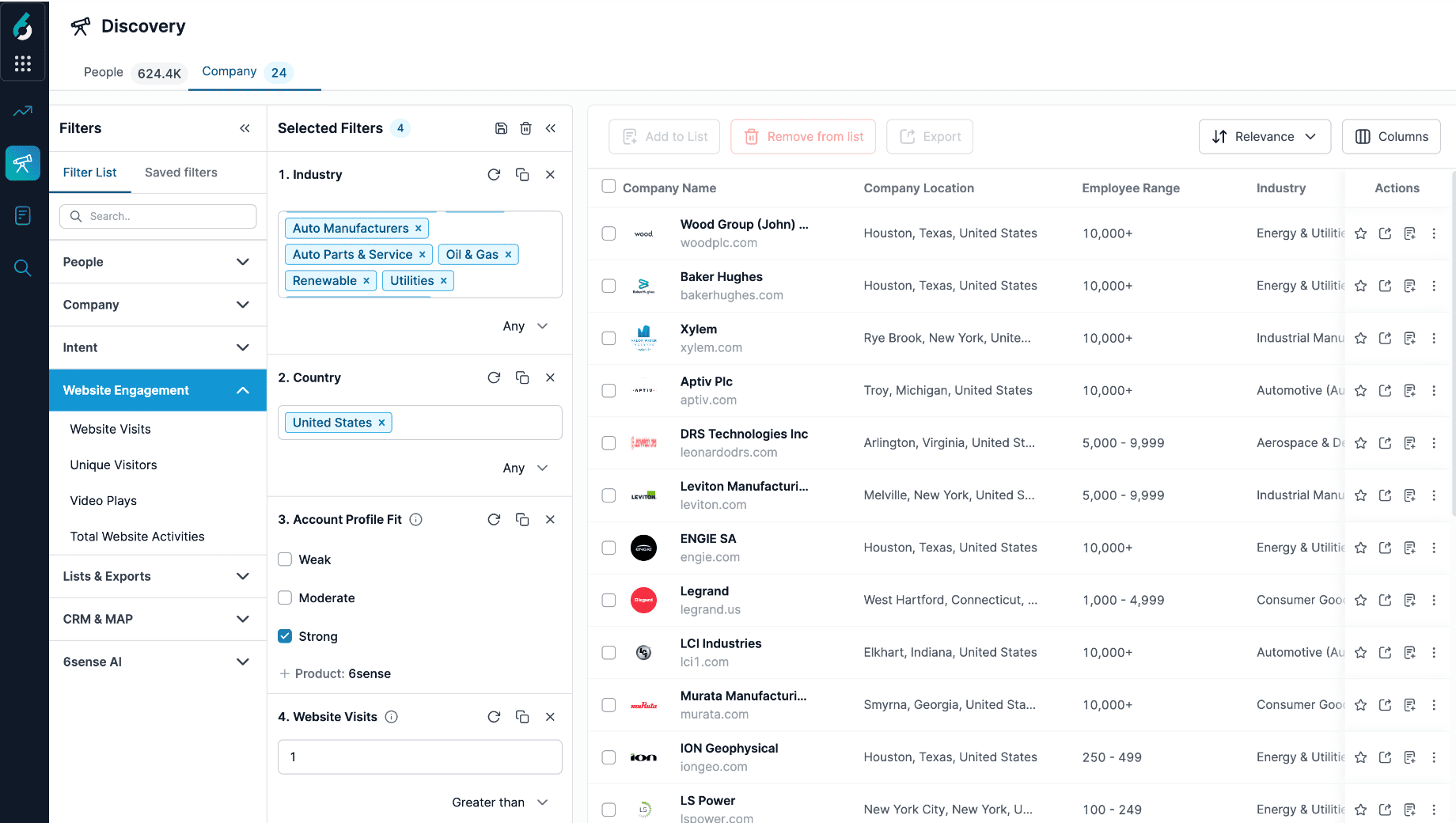
Demandbase is a leading ABM platform for enterprise teams. But teams that need person-level data or leaner workflows often need a better fit. The top three Demandbase alternatives in 2026 are RB2B, 6sense, and ZoomInfo. RB2B stands out for its real-time person-level visitor identification, which makes it easier to act on high-intent traffic.
Top 3 Demandbase Alternatives at a Glance
#
Tool
Best For
1
RB2B
Teams needing person-level website visitor ID
2
6sense
Enterprise GTM teams running full ABM programs
3
ZoomInfo
Outbound-heavy enterprise sales teams
Looking Beyond Demandbase?
Demandbase is a popular enterprise ABM platform with native account identification and intent data capabilities. This helps sales teams become more efficient at targeting accounts and closing deals.
As powerful as Demandbase is, it’s not the right fit for every team. For some, the complex setup and level of investment make it hard to justify.
In this guide, we’ll break down the best Demandbase alternatives based on what they actually do well so you can choose the right tool for how your team sells. We’ll look at direct competitors as well as complementary tools that fill in some gaps for Demandbase users.
Why Listen to Us?
RB2B is a B2B lead generation platform used by over 100,000 teams, including Dropbox and Clay. We help teams put names to up to 70% of their website visitors. That experience across GTM software informed every insight and comparison in this guide.
A Brief Demandbase Overview
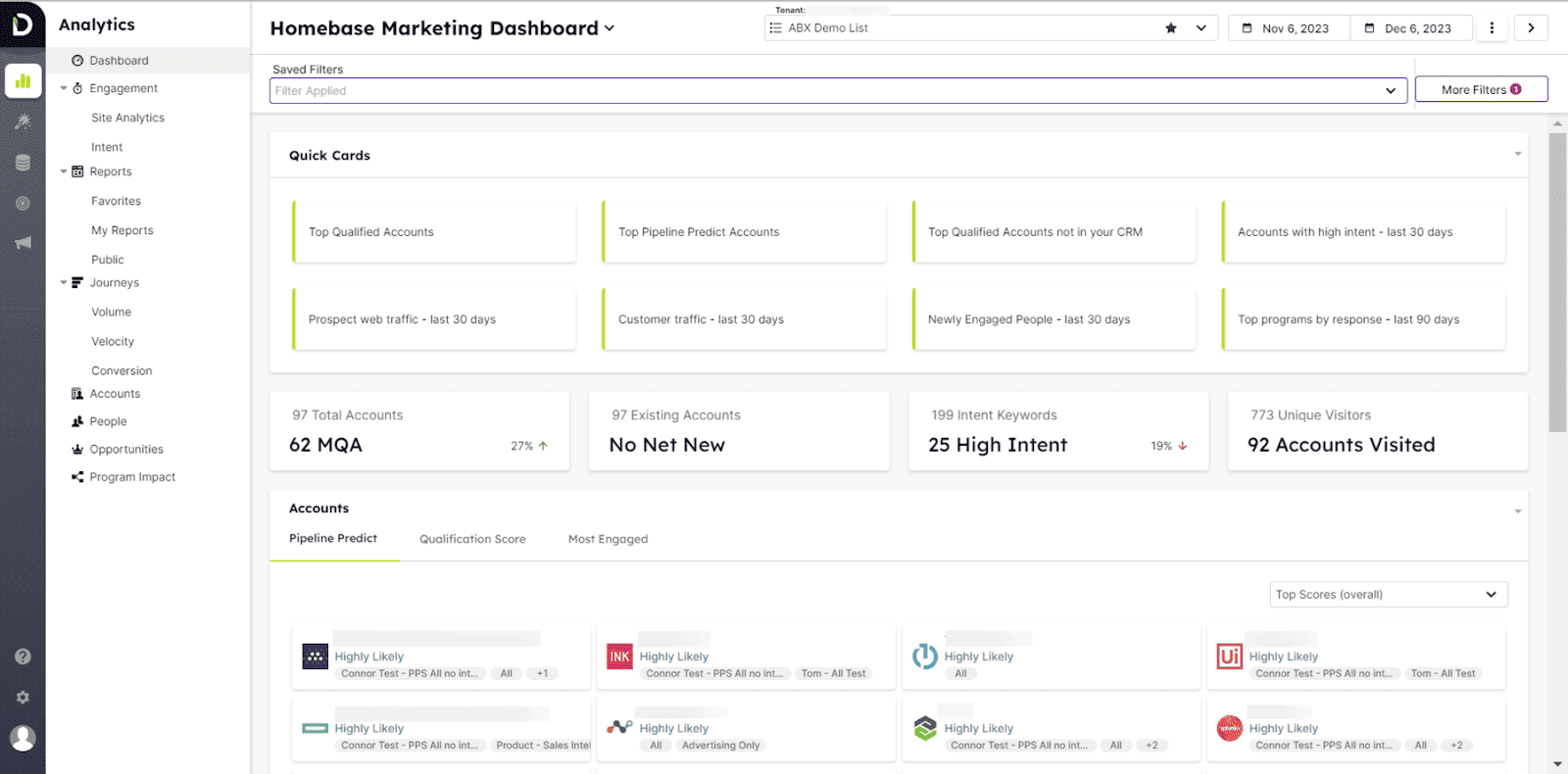
Demandbase is an Account-Based Experience (ABX) platform built for enterprise GTM teams. It combines intent data, advertising, and sales intelligence in one place. It works best for teams running a sophisticated ABM motion that targets a tight list of named accounts with coordinated ads, content, and sales outreach.
Account-level insights are where Demandbase truly shines. With it, teams can identify in-market companies, score accounts, and orchestrate multi-channel campaigns. For large revenue teams running multi-channel ABM at scale, it's genuinely hard to beat.
That said, there are reasons you might look elsewhere. But most don’t require you to throw Demandbase under the bus.
Why Look for a Demandbase Alternative?
Here are a few reasons most teams look for an alternative:
It's Built For Accounts, Not Individuals: Demandbase can surface which company is engaged, but not the specific person behind the visit. That distinction can slow down timely, targeted outreach.
Enterprise Pricing: Demandbase isn't cheap. Teams at the mid-market level often find the ROI math harder to justify.
You're in EMEA: Demandbase's data coverage skews heavily US-centric, which matters if you're running campaigns in Europe.
You Want Outbound + Inbound in One Tool: Some teams want a platform that handles contact data, sequencing, and intent without stitching three systems together.
The good news is that these gaps are well-served by a growing category of tools. Some of them complement Demandbase beautifully. Others replace it entirely, depending on your stack.
RB2B is a B2B sales intelligence platform built for warm outbound outreach. It provides global company-level identification and person-level identification for U.S. based visitors.
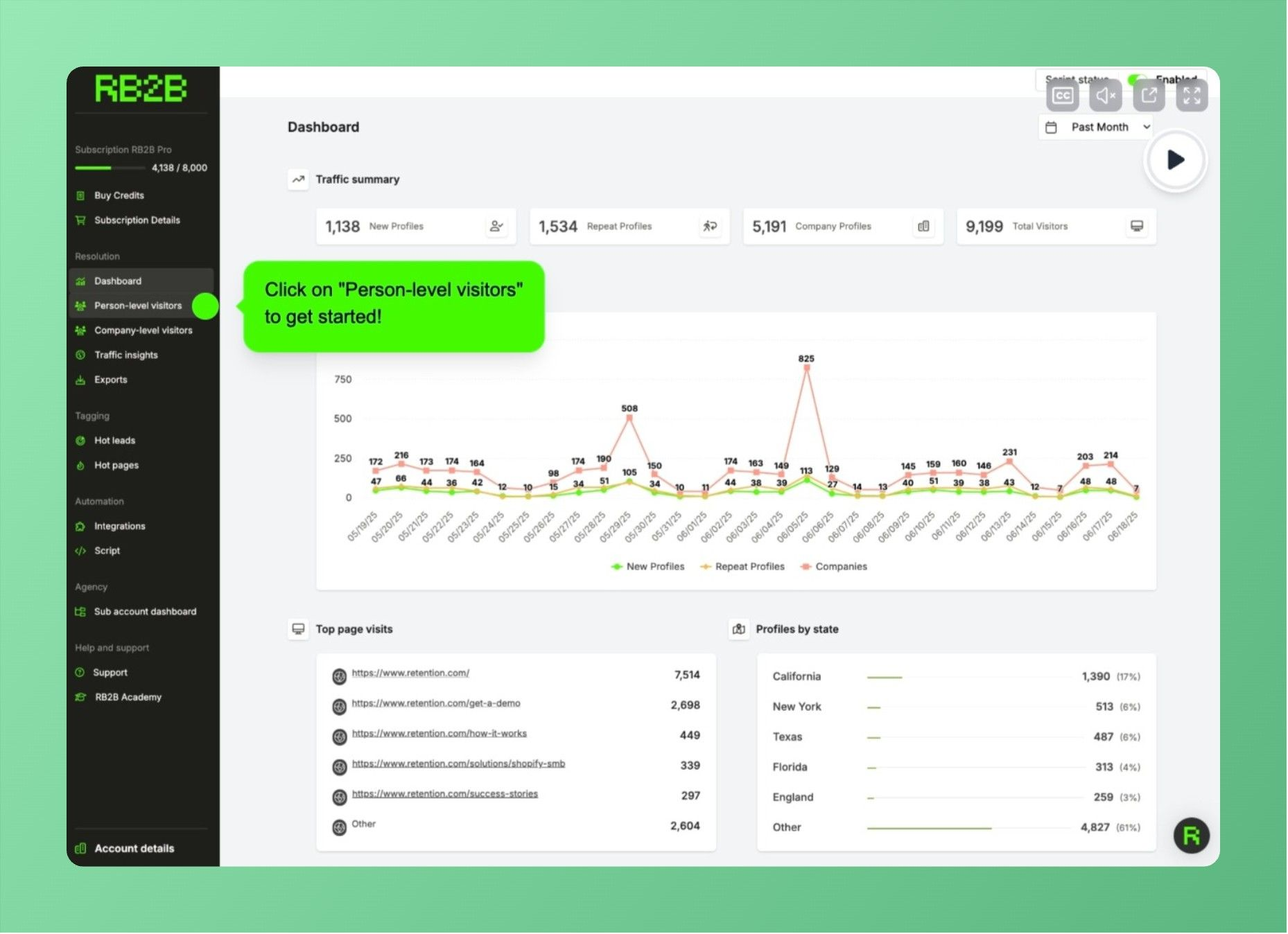
What makes RB2B stand out is its individual level identification. It identifies up to 70-80% of U.S. website traffic by name, job title, LinkedIn profile, and email address. The tool then pushes that data directly to your Slack or Microsoft Teams channel in real time.
Setup is also super easy. All you have to do is embed a lightweight tracking pixel on your website.
It's worth noting that RB2B's company-level identification is powered by Demandbase, so these two tools are genuinely complementary rather than competing. If you're already a Demandbase customer and want to layer in person-level resolution, RB2B is the obvious next step. But teams starting from scratch can use both to cover every layer of intent data.
Hot Leads: RB2B’s Hot Leads feature uses AI to surface and rank the top 10–20% of visitors most likely to convert.
Hot Pages: Track visits to key pages such as pricing, demos, and case studies in real time to spot strong buying signals.
Page Suppression: Exclude irrelevant activity, including internal traffic and non-target pages, to keep your outreach focused on qualified leads.
Real-Time Insights: Get instant alerts when high-intent visitors engage with your site. Each notification includes enriched details like name, job title, and LinkedIn profile.
Pricing
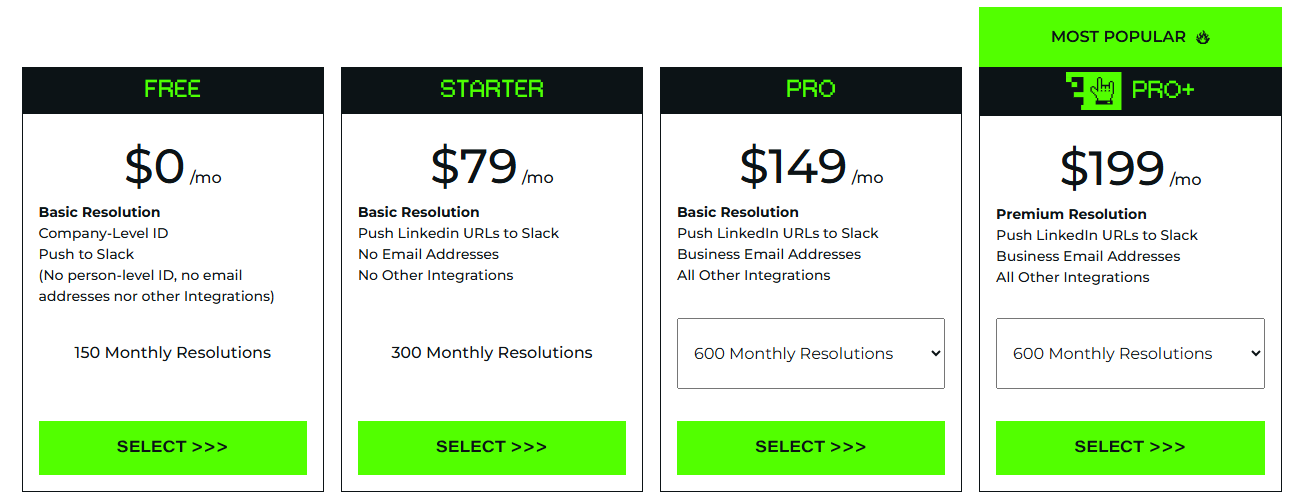
Free ($0/month): Offers 150 basic resolutions monthly, company-level ID, and Slack integration only
Starter ($79/month): Offers 300 basic resolutions monthly and pushes LinkedIn URLs to Slack. No email addresses or other integrations
Pro (starting at $149/month): Offers 600-2500 basic resolutions monthly, business email addresses, Slack, and all other integrations
Pro+ (starting at $199/ month): Offers 600-2,500,000 premium resolutions, business email addresses, and pushes LinkedIn URLs to Slack and other integrations
Pros
Person-level ID delivered instantly to Slack or Teams (no dashboard required)
Free plan available, with a freemium model that's unusually generous for this category
Hot Pages and Hot Leads make prioritization fast and intuitive
Unlimited Demandbase company-level resolution on all paid plans
Slack notification with the lead’s LinkedIn profile attached
Cons
Person-level ID is limited to U.S.-based traffic only
2. 6sense
Best For: Enterprise GTM teams running full ABM programs
6sense is a close like-for-like alternative to Demandbase in terms of platform scope. It offers account identification, buyer intent data, predictive scoring, and advertising all under one roof.
Its AI-driven signals make it a strong alternative. However, some users have found its account identification unreliable and inaccurate.
Key Features
Predictive Buying-Stage Intelligence: Identify where accounts are in the buying journey so teams can engage at the right time.
Unified Account and Contact Data: Combine contact, firmographic, technographic, and intent data into a single account view.
Sales Intelligence Insights: Access account research and engagement signals for more efficient prospecting.
Multi-Channel Account Orchestration: Coordinate advertising, sales outreach, and marketing engagement from a single platform to improve GTM alignment.
Pricing
Enterprise custom pricing.
Pros
Robust enterprise ABM capabilities
Combines contact data with buying signals
Strong sales and marketing alignment through shared account intelligence
Cons
Complex implementation process
Requires clean CRM data for best results
3. ZoomInfo
Best For: Outbound-heavy enterprise sales teams
ZoomInfo is a GTM intelligence platform. Its core strength is its contact database. It hosts a vast collection of global B2B contact and company data available.
Beyond the database, ZoomInfo has expanded into intent data (via its Streaming Intent feature), website visitor tracking (WebSights), and sales engagement sequencing. It's increasingly trying to be a full platform rather than just a data provider. For outbound-heavy teams that need volume, ZoomInfo is definitely one Demandbase alternative to consider.
Key Features
Global B2B Contact Database: Search a large collection of contact and company records to build targeted prospect lists at scale.
Advanced Prospecting Filters: Segment accounts by technographics, hiring activity, company growth, and organizational structure to improve targeting precision.
Buyer Intent Signals: Identify accounts actively researching relevant topics so reps can prioritize in-market opportunities.
Conversation Intelligence: Analyze sales calls and meetings automatically to uncover coaching opportunities and improve performance.
Pricing
ZoomInfo does not list pricing plans publicly.
Pros
Strong account intelligence for enterprise outbound teams
Robust integrations across the modern sales stack
Extensive global data coverage across industries and company sizes
Cons
Data freshness can vary across industries and regions
Annual contracts and seat minimums can be restrictive
4. Bombora
Best for: Teams adding intent data to existing stack
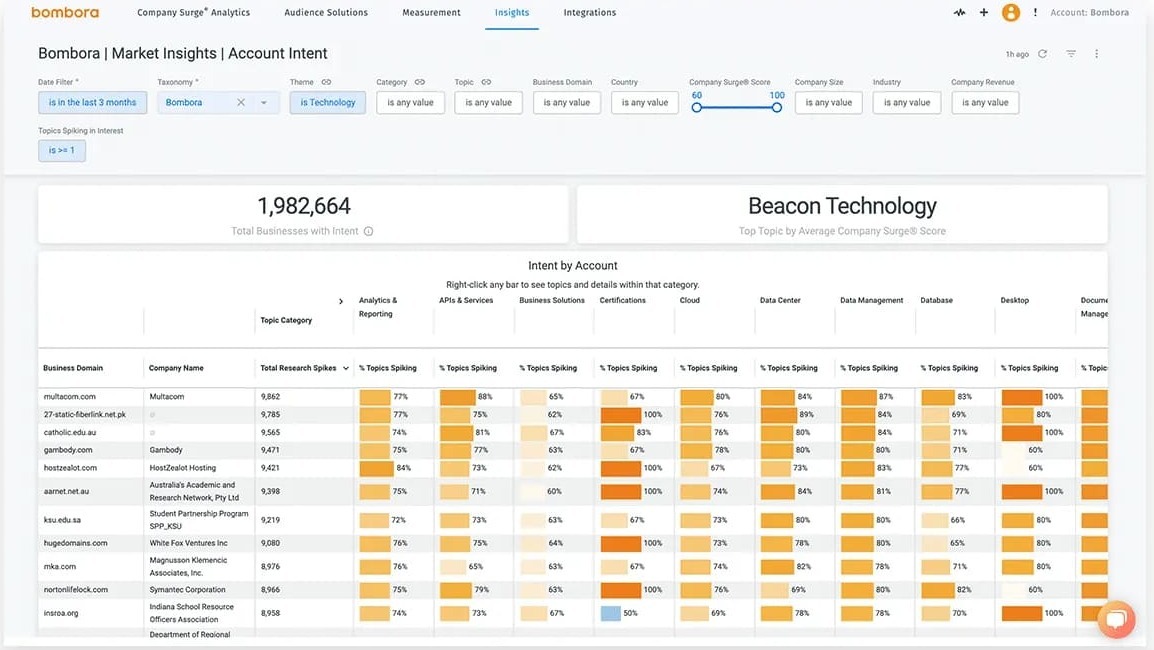
Bombora doesn't try to be a full platform like most Demandbase alternatives. It does one thing: intent data. Specifically, it aggregates behavioral signals from a co-op of thousands of B2B media sites and publisher networks, then tells you which companies are actively researching specific topics relevant to your product.
That breadth is Bombora's superpower. Because its signals come from across the open web, it can surface in-market accounts you'd never see through first-party tracking alone. The tradeoff is that it requires intense training and ongoing support to use effectively.
Key Features
Surge intent data: Identify companies researching specific topics so sales and marketing teams can engage buyers earlier.
Publisher co-op network: Aggregate behavioral signals from thousands of B2B websites to uncover buying intent across the open web.
CRM and ABM integrations: Push intent data directly into existing sales and marketing workflows for faster activation.
Extensive topic taxonomy: Track buyer research activity across thousands of business topics and categories.
Pricing
No publicly listed pricing information on the Bombora site.
Pros
Excellent third-party intent signal coverage
Works well layered on top of existing ABM or sales intelligence tools
Broad web coverage helps uncover demand beyond your owned channels
Cons
No person-level identification
Requires another platform to act on the data; it's a signal source, not a workflow tool
5. AdRoll ABM (formerly RollWorks)
Best for: Mid-market teams scaling ABM
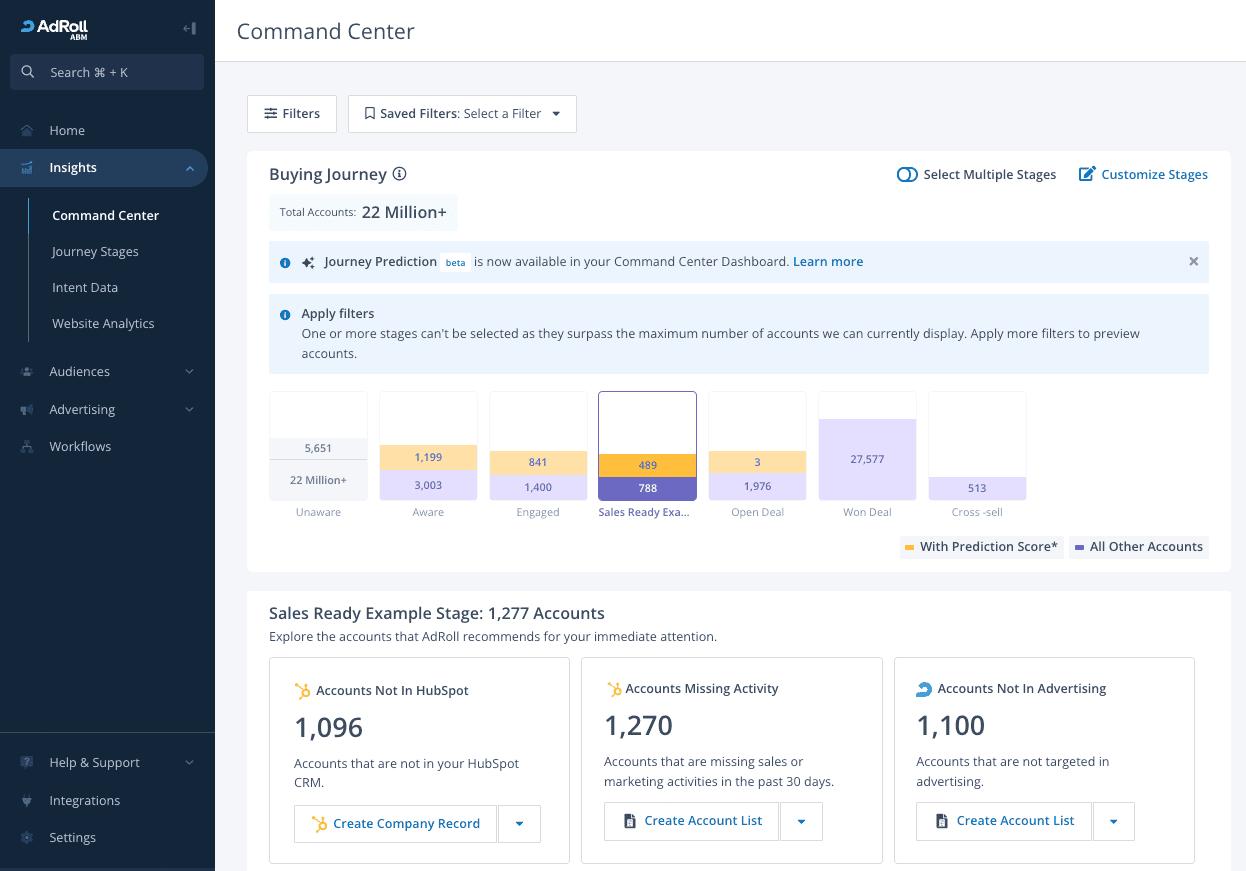
AdRoll works best for mid-market and scaling companies that want account-based advertising without enterprise-tier pricing or implementation complexity. AdRoll identifies target accounts, serving them ads across display and social, and measuring engagement. It also integrates cleanly with HubSpot and Salesforce, which keeps setup relatively fast.
Key Features
Account-Based Advertising: Deliver targeted ads across display and social channels to engage high-value accounts throughout the buying journey.
Intent-Based Account Scoring: Prioritize accounts using engagement and intent signals to focus resources on the best opportunities.
Journey Stage Tracking: Monitor how accounts move through the funnel to improve campaign timing and effectiveness.
Automated Audience Creation: Build dynamic account audiences based on behavior, fit, and engagement criteria.
Pricing
Custom pricing. Contact sales for more info.
Pros
More accessible pricing than enterprise ABM platforms
Fast to set up, especially for HubSpot-native teams
Quick and easy onboarding
Cons
Predictive analytics are less sophisticated than other tools
Ad network reach is narrower than some competitors
6. DemandScience
Best For: Teams needing pipeline generation support
DemandScience (formerly PureB2B) is a demand generation platform that combines contact data, intent signals, and content syndication. It's less focused on ABM and more on full-funnel program execution, covering everything from awareness campaigns to MQL delivery.
DemandScience has a strong database for North American B2B contacts. Its content syndication network also allows it to reach audiences that owned media often misses. That said, its live performance indicators are limited, making it harder to optimize campaigns in real time.
Key Features
Full-Funnel Demand Generation: Execute programs that support every stage of the buyer journey from awareness through qualified pipeline.
Intent-Enriched Contact Data: Combine verified contact records with intent signals to improve targeting and lead quality.
Managed Demand Generation Services: Access expert campaign management without needing a dedicated in-house team.
Lead Qualification Workflows: Improve lead quality through targeting, validation, and nurture processes before handoff to sales.
Pricing
Custom. Program-based, depending on volume and funnel stage.
Pros
Managed program support sets it apart from pure self-serve platforms
Strong for teams that need pipeline volume, not just tooling
Combines software, data, and services in a single solution
Cons
Less suited for teams that want full control over their own campaigns
Weak international data coverage
7. Cognism
Best For: Sales teams targeting Europe/UK markets
If your go-to-market motion extends into Europe, Cognism deserves a spot on your shortlist of Demandbase alternatives. It's one of the strongest B2B contact data providers for the UK and European markets.
Cognism is built around GDPR compliance and strong coverage of phone-verified mobile numbers. Its Bombora partnership adds intent data, making it a useful tool for teams that want compliant contact data and buying signals in one place.
Key features
Phone-verified mobile numbers: Access manually verified mobile numbers that help SDRs connect with prospects more reliably.
Strong EMEA coverage: Reach decision-makers across Europe with data coverage designed specifically for regional markets.
GDPR-compliant prospecting: Build outreach lists using compliance-focused data collection practices that reduce regulatory risk.
Bombora intent integration: Identify accounts researching relevant topics so sales teams can prioritize higher-intent opportunities.
Pricing
Custom, typically mid-market to enterprise pricing
Strong phone data coverage for direct outreach campaigns
Cons
Premium pricing can be difficult for smaller teams
U.S. database depth is weaker than ZoomInfo or Apollo
8. Apollo.io
Best For: SMB and startup sales teams
Apollo.io has emerged as one of the most popular sales intelligence platforms for sales teams. It offers outbound prospecting, contact data, and email sequencing without the hefty enterprise prices. The built-in sequencing tool means you can go from finding a prospect to sending a personalized email without leaving the platform.
Apollo’s intent data features have improved substantially, and the free plan is genuinely usable. For early-stage companies, lean sales teams, and anyone trying to run an efficient outbound motion on a budget, the value-to-cost ratio is hard to beat. That said, credits can run out faster than expected for high-volume prospectors.
Key Features
Large Contact Database: Access over 275 million contacts and company records to discover prospects that match your ICP
Built-In Sales Engagement: Create email sequences, automate follow-ups, and manage outreach from a single platform
Intent and Buyer Signals: Identify prospects showing relevant buying activity so teams can prioritize outreach
CRM Synchronization: Keep prospect and account data aligned across HubSpot, Salesforce, and other systems
Pricing
Free
Basic: $49/month
Professional: $79/month
Organization: $119/month
Pros
Contact data and email sequencing in one platform
Strong filtering for targeted list building
Generous free plan for startups and early-stage sales teams
Cons
Phone number accuracy can be inconsistent
Support response times get mixed reviews
9. Clearbit
Best For: Inbound-focused, HubSpot-centric teams
Clearbit, now part of HubSpot’s Breeze intelligence, built its reputation on data enrichment. If you have an email address or a company domain, Clearbit can fill in the rest. It can find job titles, company size, industry, tech stack, social profiles, and more.
That enrichment capability remains its strongest suit, especially for teams seeking instant lead scoring and routing. However, smaller businesses, niche agencies, and early-stage startups may find the contact-level data inconsistent.
Key Features
Real-Time CRM Enrichment: Automatically enrich leads and accounts with firmographic and demographic data to improve CRM quality.
Lead Scoring and Qualification: Prioritize inbound leads using enriched company and contact data.
Buyer Intent Signals: Surface engagement patterns and behavioral indicators that suggest purchase interest.
Form Shortening and Automation: Reduce form friction by automatically populating prospect data and improving conversion rates.
Pricing
Custom pricing through HubSpot.
Pros
Excellent firmographic data quality
Reduces manual data entry
Deep integration with HubSpot workflows and automation
Cons
Not a database for finding new contacts
Less useful without existing traffic or CRM data
10. Leadfeeder
Best For: Website visitor identification
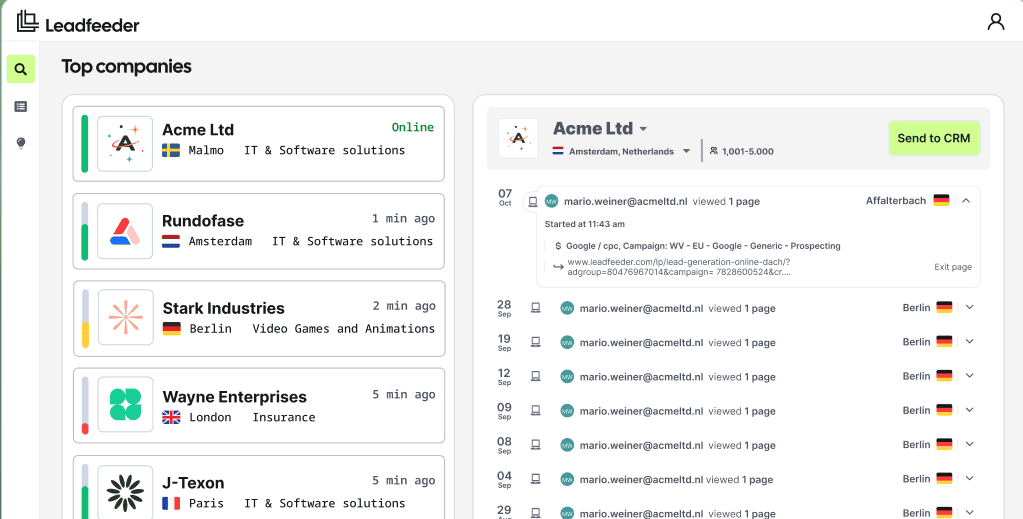
Leadfeeder is designed to help identify the companies behind anonymous website visits and convert that traffic into actionable sales leads. Using domains, locations, IP addresses, and contact data, Leadfeeder reveals what companies your visitors work for, even if they're working remotely.
The important distinction to flag: Leadfeeder tells you which company visited, not which person. For teams where person-level resolution matters, that's an important gap to consider.
Key Features
Company Visitor Identification: Reveal the companies visiting your website so sales teams can uncover otherwise anonymous traffic
Advanced Account Filtering: Qualify visitors using behavioral, firmographic, acquisition, and CRM-based criteria
CRM Synchronization: Push visitor intelligence into existing CRM workflows to improve follow-up and attribution
Behavior-Based Lead Scoring: Prioritize accounts based on engagement levels and fit with your ideal customer profile
Pricing
Lite: Free
Website Visitor Identification: $114/month
Platform: $460/month
Pros
Transparent, usage-based pricing that scales with identified companies
Strong CRM integrations that fit cleanly into existing sales workflows
Quick setup with minimal technical requirements
Cons
No person-level visitor identification
Users cite aggressive auto-renewal
11. Madison Logic
Best For: Marketing teams running content-led GTM
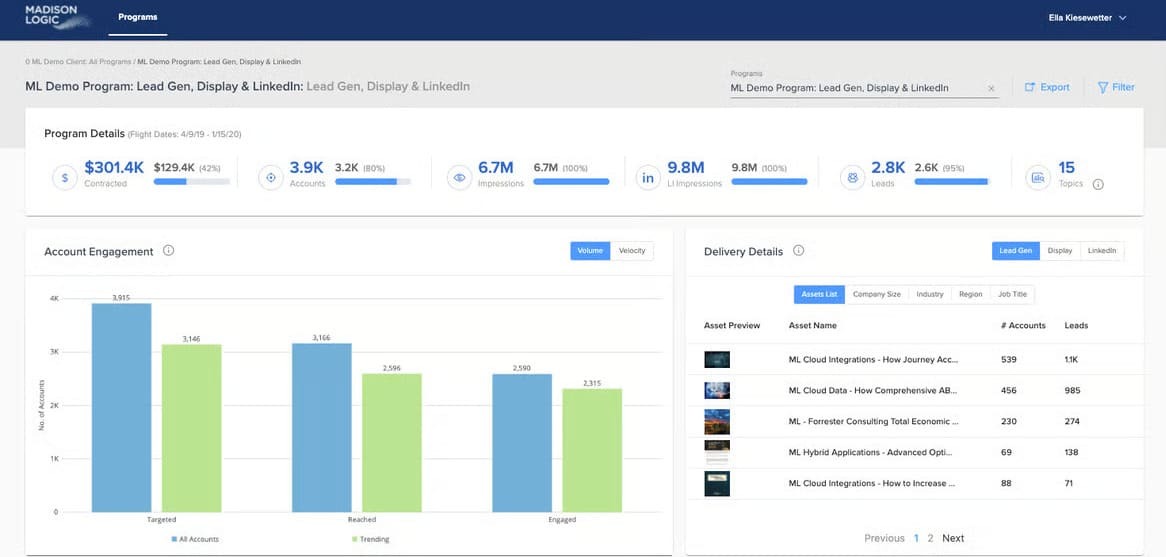
Madison Logic sits at the intersection of content syndication and account-based marketing. Its platform lets you distribute content to a curated audience of target accounts across publisher networks, then tracks engagement to surface in-market accounts.
For demand generation teams with a content-heavy strategy, Madison Logic offers a way to generate pipeline through account-level content consumption data. Where it falls short is reporting. There are no automated alerts, and finding relevant insights requires manual effort.
Key Features
Content Syndication Distribution: Promote content across a network of B2B publishers to reach target accounts at scale.
Account-Level Engagement Tracking: Monitor content consumption and engagement to identify active buying groups.
Multi-Channel Activation: Extend campaigns across display advertising, LinkedIn, and email nurture programs.
Pipeline Attribution Reporting: Connect content engagement to pipeline and revenue outcomes for clearer ROI measurement.
Pricing
Custom. Program-based pricing depending on content volume and account targets.
Pros
Strong fit for teams where content is a primary demand gen lever
Combines intent data and content engagement in a single view
Good publisher network for expanding content reach
Cons
Less useful for teams without an established content library
Reporting can lag compared to real-time ad platforms
12. Influ2
Best For: Person-based advertising
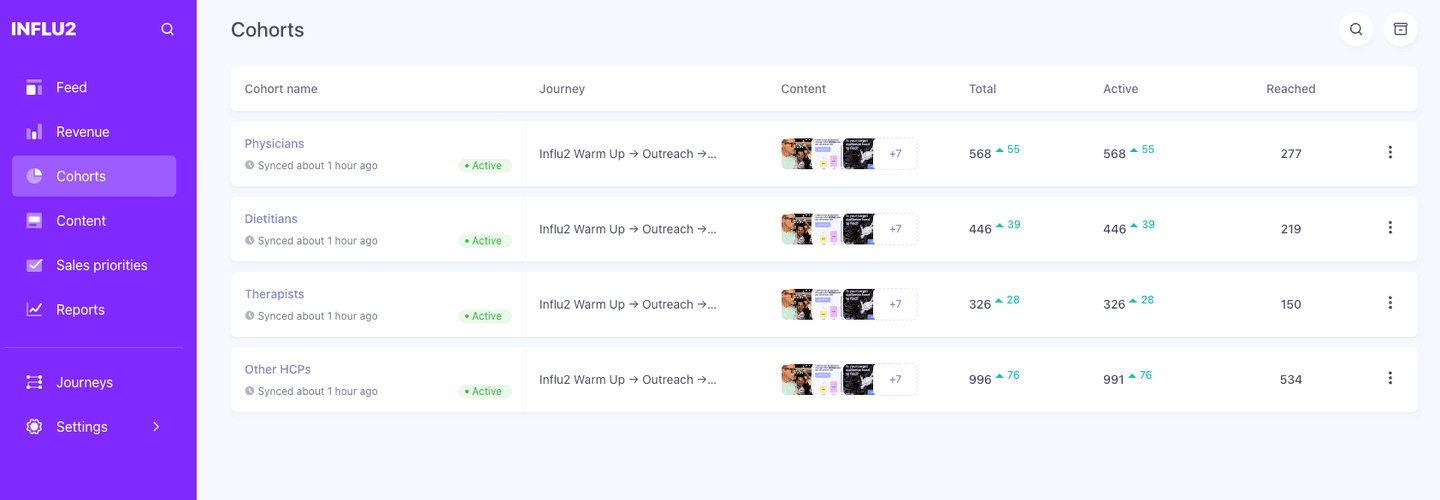
Influ2 is an ABM platform that focuses on contact-level advertising (as opposed to company-level). By integrating with your CRM and your target account list, Influ2 can serve display ads to specific decision-makers. It also reports back on individual engagement.
The approach is more precise than traditional ABM advertising, and often more expensive. But for enterprise deals that require influencing a buying committee, that level of visibility is hard to replicate elsewhere.
Key Features
Person-Based Advertising: Serve ads directly to named contacts in your CRM rather than targeting accounts broadly.
Individual Engagement Reporting: Measure ad engagement at the contact level to understand influence on buying decisions.
Buying Committee Mapping: Coordinate campaigns across multiple stakeholders involved in complex B2B purchases.
Revenue Attribution Insights: Connect ad engagement to pipeline progression and revenue outcomes at the individual level.
Pricing
Custom. Best suited for enterprise budgets.
Pros
Unmatched precision for targeting specific individuals rather than account clusters
Engagement data maps directly to contacts in your CRM
Provides visibility into how specific decision-makers engage with campaigns
Cons
Expensive relative to traditional ABM ad platforms
Best suited for small, high-value account lists
Ready to Upgrade Your ABM Program?
There's no shortage of Demandbase alternatives out there. But not all of them move you in the right direction. For teams who need person-level insights, settling for a tool that only surfaces account data is just trading one gap for another.
RB2B cuts straight to that problem by going beyond account intent to identify the individual on your site. You get contact data, including name, job title, and LinkedIn profile pushed directly to Slack the moment they land on your site.
It also integrates with Demandbase rather than replacing it, so you keep everything you've already built while adding a layer of visibility you didn't have before. Want to see it in action?
Not exactly. RB2B's company-level identification is actually powered by Demandbase, which makes them more complementary than competing. Where Demandbase focuses on account intelligence and ABM orchestration, RB2B specializes in identifying the specific person behind each visit. Many teams run both together for that reason.
2. What's the Difference Between Account-Level and Person-Level Data?
Account-level data operates at the company level, telling you that a business like Acme Corp has been showing interest in your product category.
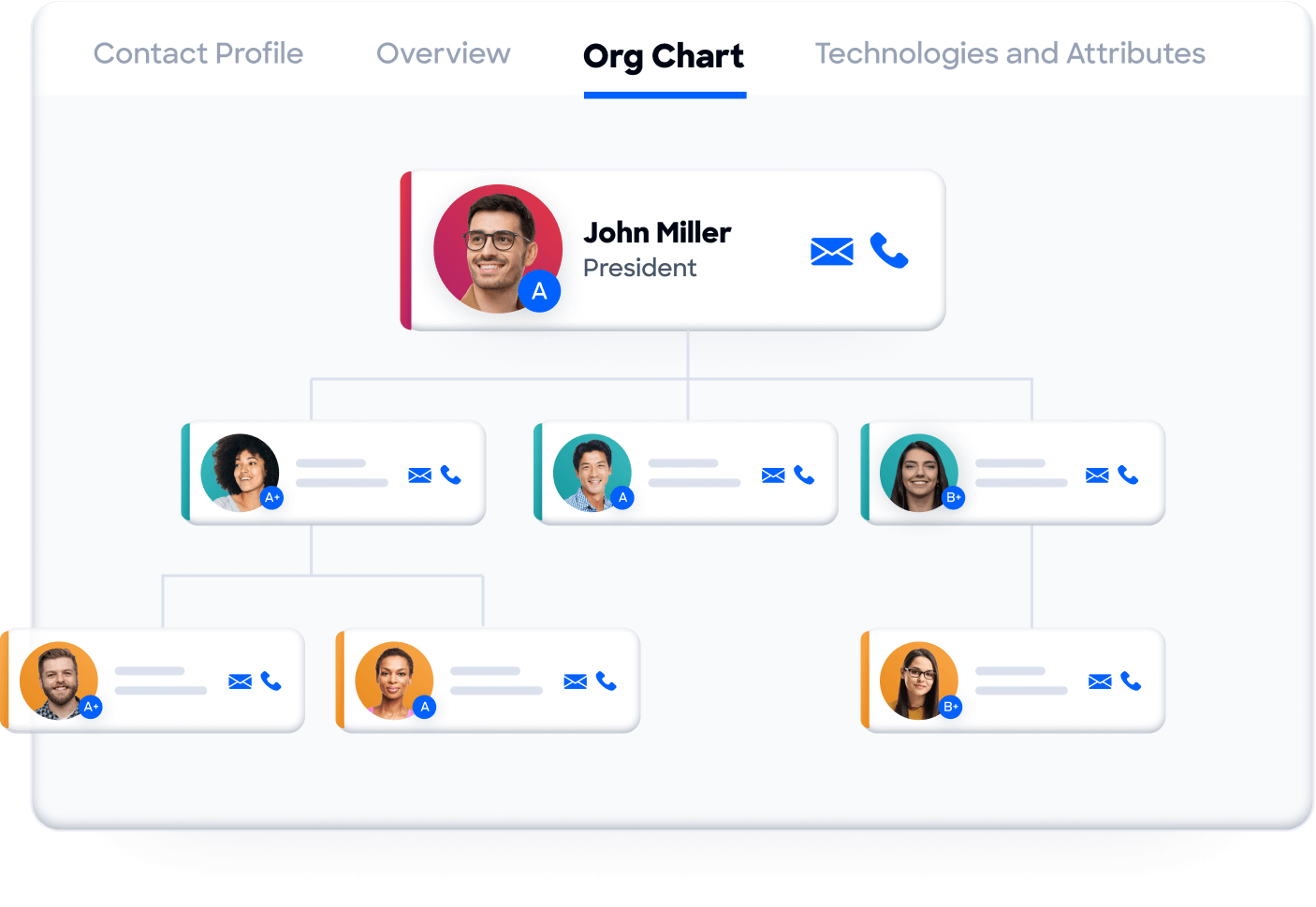
Person-level data goes a layer deeper, identifying the actual individual behind that activity. So instead of a company name, you have Jamie Chen, VP of Marketing at Acme Corp, who visited your pricing page twice this week. That extra layer of detail makes it easier for sales teams to know who to reach out to and when.
3. Do I Need a Demandbase Alternative or Demandbase Complement?
It depends on your situation. If you have Demandbase and wish it told you more about individuals, you need a complement stacked on top. Something like RB2B. However, if Demandbase is out of budget range or too complex for your team size, you need an alternative.
4. Can I Use Multiple Tools from This List Together?
Absolutely. Most sophisticated go-to-market teams do. A common combination: RB2B for real-time person-level visitor ID and Demandbase for company level tracking. The key is making sure your CRM sits in the middle, and all your tools feed into it cleanly.
This guide covers ten sales prospecting techniques for B2B sales and marketing teams, from referrals and account-based prospecting to website visitor identification. Learn when each method works, how to apply it, and which signals deserve a closer look. The goal is more qualified conversations and booked demos, with less time spent on poor-fit contacts.
Lead routing best practices go beyond assigning leads to reps. The goal is to route the right leads with the right priority. Score on ICP fit and real-time intent, then act fast. High-intent buyers reach a rep first, and conversion rates climb.
High-intent B2B leads need follow-ups tied to their behavior, not a fixed cadence. This library gives you seven sales follow-up email templates for real buying signals. Each one maps to an action like a pricing visit or repeat session. Match the message to the moment, and replies climb.