
RB2B AI: ASK US ANYTHING
Most B2B sales and marketing teams still rank potential customers (leads) using fixed factors such as the person’s job title or the size of their company. They also rely on basic activity signals, like whether someone opened an email or downloaded a whitepaper, to decide how interested that lead might be. The problem is that this approach focuses too heavily on ICP fit on paper, rather than actual buying behavior. Thus, a more modern approach to lead scoring is required that solves this issue and helps your team prioritize the prospects most likely to convert.
If you're building or optimizing your team's outreach, ABM, or GTM strategy, visit the RB2B blog. We regularly publish guides based on insights from our experts to help B2B teams maximize their time, focus on the right leads, and grow revenue more efficiently.
Effective lead scoring helps B2B teams focus on prospects who are most likely to buy, combining an ideal customer profile (ICP) fit with real-time engagement signals. By tracking high-intent website actions and prioritizing behavior over static demographics, teams can identify genuinely interested leads.
They can also reduce wasted outreach, and align marketing and sales around the same definition of quality leads. In this article, we’ll share some of the best lead scoring practices to ascertain your team spends time where it matters most!
The sales vs. marketing lead disconnect is a familiar story. Marketing teams pass leads to sales that they consider high quality, only for sales to reject them as unusable. Meanwhile, marketing celebrates growing SQL numbers, while sales complain that the so-called "hot leads" rarely go anywhere.
The problem isn't that either team is bad at their job. But the real issue is that the criteria used to evaluate leads often fail to accurately capture buying intent. Most traditional lead scoring models overweight static demographic data and underweight real-time buyer behavior. The result is false hot leads that look great on paper but are actually far from the end of their buying journey or not even considering buying at all. This creates two major problems:
For example, a traditional scoring model may prioritize company size and senior titles, so a VP from a 5,000-employee company might rank higher even with minimal engagement. Meanwhile, a Head of RevOps at a 200-employee SaaS company who shows strong buying intent could be ranked lower simply because they:
In reality, the second prospect is showing far stronger buying signals. But the scoring system focuses more on the lead’s profile (like job title or company size) instead of their actual behavior. Due to that, strong buying signals, such as frequent visits or meaningful engagement, are often given too little importance or ignored entirely. As a result, genuinely high-intent prospects can be misclassified as cold leads.
The rest of the article explains why traditional lead-scoring methods are no longer effective and why businesses need a more modern approach. It will also show how to focus on real buying signals by using website visitor identification tools like RB2B.
At RB2B, we built a person-level website visitor identification tool to help B2B teams identify and score the individuals visiting their websites. Today, more than 1,500 B2B teams use RB2B to uncover high-intent visitors and prioritize the leads most likely to convert.
Our daily interactions with customers and prospects give us direct insight into the challenges B2B teams face with ABM and sales outreach. We especially see how difficult it is for teams to identify truly high-quality leads.
The insights in this article are based on the patterns, challenges, and feedback we consistently observe from teams striving to improve how they capture and score leads.
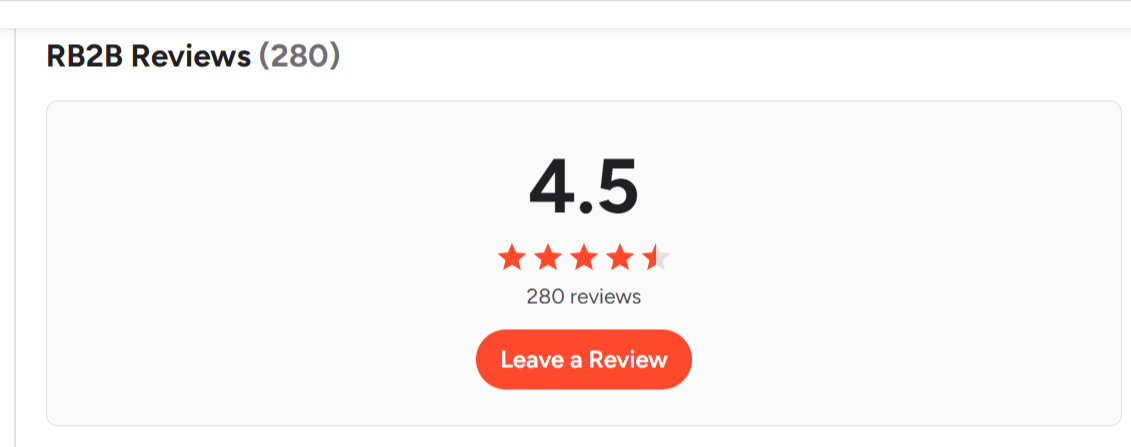
Besides, if you prefer reviews from real users, RB2B also holds a 4.5/5-star rating on G2. This reflects the positive experiences of the many teams using our platform to optimize their lead intelligence workflows.
Lead scoring is the process of ranking leads based on their likelihood to become customers. Scores, often ranging from 1 to 100, are typically calculated using a combination of:
By scoring every lead, B2B teams can identify sales-ready prospects, align marketing and sales efforts, and prioritize outreach. The ultimate goal is to help sales focus on buyers showing real purchase intent.
Lead scoring has evolved alongside marketing and sales technology. Initially, it focused primarily on identifying leads that fit the ideal customer profile (ICP). But with marketing automation, teams began tracking additional parameters like email opens and website downloads and incorporating them into lead scores.
Today, tools like RB2B make it possible to track person-level website activity, giving teams deeper insight into which prospects are actively evaluating their product. Yet most B2B teams remain stuck in the older model. They rely on signals that may not reflect actual buying intent, while ignoring the behaviors that truly indicate a prospect is ready to purchase.
Lead scoring provides numerous benefits for B2B sales and marketing teams. Some of these benefits include:
In sales, timing is critical. When lead scoring is done well, it helps your team identify prospects who are actively researching your product or solution. This allows your team to reach out at the right time, increasing engagement and reducing the chance that competitors win those leads.
Accurate lead scoring ensures reps spend their time engaging with leads that are actually ready to buy, rather than chasing cold prospects. This not only improves conversion rates but also boosts rep confidence and morale.
High-intent leads convert more frequently. By prioritizing these leads, your team maintains a healthy pipeline of prospects ready to move through the funnel with the right interactions.
Lead scoring creates a shared understanding of what constitutes a qualified lead. This alignment reduces the MQL–SQL disconnect, prevents sales from complaining about "low-quality" leads, and stops marketing from feeling frustrated when leads slip through the cracks.
By focusing on high-intent prospects, teams can accelerate conversions, improve pipeline efficiency, and ultimately generate more revenue.
Many B2B teams are still stuck in stage 2 of lead scoring evolution and have not yet adopted behavior-based scoring. Here's why this limits their effectiveness:
Traditional lead scoring models mainly look at demographic details such as job title, company size, or industry. They often ignore strong behavioral signals, like repeated website visits, pricing page views, or demo requests, which can show real buying interest.
For example, you sell a content operations tool. A demographic-based scoring model might assign points like this:
A VP of Marketing at an enterprise company might subscribe to and open your email out of curiosity. Traditional lead scoring would give them full points, categorize them as a hot lead, and push your sales team to engage. This makes you waste time on someone who isn't actively looking to buy.
A content manager at a mid-size retail company could be actively researching your product. Even with behaviors like visiting the pricing page three times in a week or reading use-case articles, they might still score very low. Since they don’t match the typical “VP-ish” profile, they can be overlooked in your CRM. As a result, the lead may never reach your sales team, or arrive too late, letting a competitor capture it.
Traditional lead scoring usually considers high-intent behaviors, like pricing page visits, demo requests, or integration page views, as minor signals. These actions are assigned far fewer points than ideal customer profile (ICP) demographics, even though they indicate strong buying intent. For example, a typical lead scoring model scores behavior signals like this:
Even if a lead isn’t a perfect ICP fit, traditional scoring may rank them lower than a perfect demographic match with no real buying intent. So, when a prospect reads blog posts, visits the pricing page, and reviews integration details multiple times, they’re often not recognized as high-value leads.
Buyer behavior evolves, but many lead scoring systems do not. B2B teams often build a scoring model once, never update it, and assume it will remain accurate over time.
For example, five years ago, whitepaper downloads were considered strong buying signals. Today, pricing page visits, product comparison searches, and demo requests are stronger indicators of intent.
If scoring models aren't updated, they fail to capture the signals that matter most today, leading to misclassified leads and missed opportunities.
Most traditional lead scoring and routing tools send updates too late, delaying sales outreach and reducing the likelihood of conversion.
For example, a prospect might visit your pricing page at 8 a.m. If your system only identifies, scores, and alerts your team five hours later, the opportunity to engage while they’re actively evaluating your product is likely lost.
The backbone of effective lead scoring is balancing the two pillars that define a lead:
1. Lead Fit (Who they are),
2. Buyer Intent (What they do).
Proper scoring requires weighing both factors, so your team can prioritize the right leads and avoid wasting effort on prospects that aren't ready to buy.
Lead fit evaluates whether a prospect matches your Ideal Customer Profile (ICP). Common fit factors include industry, company size, geography, job title, and tech stack.
For example, if your target ICPs are revenue leaders at B2B SaaS companies with 50–500 employees, a RevOps manager at a 150-employee SaaS company scores high. In contrast, a student researching marketing automation would score low, even if they show interest in your product.
It's important to include all ICPs your company targets to ensure your scoring model doesn't dismiss valid leads. You can also assign different point values to prioritize certain ICPs. For example, you may score a VP of sales 20 points and a sales manager 10 points.
Intent measures actual buying behavior. High-intent behaviors signal that a prospect is actively researching or evaluating your product. Examples of intent signals include pricing page visits, demo requests, integration page views, ROI calculator usage, and repeat visits.
P.S: Separating fit and intent is critical. Overweighting one over the other can generate false positives, categorizing leads as ready when they're not, or ignoring high-intent prospects from smaller or atypical companies. A guiding principle is to note the following:
Most high-value behavioral signals occur on your website, from demo page visits and content downloads to webinar registrations, pricing page views, and demo requests.
When teams generate high traffic but don't know who is behind it, these signals are lost, along with critical insights into buying intent. Without this data, lead scoring is often oversimplified because teams cannot accurately weigh the behaviors that indicate a prospect's readiness to buy.
By tracking and connecting every website activity to a specific person or company, B2B teams gain a clear picture of engagement. This allows them to combine ICP fit with actual buying intent, creating a dynamic and highly accurate lead scoring system. Website visitor identification tools like RB2B make this process seamless, ensuring no high-intent prospect goes unnoticed.
Not all website actions are equal. Some indicate casual interest, while others signal active purchase research. For accurate lead scoring, website actions can be classified as low, medium, or high intent, with corresponding scoring weights:
These actions typically indicate early awareness or curiosity rather than buying intent. Examples include reading blog posts, viewing the careers page, or browsing the homepage. These can be scored 5 points per action.
Scenario: A visitor reads two blog posts and browses the homepage. While they are engaging with your content, this behavior alone indicates early awareness, not readiness to buy.
These behaviors suggest that a prospect is in the evaluation stage. Examples include downloading guides, whitepapers, watching product videos, or visiting feature pages. These can be scored 15 points per action.
Scenario: A prospect downloads a product guide and watches a demo video. They are showing interest and evaluating your solution, so sales may prepare to nurture them further.
High-intent actions should carry the highest weight in scoring, as they strongly indicate purchase readiness. Examples include pricing page visits, demo requests, repeat website visits, or integration page views. These can be scored 25+ points per action.
Scenario: A RevOps lead visits the pricing page, checks integration documentation, and requests a demo. Combined, these high-intent actions signal that a prospect is ready for direct sales engagement.
Now that you know why monitoring website behavior is important and which actions show buying intent, you have the foundation for better lead scoring. The next step is to put a lead-scoring system into practice that actually identifies high-value prospects. Here are 11 best practices to help with that.
Marketing–sales misalignment often occurs when there is no shared definition of what qualifies a lead to pass to sales. Before setting up a lead scoring model, both teams should collaborate to define what actually signals a sales-ready prospect. Start by answering key questions like:
This is also the stage where teams should analyze past deals to identify patterns in buyer behavior. For example:
These insights help ensure your scoring model is based on real customer behavior rather than assumptions. When sales contributes insights from actual pipeline activity, the resulting scoring system reflects how deals truly happen, not theoretical marketing metrics. A strong lead scoring model is always data-backed, not based on guesswork.
When scoring leads, avoid relying on a single combined score that merges demographic and behavioral points into one number. Instead, track separate scores for lead fit and buyer intent, alongside the final score.
This allows your team to see not just how highly a lead is scored, but why. In other words, you can quickly identify whether a lead's score is driven by strong ICP alignment or by actual buying behavior.
Without this breakdown, two leads with the same total score may appear equally valuable, even though their purchase readiness is very different. For example, suppose you have two leads:
Lead A:
Lead B:
If your team only looks at the final score, both leads would appear equally valuable. In reality, Lead B shows significantly stronger buying intent and is far more likely to convert.
By separating fit and intent scores before calculating the final lead score, sales teams gain deeper visibility into each prospect's readiness to buy. This allows them to prioritize leads that demonstrate genuine purchase intent.
Many traditional lead scoring models prioritize demographic fit over behavioral signals. As a result, leads that perfectly match the ICP on paper can receive high scores. Meanwhile, prospects who demonstrate strong buying behavior but don’t fully fit the demographic profile may score lower.
This defeats the purpose of lead scoring. It allows ready-to-buy prospects to slip through the cracks while sales teams focus on ideal profiles that may not actually be in the market.
To avoid this, assign higher scores to intent-driven actions like demo requests, pricing page visits, repeat visits, and integration page views. In this model, demographic fit becomes the baseline qualification, while behavioral intent determines how urgently a lead should be prioritized.
For example, traditional scoring often gives more points to job title or company size than to actual actions. Instead, you should assign a higher weight to intent signals, like pricing page visits, than to demographic attributes.
It's also important to ensure the scores reflect the relative strength of each behavior. Low-intent actions, like reading a blog post, should carry fewer points, while high-intent actions, like requesting a demo, should receive significantly higher scores.
By prioritizing intent signals, your scoring model highlights prospects who are actively researching your product. This ensures you focus on leads closer to purchasing, instead of just those who fit the ideal customer profile on paper.
Buyer intent fades over time. A prospect who showed interest last week may no longer be actively researching today. Without accounting for this, your lead scoring model may continue to prioritize stale leads while overlooking prospects who are currently ready to buy.
To address this, introduce score decay, which gradually reduces the points assigned to behavioral actions over time, especially if those actions are not repeated. This helps ensure your sales team focuses on recent, relevant intent signals rather than outdated activity.
For example, a visit to a pricing page might initially receive 30 points on the day it occurs. If the prospect takes no further action, that score could decrease to 20 points after two weeks and 10 points after three weeks.
Score decay keeps your lead scoring model aligned with real-time buyer behavior, ensuring that leads showing current engagement are prioritized over those whose interest has likely faded.
Speed matters in sales. Quickly identifying, scoring, and routing leads gives your team a significant speed-to-lead advantage. Industry research shows that 30–50% of deals go to the vendor that responds first. But waiting even just 10 minutes to respond can dramatically reduce the chances of converting a lead.
To capitalize on this, your lead scoring system should update in real time. As soon as a prospect performs a high-intent action, like visiting the pricing page, requesting a demo, or repeatedly returning to the site, the system should immediately:
Real-time scoring ensures that high-intent prospects are identified and routed instantly, allowing your sales team to reach out while the buyer is actively researching solutions.
Your lead scoring model shouldn't be a set-it-and-forget-it system. Buyer behavior evolves over time as markets shift, customer needs change, and new technologies or competitors enter the landscape. If your scoring model isn't updated regularly, it can quickly become outdated and misaligned with how your buyers actually behave.
To keep your scoring system effective, conduct regular reviews, ideally quarterly. During these reviews, evaluate whether your model still reflects:
Regular updates keep your lead scoring model aligned with the most relevant signals. This helps surface the most valuable prospects instead of relying on outdated assumptions that no longer reflect reality.
Many website visitor identification tools only connect website activity to company-level data. While this can reveal which organizations are visiting your site, it often leaves you guessing who within the company is actually engaging.
This can create confusion, especially in larger organizations where multiple teams may interact with your website. For example, a visit from a large enterprise account might seem valuable, but the activity could be coming from someone outside your target buyer profile.
Instead, prioritize tools that identify person-level activity, not just company-level engagement. Solutions like RB2B allow you to see exactly which individual is interacting with your website, making it easier to determine whether the visitor matches your ICP.
For instance, rather than just knowing that Company X visited your site, you can see individual actions. You might discover that Jane, the CMO, viewed your pricing page and downloaded a product guide, clear signals from a qualified decision-maker. This level of visibility helps ensure that your lead scoring model prioritizes the right people, not just the right companies.
Effective lead scoring doesn't only add points for positive actions. It also subtracts points for signals that indicate a lead is unlikely to convert. Incorporating negative scoring helps prevent sales teams from spending time on unqualified prospects.
Common negative signals include activity from internal traffic, competitors, students, or leads outside your target ICP or regions. By assigning negative values to these signals, your scoring model becomes more accurate and better aligned with real sales opportunities. For example:
For example, a lead who downloads a newsletter using a Gmail address might initially appear engaged and accumulate positive points. However, if your lead scoring model treats personal email domains as a negative signal, the lead's score will be adjusted accordingly. This helps your team avoid prioritizing prospects unlikely to become customers.
In B2B buying journeys, purchasing decisions rarely involve just one person. As prospects move closer to making a decision, multiple stakeholders from the same company often participate in the evaluation process.
For this reason, it's important to track engagement at the individual level while also aggregating those signals at the account level. This allows your team to see both who is engaging and how much overall interest exists within a company. For example, within the same company:
Individually, each action may appear minor. However, when these interactions are viewed together, they indicate serious account-level product evaluation.
By aggregating individual activities into an overall account engagement score, sales teams can see the full picture of organizational interest. This helps them identify when a company is actively researching a solution and may be ready for outreach.
Lead scoring isn't just about identifying sales-ready prospects. It can also power marketing nurture workflows. By integrating lead scoring with your automation tools, you can act on leads in real time, without manual data entry or cross-tool copying.
For example, a website visitor identification tool can reveal ICP accounts and individual personnel, then feed that data into a lead enrichment tool. This setup allows you to add demographic and behavioral data, score the leads dynamically, and then route them automatically to your CRM, Slack, or Teams.
With this system, leads receive the right content at the right stage. A simple automation workflow might look like:
By aligning lead scoring with automated nurture workflows, your team ensures timely engagement, guiding prospects toward conversion while maximizing efficiency.
One of the biggest reasons lead scoring systems fail is overcomplication. Some models try to track hundreds of rules, dozens of point combinations, and unclear thresholds. This makes them difficult to maintain and even harder for sales and marketing teams to act on.
The best approach is to focus on a handful of strong, high-value signals that truly indicate buying intent. These might include ICP fit, pricing page visits, repeat website visits, demo requests, product page engagement, and integration research. By concentrating on the actions that matter most, your scoring model remains manageable, interpretable, and accurate.
A simpler model lets your team quickly identify and prioritize the most promising leads without unnecessary complexity. At the same time, it still captures the signals that truly show a prospect is ready to buy.
RB2B improves lead scoring by connecting real-time website behavior with person-level website visitor identification. This gives your sales team clear insights into who is actively evaluating your product. It tracks each visitor's actions, like visits to hot pages. Then, tie these actions to their name, role, and company, providing a complete picture of both fit and intent.
For example, a VP of Marketing at a 500-employee company might initially have a lead score of 60 based only on demographic data. But once RB2B captures their activity, for example, visiting the pricing page multiple times. The lead score can update to 95, signaling that this prospect is actively researching solutions and ready for engagement.
By automatically feeding this enriched data into your CRM, Slack, or Teams, RB2B ensures your sales team can focus on high-intent leads. It also ascertains your team prioritizes demo-ready prospects, and avoids chasing contacts who are unlikely to convert. This makes lead scoring dynamic, actionable, and much more accurate.
Click here to learn more about how RB2B works.
Lead scoring works best when it combines ICP alignment with real-time behavioral insights. Using tools like RB2B to track high-intent actions helps B2B teams focus on ready-to-buy leads, cut wasted outreach, and align sales and marketing. Follow the lead scoring best practices mentioned earlier, and your team will spend time engaging prospects who are actively evaluating your product, boosting revenue growth.
Alert your reps, start automated outreach, and add to lead score in under five minutes.

