
RB2B AI: ASK US ANYTHING
If you’re evaluating Demandbase, you’re likely exploring a powerful account-based marketing (ABM) and go-to-market (GTM) engine for B2B. And you’re probably wondering the big question:
How much is this actually going to cost?
In this guide, I’ll break down how Demandbase pricing works, what features you get at different levels, where it shines (and where it falls short), and how it compares to alternatives like RB2B, Clearbit, and Leadfeeder.
Demandbase is one of the most established names in ABM. Its entire platform is built to unify sales and marketing using account-level intelligence, intent data, AI-driven orchestration, and audience activation.
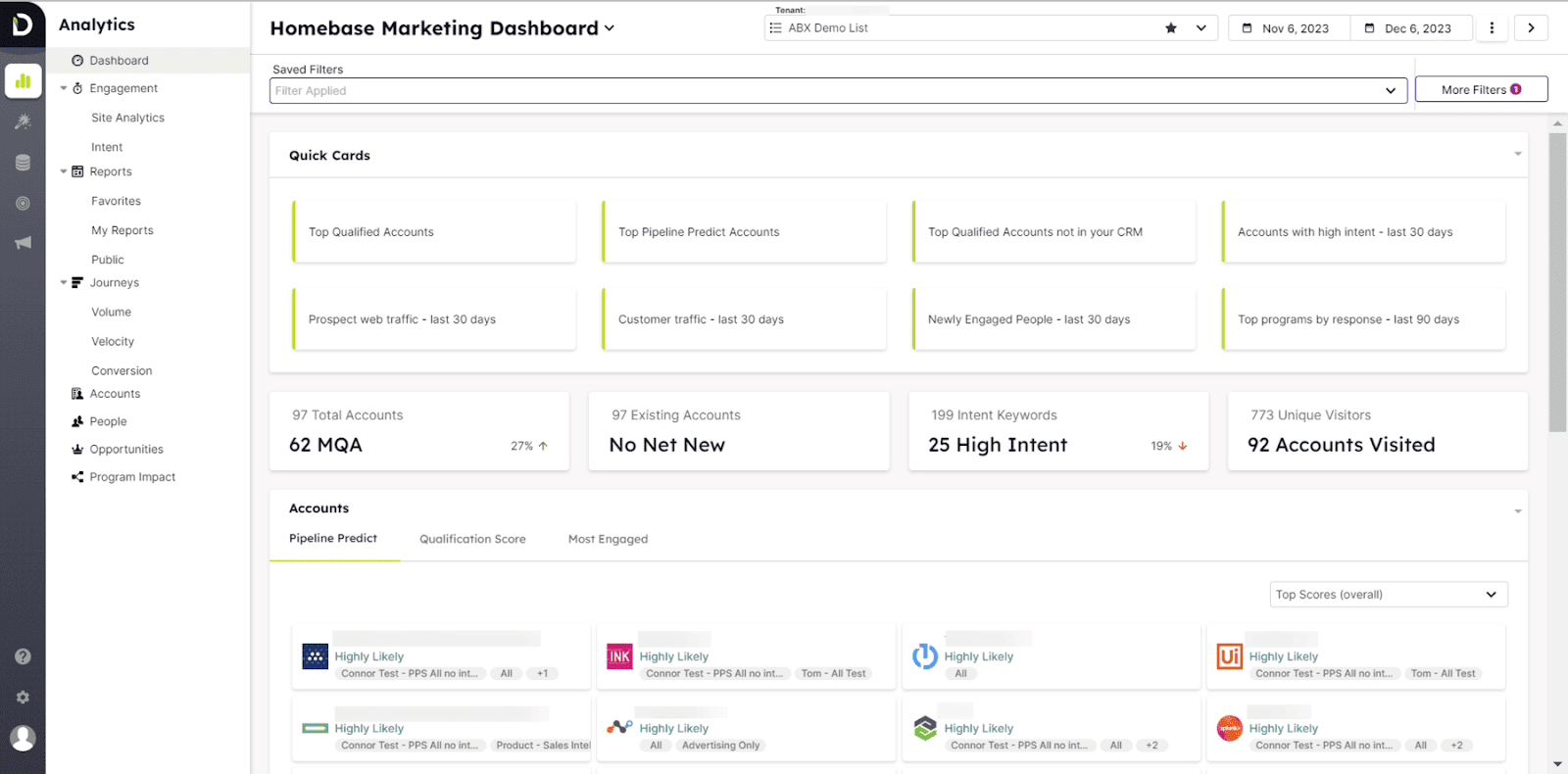
Rather than simply telling you which companies visit your website, Demandbase gives you:
In short: Demandbase isn’t just a “website visitor” tool. It’s a full enterprise GTM engine.
Demandbase does not publish standard pricing tiers. All pricing is quote-based and customized to each business.
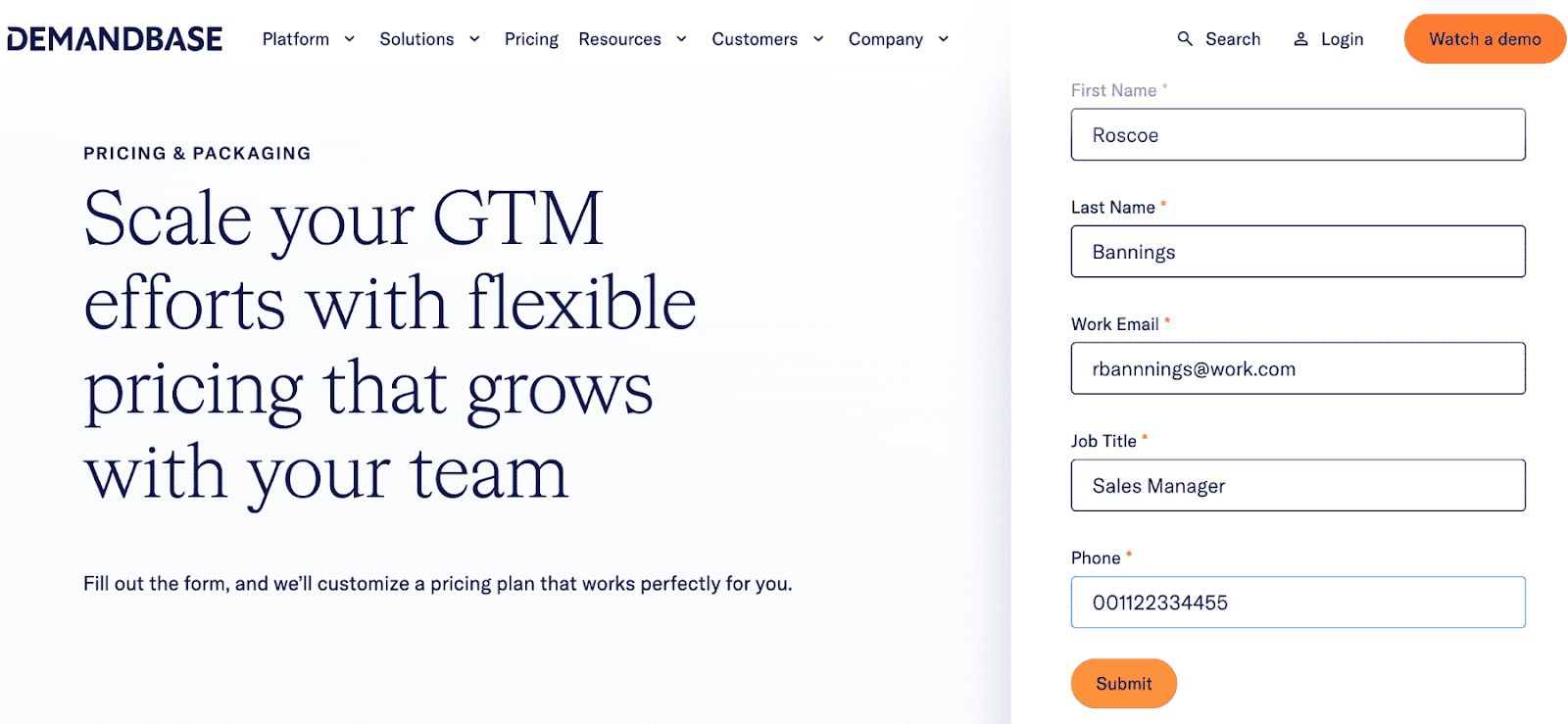
But based on analyst reports, customer reviews, and public marketplace listings, here’s what most companies can expect:
Demandbase pricing increases significantly with:
Demandbase is modular, so features vary by contract size. Here’s a realistic breakdown.
Best for basic ABM programs:
Adds more sophisticated ABM capabilities:
Where the full power unlocks:
After extensive research, I found Demandbase makes sense for a specific type of organization.
You have a defined set of target accounts, multiple personas, and strong alignment between sales and marketing. Demandbase’s intelligence and orchestration features are most valuable in this context.
Because Demandbase’s ad module can be part of the deal, you need to be ready to spend on media, too, not just on software.
Demandbase’s AI agents and predictive scoring can help you prioritize accounts and recommend plays. This is powerful if you have a RevOps or GTM operations team.
If your business operates across geographies, Demandbase’s modular and scalable architecture is well-suited for global GTM.
To get value, you’ll need good data in your CRM, clean segmentation, and probably a dedicated person or team managing your GTM tech stack.
If you only have a handful of target accounts or limited ABM ambitions, Demandbase might be overkill financially and technically.
Custom pricing, media spend, and professional services can make it hard to forecast costs precisely.
If you’re only interested in identifying which companies visit your website, but don’t plan to run ads or do heavy ABM plays, Demandbase may not be cost-efficient.
While Demandbase focuses on account-based intelligence with enterprise pricing, RB2B takes a fundamentally different approach. RB2B provides person-level identification at a fraction of the cost.
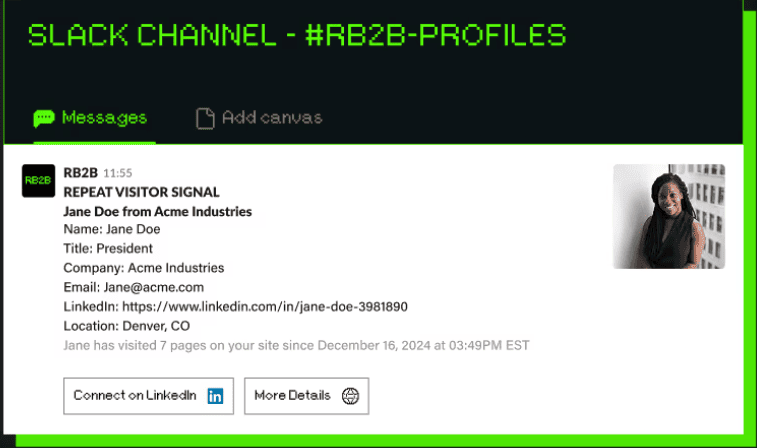
RB2B is a website visitor identification tool that goes beyond traditional company-level tracking to reveal the actual individuals browsing your site. It identifies visitors via cookies, device IDs, IP addresses, and—here's where it gets interesting—Demandbase's Reverse-IP network.
That's right. RB2B has formed a deep partnership with Demandbase to bring you the powerful combination of RB2B's Person-Level Identity and Demandbase's industry-leading Company-Level ID.
What sets RB2B apart is its dual-layer approach:
This means you're capturing 70-80% of your total website traffic. Not just the small fraction that fills out forms.
And the best part? Every paying RB2B customer gets unlimited Demandbase Company-Level resolution included. You don't pay separately for Demandbase's reverse-IP technology. It's built right into RB2B.
Want to compare Demandbase pricing and features to RB2B’s?
Check out the tables below for a quick overview.
If you’re evaluating Demandbase, you’re probably also looking at other ABM or visitor intelligence providers. Below, I compare Demandbase with some common alternatives:
Demandbase and 6sense are both enterprise-grade ABM platforms with predictive analytics and intent data capabilities. As covered in your second article, 6sense is extremely powerful but comes with a hefty price tag that puts it out of reach for many teams.
Pricing: Both platforms typically start in the $30,000–$100,000+ range annually, with 6sense often positioned at the higher end.
Verdict: Demandbase offers strong account identification and advertising orchestration with a slightly more accessible entry point.
Leadfeeder provides simpler IP-based website visitor tracking that's great for small-to-mid B2B teams. It focuses on company-level identification without the full ABM platform complexity that Demandbase brings.
Pricing: Leadfeeder starts around $139/month for basic plans, while Demandbase requires enterprise-level investment ($30,000+/year).
Verdict: Leadfeeder is ideal for teams that just need visitor tracking without the bells and whistles of enterprise ABM tools.
Demandbase remains an exceptional enterprise ABM platform. But for most small to midsize B2B teams, it’s financially and operationally unrealistic.
RB2B stands out for three big reasons:
RB2B gives you:
Demandbase, by contrast, starts at $30,000+/yr, requires annual contracts, and often includes additional spend requirements.
Demandbase identifies companies.
RB2B identifies people with:
You can instantly see who visited your site and why.
For sales teams, this is a massive advantage over account-level intel alone.

While Demandbase requires:
RB2B is designed for:
It integrates with CRMs and MAPs without heavy implementation or revamping your GTM motion.
Demandbase remains a powerful enterprise ABM platform. Its comprehensive feature set and dedicated support make it appealing for large organizations with complex go-to-market strategies and substantial budgets.
However, its enterprise-only pricing, lengthy implementation cycles, and platform complexity make it impractical for small to midsize teams. I found that many growing B2B companies simply can't justify the investment when they need quick wins and immediate ROI from their visitor intelligence tools.
If you're looking for a modern, cost-effective alternative that combines visitor identification with person-level insights and actionable intelligence, RB2B is worth a serious look. You get the core value of knowing who's visiting your site without the enterprise bloat, procurement cycles, or six-figure commitments.
For teams that need to move fast and prove value quickly, RB2B delivers what Demandbase takes months and massive budgets to achieve.
The RB2B setup process is straightforward—you only need to:
The basic version is 100% FREE to use, and you can explore additional features with a 30-day Pro trial. Get RB2B's Person-Level Website Visitor ID tool today and unlock detailed lead insights within minutes.
Alert your reps, start automated outreach, and add to lead score in under five minutes.

