
Quick Summary
Teams consider Opensend alternatives due to its e-commerce-first model and steep starting price. RB2B leads the list, identifying individual B2B visitors by name, job title, and LinkedIn profile, delivered to Slack in real time, with a free plan to start. CustomersAI and Retention.com also feature.
Top 3 Opensend Alternatives at a Glance
Looking for Website Visitor Identification Software Designed for B2B Teams?
Opensend has carved a niche in e-commerce visitor identification. Install a pixel, capture anonymous visitor emails, push them into Klaviyo, and retarget through automated flows. For DTC brands, it works.
But not every business is a Shopify store selling consumer goods. If you are a B2B revenue team trying to identify decision-makers visiting your site, not just email addresses for drip campaigns, Opensend's approach falls short.
Then there is the pricing. For teams still validating whether website visitor identification fits their pipeline strategy, Opensend’s steep entry point is a stumbling block.
This guide covers 10 Opensend alternatives that offer better B2B capabilities, more flexible pricing, and specialized features.
Why Listen to Us?
We built RB2B inside the visitor identification category, which means we've studied every tool on this list not just as competitors, but as products our customers evaluated before switching. These recommendations draw from hands-on testing, hundreds of real user reviews on G2, and direct feedback from B2B sales teams who've used multiple platforms and told us exactly where each one falls short.
This review reflects what we have learned from our own customers and hands-on research into each tool's features, pricing, and real user feedback.
What Is Opensend?
Opensend is a SaaS data platform designed to help website owners identify anonymous visitors, even if those visitors never make a purchase or fill out a form. The platform resolves visitor identities to capture emails and physical addresses, enabling retargeting via email, digital ads, and direct mail.
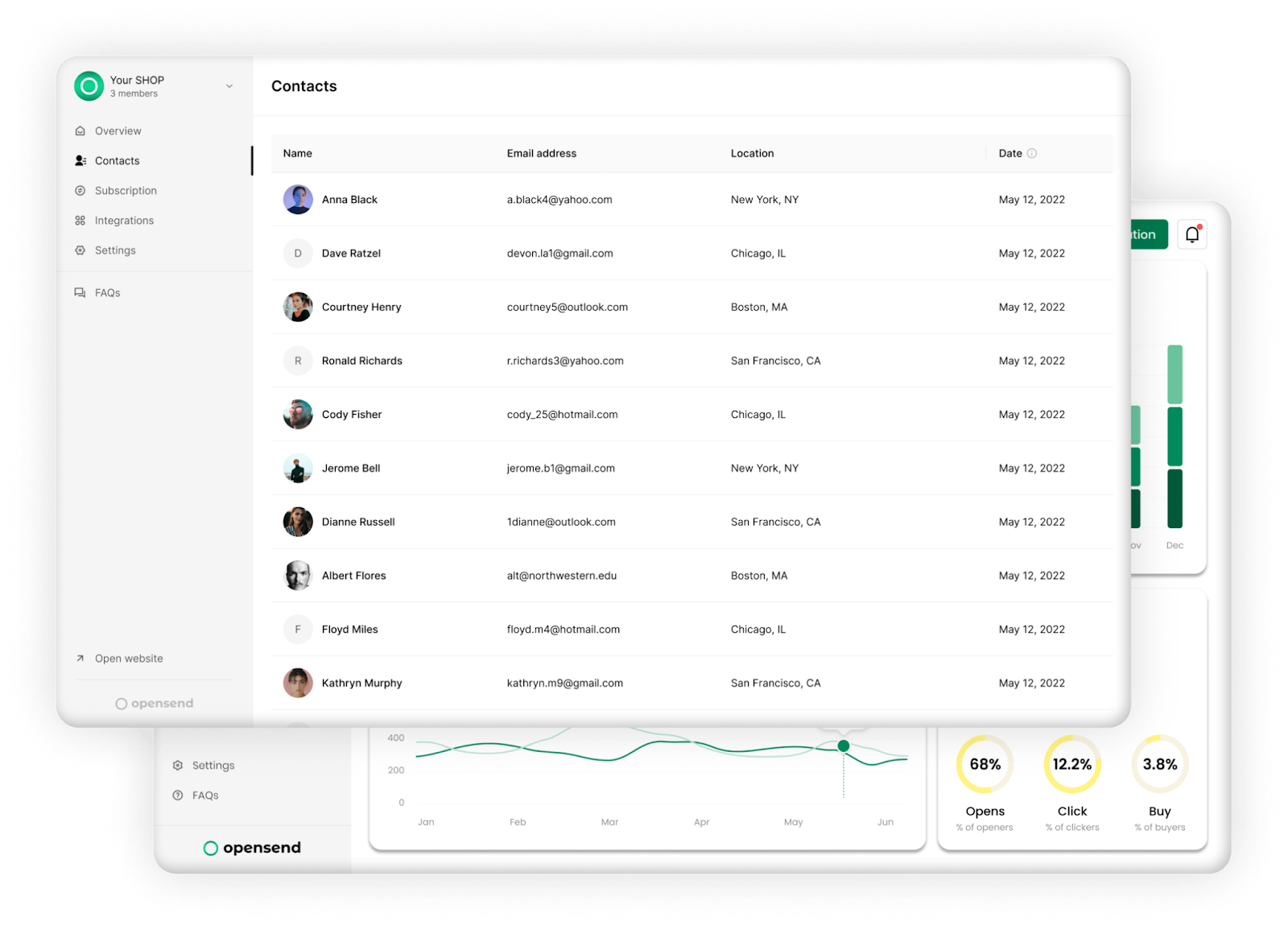
The platform is primarily built for e-commerce and DTC brands, with deep integrations into Shopify and Klaviyo. A tracking pixel uses identity resolution to capture real-time visitor data and route it directly into your marketing workflows.
Key Features
- Connect: Identifies anonymous website visitors and captures their email addresses in real time. Integrates with Klaviyo, Omnisend, and Mailchimp.
- Reconnect: Recognizes returning customers across devices and browsers to maintain consistent engagement, even after cookies expire.
- Revive: Replaces bounced or inactive email addresses with active ones for the same users, keeping your list deliverable.
- Personas: Provides demographic data based on your best customers to refine audience targeting.
Pricing
Pricing starts at $500/month for Tier 1 (2,000+ identities at $0.25 each), $1,000/month for Tier 2 (4,300+ identities at $0.23 each), and $2,000/month for Tier 3 (9,500+ identities at $0.21 each). Enterprise plans are available on request. A $1 two-week trial is offered for new users.
Pros
- Quick setup with hands-on onboarding. No developer needed.
- Granular engagement filters to control lead quality before they hit your list.
- Revive feature replaces bounced or stale emails with active ones for the same users.
- Multi-channel retargeting across email, digital ads, and direct mail.
Cons
- Starts at $500/month with no free plan. Steep for teams still testing the channel.
- Captures mostly personal emails and not business emails or company data.
- Cold leads can hurt deliverability if segmentation isn't handled carefully.
- Narrow integration ecosystem beyond Shopify and Klaviyo.
Why Should You Look for an Opensend Alternative?
Opensend works well for a specific use case: e-commerce visitor identification and email retargeting. But several limitations push teams, especially B2B teams, to explore other options.
1. Limited B2B Capabilities
Opensend was built for DTC and e-commerce. The platform primarily captures personal email addresses (Gmail, Yahoo, etc.) rather than business emails. If your sales team needs to identify decision-makers by name, job title, and company, Opensend simply does not provide that data. For B2B revenue teams, knowing an email address is not enough. You need LinkedIn profiles, job titles, company context, and page-level intent data to prioritize outreach effectively.
2. High Entry Price with No Free Plan
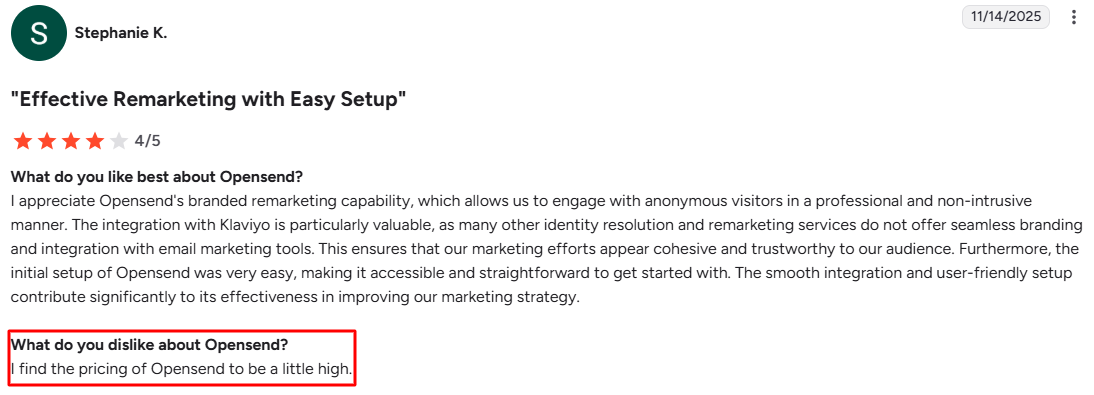
At $500/month minimum, Opensend has one of the higher entry points in visitor identification. There is a $1 two-week trial, but no ongoing free tier. For comparison, several alternatives (including RB2B) offer free plans that let you validate the signal before committing a budget.
On G2, users have flagged pricing as a concern. One reviewer noted: "It can get pricey depending on how much traffic you're driving, so you just want to make sure the quality of your traffic is good."
3. Lack of Detailed Visitor Information
Opensend captures email addresses and basic identifiers, but does not offer deeper visitor context like job titles, company names, or LinkedIn profiles. For B2B teams running account-based strategies, this gap means extra manual research before any outreach. Tools built for B2B, like website visitor tracking software designed for sales teams, provide this context out of the box.
4. Narrow Integration Ecosystem
Opensend integrates well with Shopify and Klaviyo, but if your tech stack revolves around HubSpot, Salesforce, or Slack as primary workflow tools, you may find Opensend's integration options too limited. B2B sales teams typically need visitor data flowing directly into CRM systems and rep notification channels, not just email marketing platforms.
5. Email Deliverability Risks
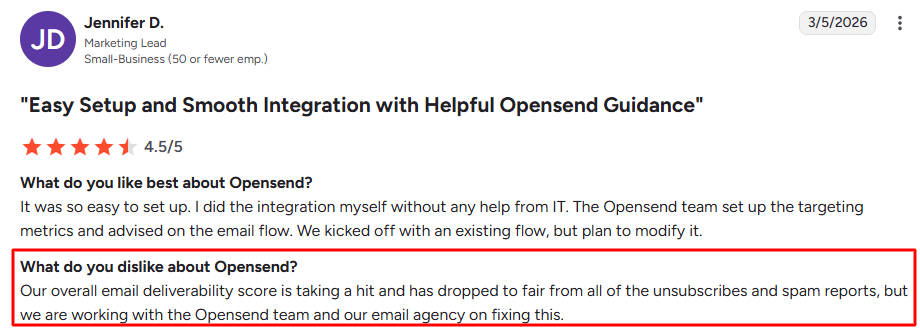
Retargeting visitors who never explicitly opted in can create deliverability problems. One G2 reviewer shared: "Our overall email deliverability score is taking a hit and has dropped to fair from all of the unsubscribes and spam reports."
10 Best Opensend Alternatives in 2026
Here is a quick comparison before we dive into each tool:
1. RB2B
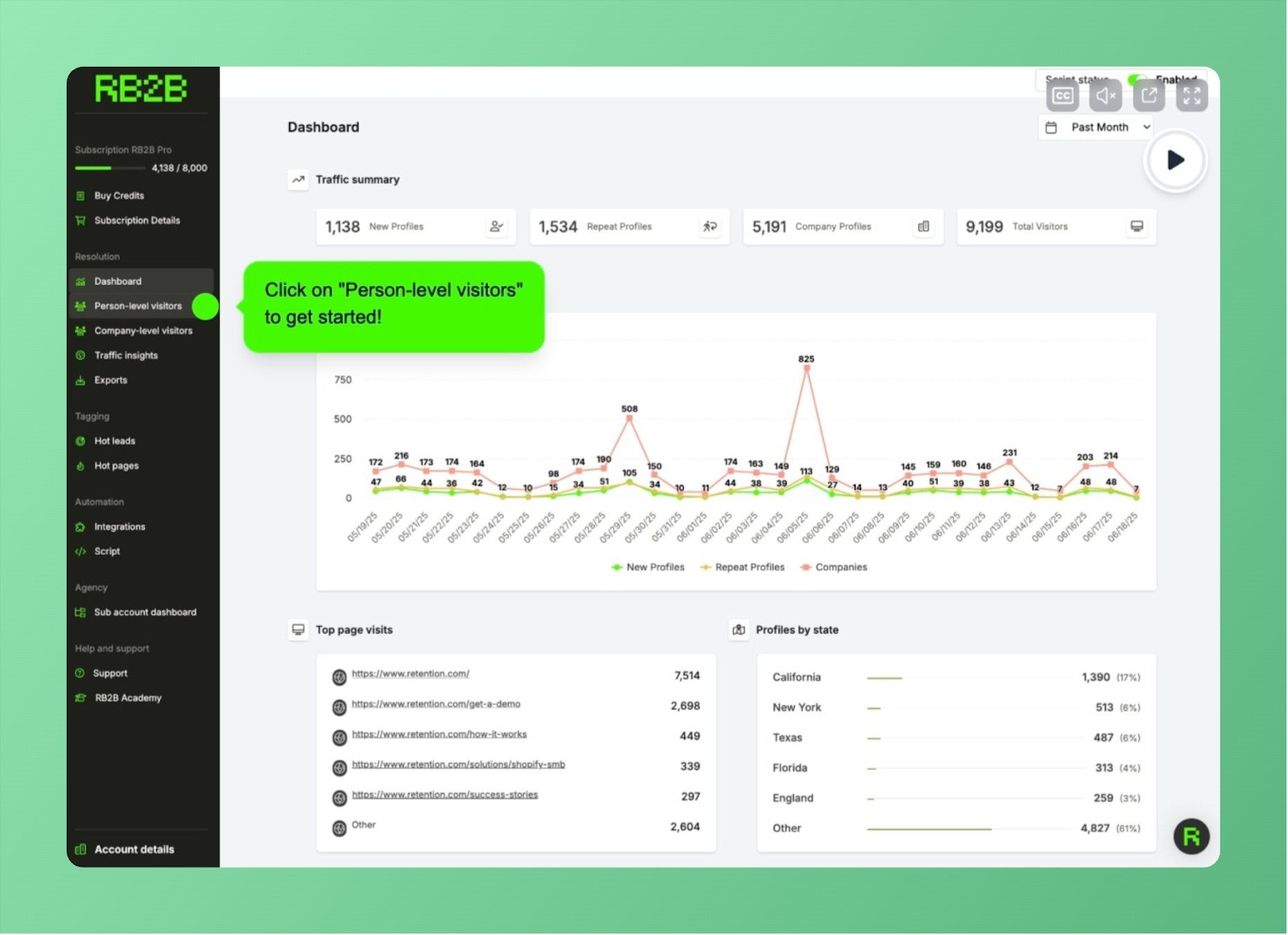
Best for: B2B sales teams that need person-level visitor identification with real-time alerts
RB2B is the strongest alternative for teams that need more than anonymous email addresses. Where Opensend captures personal emails for DTC retargeting, RB2B identifies the actual individual visiting your site, complete with their name, job title, LinkedIn profile, and verified business email.
When a VP of Sales from a target account lands on your pricing page, your rep gets an instant Slack notification with everything they need to reach out. No guesswork. No scrubbing through company-level data to find the right contact. This is the fundamental difference between email-capture tools like Opensend and person-level identification built for B2B pipeline generation.
Key Features
- Visitor Identity Resolution: Identifies individual website visitors by name, job title, LinkedIn profile, and work email for accurate lead attribution and outreach.
- Hot Leads Filtering: Flags visitors matching your ICP criteria automatically so reps focus on the right accounts.
- Real-Time Slack and Teams Alerts: Pushes instant notifications with full visitor context the moment a prospect hits your site.
- Hot Pages Tagging: Lets you tag high-intent pages like pricing, demo, and case studies to prioritize outreach by engagement depth.
- CRM and Workflow Integrations: Syncs with HubSpot, Salesforce, and other tools to feed identified leads into existing sales workflows.
- CCPA-Compliant ID Supported by Demandbase: Person-level and company-level identification is U.S.-only, fully compliant, and powered by industry-leader Demandbase.
- Five-Minute Pixel Install: Lightweight tracking pixel goes live in minutes with no developer needed.
Pricing
- Free: $0/mo for 150 Monthly Resolutions, including Basic Resolution, Company-Level ID, and Slack push.
- Starter: $79/mo for 300 Monthly Resolutions, including Basic Resolution and pushing LinkedIn URLs to Slack.
- Pro: $149/mo for 600 to 2,500 Monthly Resolutions, including Basic Resolution, LinkedIn URLs to Slack, Business Emails, and all integrations.
- Pro+: $199/mo for Premium Resolution, including LinkedIn URLs to Slack, Business Emails, and all integrations.
The Pro plan also includes a 7-day full-featured trial. Check the RB2B pricing page to compare plans in detail.
Pros
- Person-level ID with verified LinkedIn and business email data
- Instant Slack alerts with full visitor profiles
- Built-in lead scoring through Hot Leads and Hot Pages
- 5-minute pixel install, no dev help needed
- Free plan lets you test before committing to a subscription
- US-only person-level ID ensures GDPR compliance
Cons
- Person-level data is US-only. Global visitors resolve at the company level via Demandbase.
2. CustomersAI
Best for: DTC and e-commerce brands running multi-channel visitor retargeting
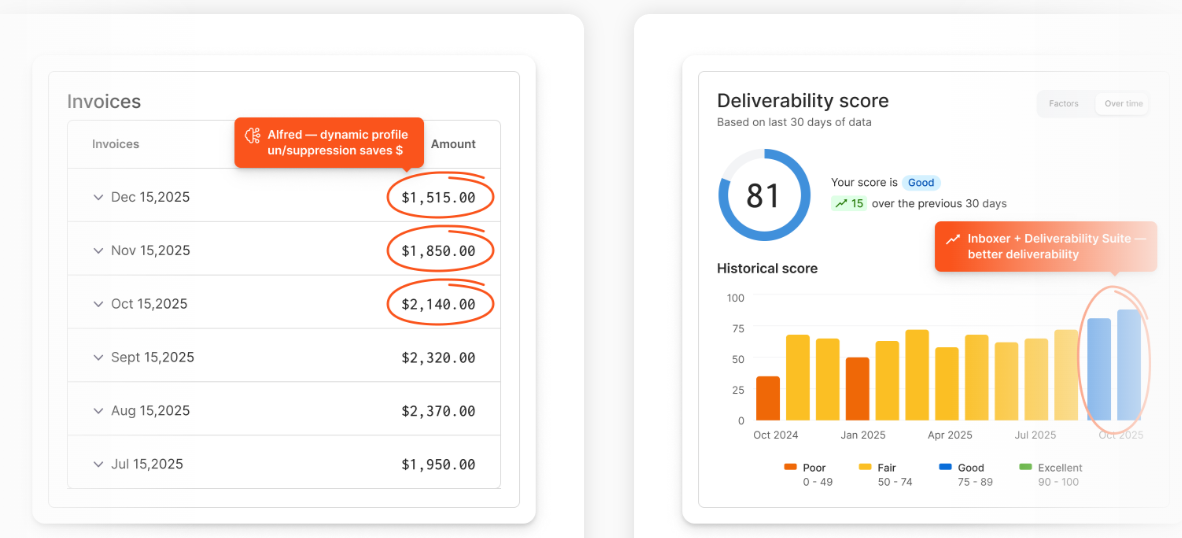
CustomersAI uses an identity resolution pixel to capture anonymous visitor data and retarget them across email, SMS, and digital ads, making it a strong fit for DTC brands. CustomersAI surpasses Opensend in reach by extending retargeting to SMS and paid ads, not just email, providing more touchpoints. Behavioral segmentation helps prioritize high-intent visitors before workflows.
That said, CustomersAI is built for ecommerce retargeting and not B2B pipeline generation. It doesn’t resolve visitors down to name, job title, or LinkedIn profile. If your team needs to know who is on the site, RB2B fills the gap with person-level identification and real-time Slack alerts built for sales workflows.
Key Features
- X-Ray Pixel Identification: Captures anonymous visitor identities using CustomersAI's proprietary pixel technology.
- Multi-Channel Retargeting: Reaches identified visitors across email, SMS, and digital ads from a single platform.
- Marketing Platform Integrations: Connects with Klaviyo, Mailchimp, and major ad platforms to power automated outreach.
- Behavioral Audience Segmentation: Segments visitors based on on-site behavior to prioritize high-intent prospects.
Pricing
CustomersAI does not publish pricing publicly. You will need to book a demo for a custom quote. User reports suggest annual contracts are common.
Pros
- Strong multi-channel retargeting capabilities
- Built for e-commerce workflows and DTC brands
- Broad integration support with marketing automation platforms
Cons
- No transparent pricing, requires a demo
- Users on G2 report support issues and a complex interface
- Not built for B2B use cases
3. Retention.com
Best for: E-commerce brands focused on high-volume email list growth and cart abandonment recovery
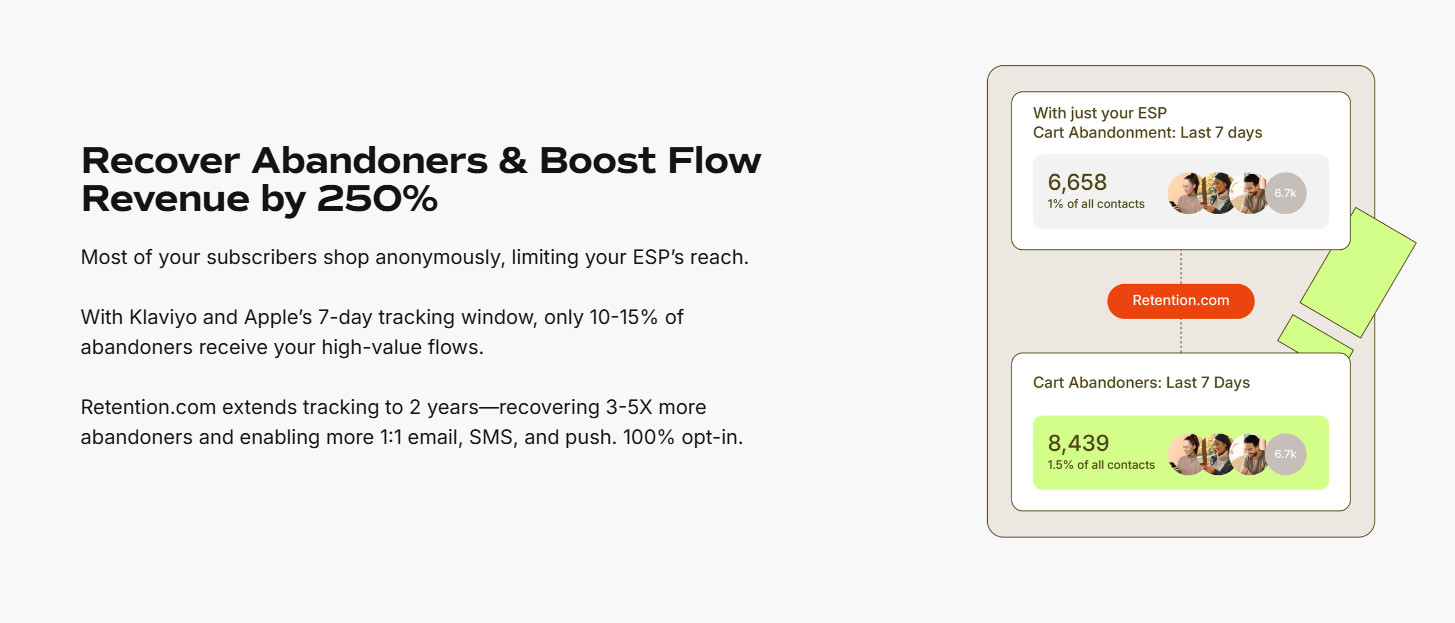
Built by RB2B’s founder, Adam Robinson, Retention.com specializes in e-commerce identity resolution. It captures anonymous visitor emails and feeds them into platforms like Klaviyo, making it a direct Opensend competitor with significant user overlap.
The platform's strength lies in high match rates for e-commerce traffic and its deep Klaviyo integration. For high traffic, Retention.com automatically captures bouncing visitors and triggers browse or cart abandonment flows.
Key Features
- Person-Level Email Capture: Identifies anonymous website visitors and resolves their email addresses in real time, U.S. only.
- ESP-Native Integration: Connects deeply with Klaviyo, Attentive, and Postscript to slot directly into existing email and SMS workflows.
- Automated Abandonment Flows: Triggers cart and browse abandonment sequences automatically for captured visitors.
- Physical Address Resolution: Captures mailing addresses alongside emails to enable direct mail retargeting.
Pricing
Retention.com does not publish pricing publicly. A demo is required for a custom quote based on traffic volume and identity needs.
Pros
- High match rates for e-commerce visitor identification
- Strong Klaviyo integration for automated email flows
- Proven ROI for DTC brands with substantial website traffic
Cons
- No free plan or public pricing
- US-only person-level identification
- Not designed for B2B sales workflows
4. Leadfeeder (by Dealfront)
Best for: Small and mid-market B2B teams wanting simple company-level visitor identification
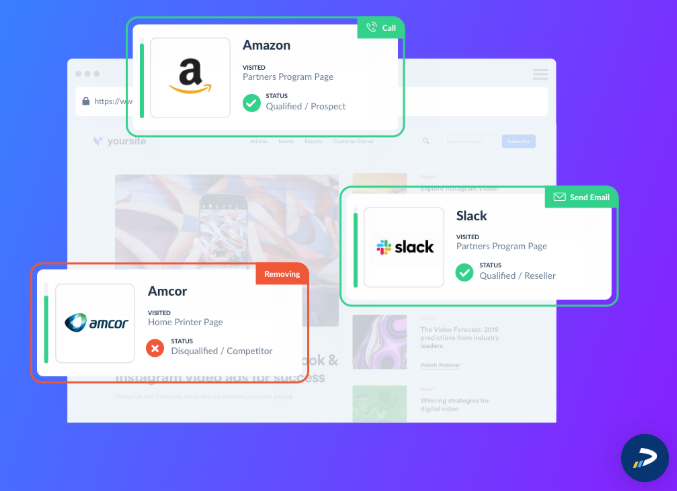
Leadfeeder identifies companies visiting your website through Google Analytics integration. It provides access to company names, pages viewed, and visit frequency. Leadfeeder is one of the more straightforward tools in the space, making it ideal for teams already using Google Analytics who want visitor identification without changing their workflow.
The challenge with Leadfeeder is that it tells you which company visited, but not which person. So your reps still need to research the right contact, and guess who was actually browsing. RB2B closes that gap by resolving visitors down to the individual, complete with name, job title, and LinkedIn profile, so outreach starts with context instead of cold research.
Key Features
- Google Analytics Integration: Connects directly with Google Analytics to identify companies visiting your site without additional tracking scripts.
- Visitor Behavior Tracking: Shows pages viewed, visit frequency, and engagement depth for each identified company.
- Behavioral Lead Scoring: Ranks visiting companies automatically based on on-site activity and engagement patterns.
- CRM Sync: Integrates with HubSpot, Salesforce, and Pipedrive to route identified companies into your existing sales pipeline.
Pricing
- Free Plan: Up to 100 identified companies with 7 days of data.
- Paid Plan: Starts at €99/month with unlimited data storage, priced by volume of identified companies.
Pros
- Affordable with a genuine free tier
- Clean, intuitive interface with minimal learning curve
- No long-term contracts required
Cons
- Company-level only, no individual identification
- Fewer data points than comprehensive alternatives
- Data accuracy drops with remote workers and shared IPs
5. ZoomInfo
Best for: Enterprise sales and marketing teams needing comprehensive B2B intelligence
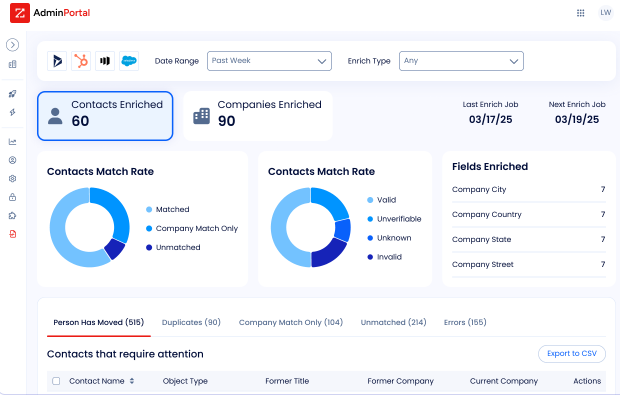
ZoomInfo provides visitor identification as part of a much larger B2B sales intelligence suite. Their WebSight Buyer ID links anonymous site visitors to known decision-makers in their database. The platform is built for enterprise teams that need visitor identification alongside extensive contact databases and intent data in a single system.
While pricier than standalone visitor ID tools, ZoomInfo justifies its cost through its massive B2B database, conversation intelligence, and advanced prospecting filters that go far beyond simple identification.
Key Features
- B2B Contact Database: Provides access to over 174M emails and 70M+ phone numbers through ZoomInfo's proprietary data asset.
- Intent Data Tracking: Monitors buying signals across the web to surface accounts actively researching solutions in your category.
- Conversation Intelligence: Analyzes sales calls to deliver coaching insights, talk-track feedback, and deal risk signals.
- Multi-Channel Campaign Orchestration: Coordinates outreach across email, phone, ads, and social from a single platform.
Pricing
ZoomInfo does not publish pricing publicly. A demo is required for a custom quote. User reports and third-party sources suggest annual contracts typically starting in the $15,000-$25,000+ range.
Pros
- Most comprehensive B2B contact database available
- Strong intent data and sales intelligence beyond visitor ID
- Robust integrations across the full sales stack
Cons
- Expensive, visitor ID is a small part of a large, costly platform
- Complex platform with a steep learning curve
- Can feel like overkill if you only need visitor identification
6. Warmly
Best for: B2B teams wanting real-time visitor engagement through chat, email, and video
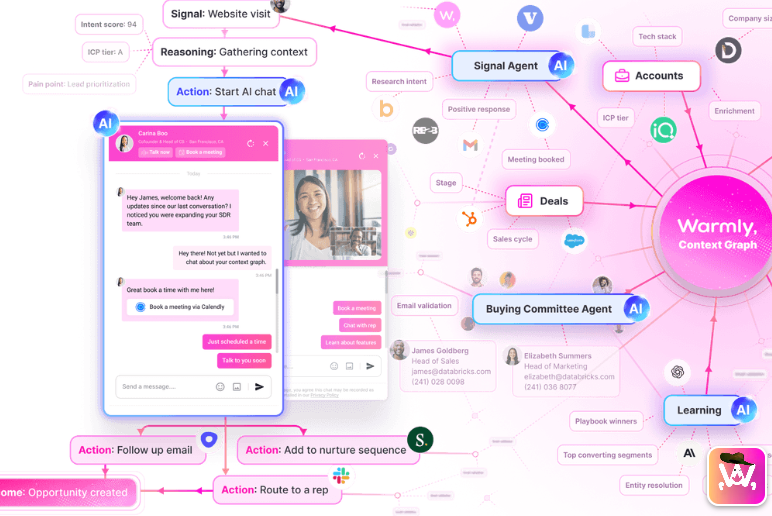
Warmly combines visitor identification with real-time engagement tools. The platform identifies visitors in real time, enabling chat, email, or video outreach while they browse. This 'revenue orchestration' captures leads at peak interest.
What sets Warmly apart from most tools on this list is its focus on immediate engagement rather than just data delivery. Instead of sending visitor data to a CRM for later follow-up, Warmly enables your sales team to start conversations with identified visitors while they are still active on your site. This real-time interaction model works well for teams with dedicated SDRs who can respond quickly.
Key Features
- Real-Time Visitor Identification: Identifies visitors the moment they land on your site and pushes instant notifications to your team via Warmly's platform.
- Live On-Site Engagement: Enables reps to start conversations through chat, email, or video while visitors are still actively browsing.
- Behavioral Outreach Triggers: Fires automated, personalized outreach based on specific visitor actions and engagement patterns.
- Integration Hub: Connects with Slack, HubSpot, Apollo, and LinkedIn to unify visitor intelligence with existing sales workflows.
Pricing
- TAM: Starting at $15,000/year for outbound orchestration
- INBOUND: Starting at $30,000/year for real-time capture
- FULL GTM: Custom pricing (Talk to Sales) for a unified motion
Pros
- Unique real-time engagement while visitors are still on-site
- Global visitor identification (not US-only)
- Combines visitor ID with outreach in one platform
Cons
- Expensive starting price
- Requires dedicated team members for real-time engagement
- Newer platform with less market validation
7. Lead Forensics
Best for: Mid-market B2B teams focused on company-level website visitor identification
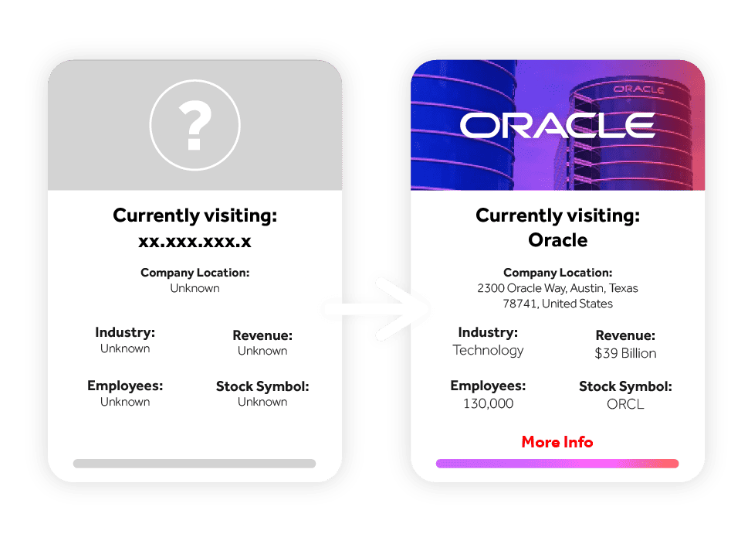
Lead Forensics uses reverse IP tracking to identify which companies visit your website. It provides company names, visit details, and enriched contact data sourced from its internal business database. The platform goes a step further than pure company-level tools by layering contact data onto each visit, including names, titles, and emails of key people at the identified company.
That said, it still doesn't tell you which specific person was actually on your site. Your team is left sorting through a list of contacts and making an educated guess about who to reach out to. RB2B removes that guesswork by identifying the actual individual browsing your site and delivering their profile to Slack in real time. That means your reps spend less time researching and more time reaching the right person.
Key Features
- Reverse IP Lookup: Matches anonymous website traffic to company identities using Lead Forensics' proprietary IP-to-business mapping.
- Contact Enrichment: Layer names, job titles, and email addresses from its internal database onto identified company visits.
- Custom Dashboards: Provides configurable views to surface high-value visitor insights and prioritize follow-up.
- CRM Integration: Syncs with Salesforce and HubSpot to push enriched company data directly into your sales pipeline.
Pricing
Custom pricing based on goals and traffic scale. Contact sales for a quote. User reports suggest multi-year contracts are common.
Pros
- Established B2B platform with deep company-level data
- Contact enrichment adds names and emails to company visits
- Advanced traffic filtering with granular rules to segment visitors by criteria that match your target accounts
Cons
- No individual-level identification
- High costs with inflexible multi-year contracts
- Users report data accuracy concerns for smaller companies
8. Albacross
Best for: B2B teams wanting GDPR-compliant visitor identification with intent data and European data strength
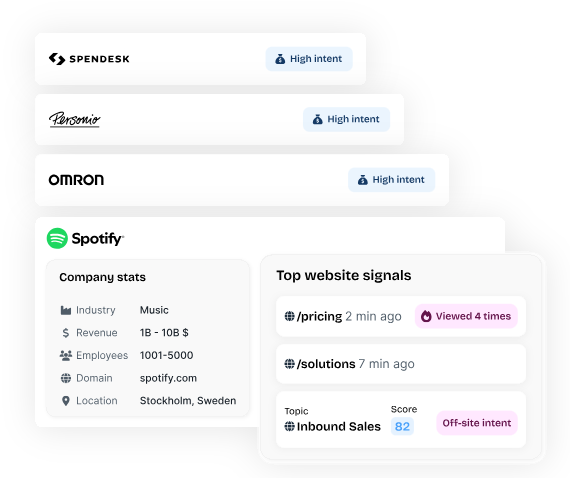
Albacross is a Stockholm-based B2B platform that combines website visitor identification with intent data and account-based marketing capabilities. Starting at €59/month, it offers an affordable entry point for teams exploring visitor identification, with built-in AI sequences and LinkedIn automation.
It identifies visiting companies via IP-to-company mapping with 100+ B2B attributes, tracks on-site behavior to surface intent, and uses AI-powered automated workflows for direct email and LinkedIn outreach.
Key Features
- IP-to-Company Identification: Identifies visiting companies through Albacross's proprietary mapping with 100+ B2B attributes.
- Intent Data Tracking: Surfaces accounts showing active buying signals based on on-site behavior and engagement depth.
- AI-Powered Outreach Sequences: Automates personalized email and LinkedIn outreach using built-in AI sequences.
- CRM and Workflow Integrations: Connects with HubSpot, Salesforce, Pipedrive, and Slack for seamless lead routing.
- ABM Audience Segmentation: Builds dynamic audience segments for targeted account-based marketing campaigns.
Pricing
- Starter: €59/mo (billed yearly) for up to 100 identified companies.
- Professional: €149/mo (billed yearly) for up to 1,000 identified companies.
- Organization: €375/mo (billed yearly) for 2,000 to 5,000+ identified companies.
Pros
- Affordable entry point with published pricing
- Strong European data coverage and GDPR-first approach
- Built-in AI sequences for email and LinkedIn outreach
Cons
- Company-level only, no person-level identification
- Contact enrichment credits are limited on lower-tier plans
- Growth and Organization plan pricing requires contacting sales for exact quotes
9. Clearbit (Now HubSpot Breeze Intelligence)
Best for: HubSpot users wanting native data enrichment and visitor identification
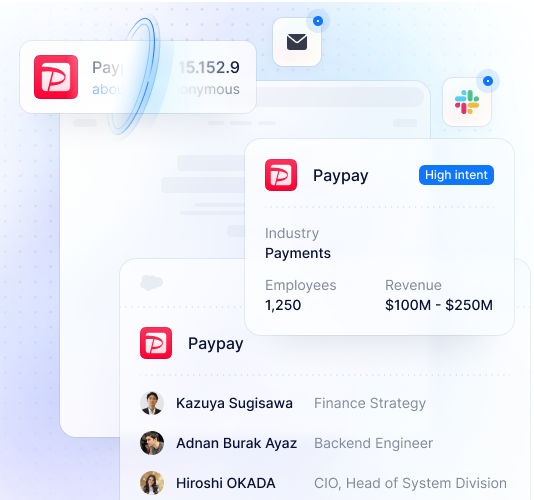
Clearbit was acquired by HubSpot and rebranded as Breeze Intelligence. It provides data enrichment and company-level visitor identification natively within the HubSpot ecosystem, making it a natural choice for teams already invested in HubSpot's CRM.
It automates CRM data enrichment from 100+ sources, identifies website visitors, and uses auto-fill to shorten forms. It functions as a seamless HubSpot extension, reducing friction and closing data gaps directly within the CRM.
Key Features
- Native HubSpot Integration: Operates as a built-in layer within HubSpot's CRM for seamless data enrichment without third-party connectors.
- Contact and Company Enrichment: Pulls from 100+ data sources to fill gaps in CRM records with firmographic and demographic detail.
- Company-Level Visitor Identification: Identifies which companies are browsing your site and matches them to existing CRM records.
- Smart Form Shortening: Auto-fills form fields in real time using known data, reducing friction and improving conversion rates.
Pricing
Clearbit's enrichment features are bundled into HubSpot plans. Specific enrichment credit pricing is available through HubSpot's sales team.
Pros
- Seamless for teams already on HubSpot
- Strong data enrichment capabilities
- Reduces form friction with autofill
Cons
- Requires HubSpot, limited standalone value
- Company-level visitor identification only
- Enrichment credits deplete quickly on high-traffic sites
10. 6sense
Best for: Enterprise ABM teams needing AI-powered intent data and predictive analytics
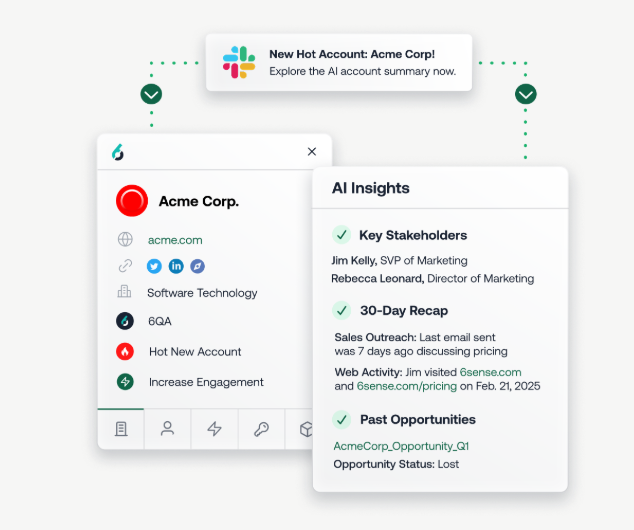
6sense is a Revenue AI platform combining visitor identification with predictive analytics, intent data, and account orchestration for large-scale ABM programs. Built for enterprise go-to-market strategies, teams need it to understand where accounts are in the buying journey and coordinate multi-channel campaigns.
The platform's AI models analyze behavior across millions of websites to score accounts and predict purchase intent. This goes well beyond basic visitor identification. It builds comprehensive ABM programs with dynamic audience segments, multi-touch attribution, and revenue forecasting, not just a list of companies that visited their site.
Key Features
- AI-Powered Predictive Analytics: Scores accounts by buying stage using 6sense's machine learning models trained on millions of behavioral signals.
- Cross-Web Intent Data: Tracks research activity across the web to identify accounts actively exploring solutions in your category.
- Dynamic Audience Building: Creates segmented audiences using 80+ filters for precise account-based targeting.
- Multi-Channel Campaign Orchestration: Coordinates outreach across ads, email, and LinkedIn from a unified platform.
Pricing
- Free Plan: 50 credits/month with basic search and alerts.
- Paid Plans: Custom pricing on request.
Pros
- Best-in-class predictive analytics and intent data
- Comprehensive ABM capabilities
- Sophisticated account journey mapping
Cons
- Very expensive with opaque pricing
- Steep learning curve requiring dedicated admin resources
- Users report data accuracy issues for niche markets
Ready to Move Beyond Opensend?
The visitor identification space has evolved. Opensend serves DTC brands well, but if your sales team needs to know the actual person behind a website visit, not just an email address for a drip campaign, it is time for a different approach.
RB2B identifies visitors by name, job title, and LinkedIn profile, then pushes that intel to Slack the moment they hit your site. It syncs with HubSpot and Salesforce so your reps can act while intent is warm. There are no ecommerce-only limitations or a $500/month base minimum to start.
Sign up with RB2B and get 150 monthly credits and LinkedIn profiles sent to Slack with no credit card required. Start with RB2B's 7-day free trial and begin discovering new leads.
Frequently Asked Questions
1. What is the main difference between Opensend and RB2B?
Opensend targets e-commerce via personal emails (mostly Gmail) for retargeting ads and emails, starting at $500/month. RB2B targets B2B sales by identifying visitors with names, job titles, and LinkedIn profiles, offering a free entry tier.
2. Does Opensend work for B2B?
Opensend recently introduced a B2B offering, but its core platform was designed for DTC and e-commerce. User reviews indicate that it primarily captures personal email addresses rather than business emails, which limits it for B2B outreach and lead generation.
3. Can I use RB2B and Opensend together?
Yes. Some teams use Opensend for e-commerce retargeting and RB2B for B2B lead generation. The platforms serve different audiences, so there is minimal overlap in the data they provide.
4. Which Opensend alternative is best for small teams with limited budgets?
RB2B offers a free plan with 150 monthly credits, and Visitor Queue starts at just $39/month. Both are affordable entry points for teams that want to validate visitor identification before scaling their investment.
5. Is visitor identification compliant with GDPR and CCPA?
Compliance varies by tool. RB2B's person-level identification is US-only, which means GDPR does not apply. The platform is fully compliant with CCPA and CPRA. Always review each vendor's data practices and update your site's privacy policy accordingly. Read more about how to identify website visitors compliantly.