This guide breaks down the top data enrichment tools, what they offer, and how they help revenue teams work with cleaner, more complete data. You’ll see how each tool handles accuracy, identification, intent, and enrichment depth, plus where RB2B stands out for real-time buyer insight. For deeper guidance on building the right enrichment stack for your workflow, visit the RB2B blog.
Looking for the Best Data Enrichment Tool for Your Business?
Weak data costs you more than you realize. U.S. companies alone lose $3.1 trillion each year due to poor data quality. You may have leads, but without context like job titles, company details, and buying signals, your team is forced to guess who’s worth pursuing instead of making informed decisions.
Data enrichment tools fix that. They pull in verified, real-time insights about your prospects so you can segment accurately, personalize outreach, qualify faster, and increase revenue without increasing workload.
In this RB2B guide, we’ll break down the top data enrichment tools, their pros and cons, and how to choose the one that fits your business best.
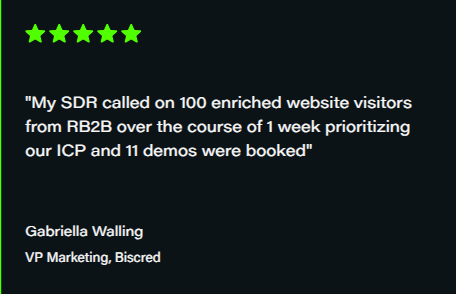
At RB2B, we help hundreds of revenue teams turn anonymous website traffic into real buyer insight every day. For Biscred, that led to 11 booked demos in just one week. Because we operate in this space, we know what separates great enrichment tools from average ones. This guide reflects that hands-on experience, helping you choose a tool that best fits your needs.
What are Data Enrichment Tools?
Data enrichment tools are solutions that add missing details to your leads and accounts. They turn basic info like a name or email into full profiles with job titles, company size, industry, and activity. These tools keep your data fresh so you can target accurately, qualify faster, and run campaigns that match real buyer intent.
Expectedly, the market for these tools is expanding rapidly, projected to grow from $2.58 billion in 2024 to $4.65 billion by 2029, with a 12.5% compound annual growth rate. As more businesses rely on accurate, real-time data to compete, enrichment has become essential rather than optional.
Why are Data Enrichment Tools Important?
Speeds up qualification: Helps your team quickly see which leads fit your ideal customer profile so reps spend time on the right accounts.
Sharpens targeting: Gives you clearer details about each lead, making it easier to send messages that match what they actually care about.
Reduces wasted effort: Cuts the time your team spends chasing bad or outdated contacts by keeping your records accurate and fresh.
Enhances segmentation: Provides stronger data so you can build more precise audience lists for campaigns, sequences, and outreach.
Boosts conversion rates: Gives you the context you need to reach qualified prospects at the right moment, increasing the chance they respond or book a call.
How Visitor Identification and Data Enrichment Services Work Together in B2B Sales
Visitor identification and data enrichment often go hand-in-hand in B2B sales and marketing. Identification tools turn anonymous traffic into usable lead data that sales and marketing teams can act on immediately. Enrichment tools then add context like roles, company details, or intent signals to this data.
In practice, the line is not always clear. Identification tools often include basic enrichment. Enrichment tools also depend on identified leads to be useful.
That overlap is why tools like RB2B are included in this list. RB2B and other visitor identification tools don't function like the traditional data enrichment solutions. But they still perform core enrichment functions. This makes them an essential part of the data enrichment pipeline for B2B teams focused on capturing active demand.
12 Best Data Enrichment Tools to Consider
Here’s a quick comparison of the tools.
#
Tool
Best For
Pricing/Free Trial
Integrations
GDPR Compliance
Data Accuracy
1
RB2B
Teams that want real-time website visitor identification with person-level and company-level intent data
Paid plans from $79/month; 7-day free trial and free plan available.
50+ integrations including HubSpot, Salesforce, Slack, and Teams
Yes (GDPR-compliant and privacy-first tracking)
High (person and company level, powered by strong data sources)
2
Clearbit
Teams that want to enrich existing leads with firmographic data directly inside their CRM
Custom pricing; no free trial
Seamless integrations with HubSpot
Yes (via HubSpot's framework)
Strong for firmographics; mixed contact accuracy
3
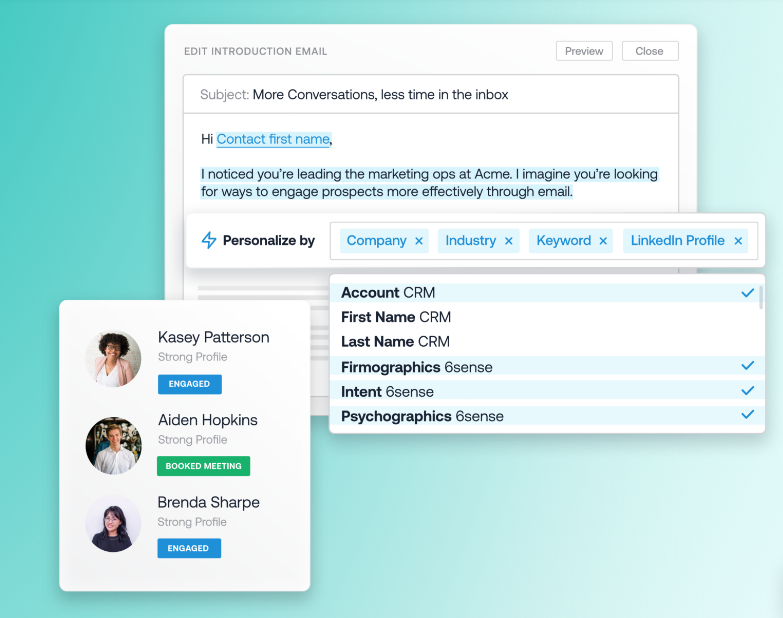
6sense
Enterprise teams that want predictive intent data and account-based targeting at scale
Custom-priced with a limited free plan
Integrates with Salesforce, HubSpot, and select advertising platforms
Yes
Strong for account-level intent; mixed contact accuracy
4
Warmly
Teams that want to identify and engage website visitors with AI-driven automation
From $20,000/year; free trial not always standard
Limited native connections outside HubSpot, Salesforce, and Slack
Yes
Mixed accuracy depending on visitor traffic and region
5
Vector
Teams that want to build ad target audiences with website intent data
From $399/month; no free trial available
Basic CRM integrations
GDPR posture not well established
Good for basic company match; weaker outside US
6
LeadIQ
Sales teams that want to capture and enrich contact data directly from LinkedIn
Starts at $15/month; free plan available
Integrates with Salesforce, HubSpot, and Outreach
Yes
Good email accuracy, mixed phone accuracy
7
Apollo.io
Teams that want an all-in-one prospecting, enrichment, and outreach platform
From $49/user/month; free plan available
Integrates with Salesforce and HubSpot with APIs available for custom integrations
Yes
Good email accuracy, mixed phone data
8
Leadfeeder
Teams that want company-level website visitor tracking and basic lead qualification
Starts at $141/month with free plan available
Broad CRM integrations including HubSpot, Salesforce, Zoho, and Pipedrive
Yes (GDPR-first architecture)
Moderate, depends on IP resolution
9
ZoomInfo
Teams that want a highly narrowed-down ICP list
Custom pricing estimated at $31,000/year; no free trial
Native integrations with major CRMs like HubSpot
Yes
High overall, especially for company-level data
10
Clay
Teams that want highly flexible, customizable data enrichment workflows
From $167/month; free plan available
Integrates with CRMs like HubSpot and Salesforce via APIs
Yes (GDPR compliant via partners)
High, but depends on the selected data sources
11
Cognism
Teams that need highly accurate contact data for each ICP account
Custom pricing estimated at $38,000/year; free trial available
Native integrations with Salesforce, HubSpot
Built for GDPR compliance
High contact accuracy, especially in EU markets
12
Lusha
Teams that want lead identification, enrichment, and engagement in one platform
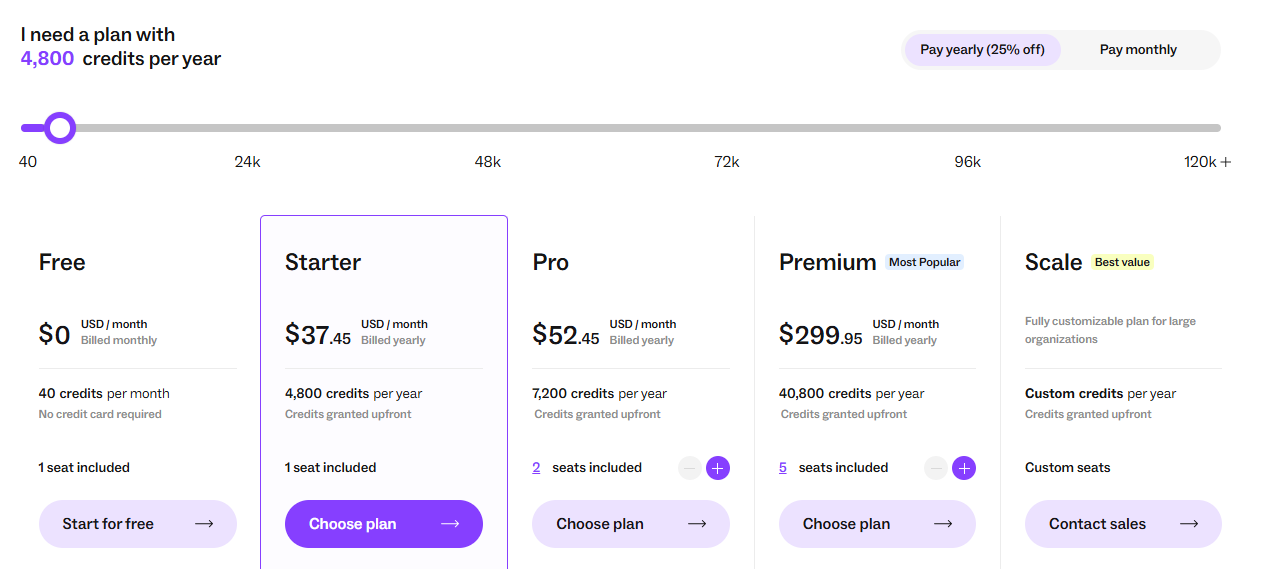
From $37.45/month with free plan available
CRM integrations with Salesforce and HubSpot
Yes
Good contact accuracy; limited behavioral depth
1. RB2B
The first on the list is our tool, RB2B.
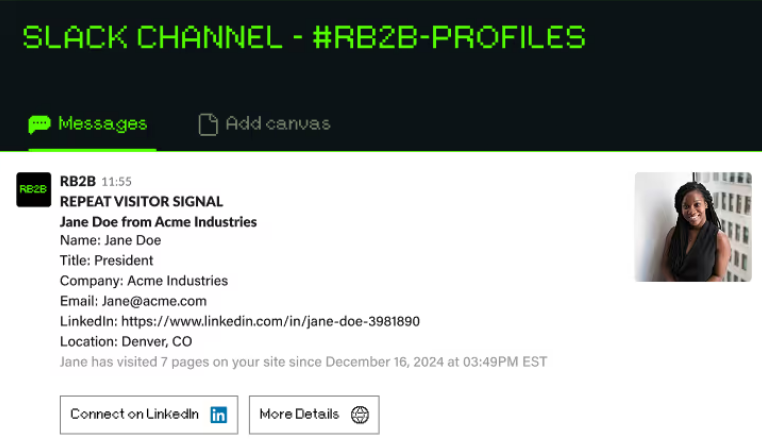
RB2B is a lead generation software that shows you who is on your site in real time, down to the actual person viewing each page. You see titles, LinkedIn profiles, and contact details, which makes it easier for sales and marketing teams to spot real interest instead of guessing who is behind the traffic.
Our platform sends this data straight to Slack or Microsoft Teams, so your team can act fast. With person-level and company-level identification, RB2B gives you the kind of signal strength that helps book more demos and move deals forward.
Key Features
Real-time visitor identification: See the actual people on your site with titles, LinkedIn profiles, and contact details for better targeting.
Hot pages tracking: Monitor which pages prospects return to and how often they engage. This helps your team understand what each buyer cares about most.
Hot leads tagging: Mark high-intent visitors who fit your ideal customer profile so reps can focus their time on the prospects most likely to convert.
Page suppression: Exclude traffic from specific domains such as internal teams or competitors so your sales team focuses on the most relevant leads.
Instant Slack and Teams alerts: Get notified the moment qualified buyers hit key pages, and reach out to prospects while interest is fresh.
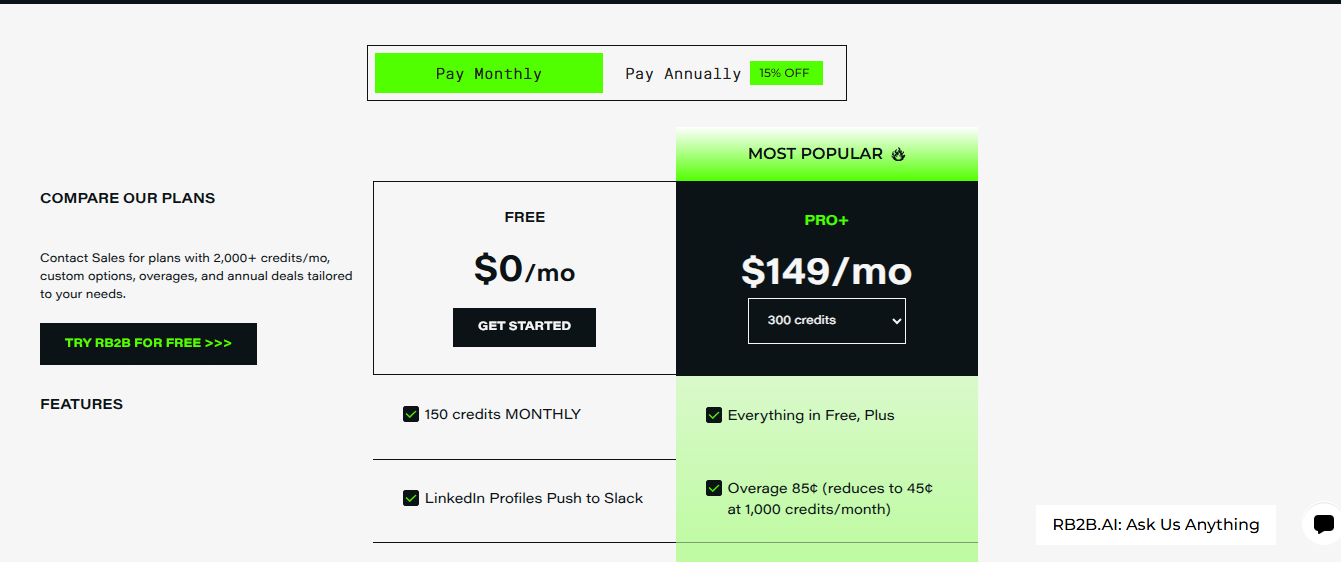
Free: $0/month. Includes 150 credits/month, LinkedIn profiles, push to Slack.
Pro+: $149/month (monthly) or $129/month (annually). Includes everything in Free, 300 credits plus traffic insights, hot pages, hot leads filtering, URL exclusions, CRM integrations (HubSpot, Salesforce, Apollo), webhooks, Zapier, and more.
Custom: Contact sales for plans with 2,000+ credits/month, custom options, overages, and annual deals tailored to your needs.
All plans come with a free trial to get started.
Pros
Real-time visitor identification with person-level data for sharper targeting.
Instant Slack and Teams alerts that help reps act while interest is high.
Hot Pages and Hot Leads features that highlight buyers with strong intent.
Person and company-level data powered by Demandbase’s data asset.
Lightweight tracking pixel that captures rich data without slowing your site.
Cons
Setup may take time, but the support team is always available to help.
2. Clearbit
Clearbit is a data enrichment tool that adds firmographic and contact details to the leads you already have. Now part of the Hubspot AI product suite, it helps sales and marketing teams understand who they are reaching, improve targeting, and qualify accounts with cleaner, more complete data.
Key Features
Data enrichment: Adds fresh firmographic and demographic attributes to records using Clearbit’s proprietary data graph.
Reveal identification: Unmasks anonymous website traffic by matching IP data to verified company profiles.
Contact discovery: Finds new contacts within target accounts using job title, role, and department filters.
Real-time refresh: Updates CRM records automatically as companies change size, funding, technologies, or roles.
CRM and MAP integrations: Connects with Salesforce, HubSpot, Marketo, and other major tools for synced data.
Pricing
Pricing is based on your HubSpot tier and can vary depending on your subscription and usage.
Pros
High data accuracy provides a reliable firmographic
Strong native integrations with major CRMs and marketing platforms
Real-time enrichment for updated contact and account records
Cons
Occasional data inconsistencies, including duplicates or outdated details
Initial setup and configuration can be overwhelming for non-technical users
3. 6sense
6sense helps revenue teams spot accounts that are active in the market and close to buying. The platform collects intent signals, buyer activity, and firmographic data so teams can focus on companies showing real interest and plan outreach with better timing and context.
Key Features
Intent signal detection: Monitors buyer research activity across the web using its intent data network and partnerships.
Account identification: Matches anonymous website sessions to known companies through IP data and proprietary models.
Predictive scoring: Uses machine learning models to score accounts based on the likelihood to engage or buy soon.
Buyer journey stages: Categorizes each account into defined stages based on behavior patterns and historical trends.
Audience segmentation: Builds detailed account segments using firmographic, technographic, and intent attributes.
Pricing
6sense has a limited free plan with a small monthly data credit for company and people search, list building, and sales alerts. All other plans are custom-priced.
Pros
Accurate intent signals for better timing and outreach focus
Strong account prioritisation and segmentation features
Good integration with CRM/marketing tools for sales-marketing alignment
Cons
Data quality can be inconsistent, especially contact level and enrichment details
Setup complexity for non-technical users
4. Vector
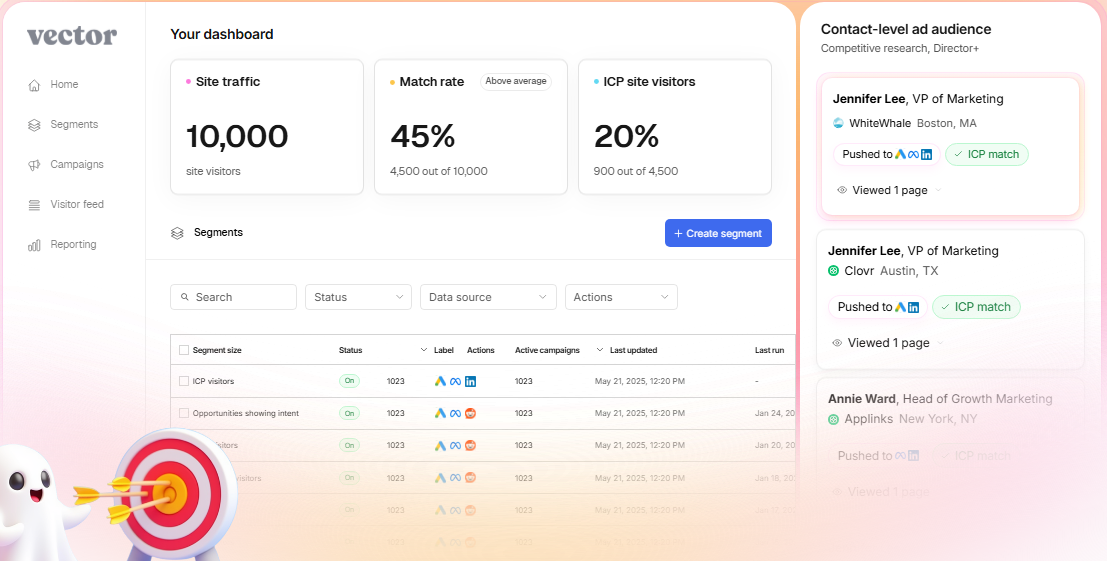
Vector gives you basic visitor identification by showing which companies are browsing your site. The solution focuses on simple lookups and quick alerts, giving small teams a lightweight way to see who is showing interest without adding extra complexity. While it is built around company-level data, Vector now also supports visitor insights and ad-audience tracking.
Key Features
Company identification: Detects and lists companies visiting your site using IP and data matching technology.
Basic firmographic data: Provides industry, size, and location details pulled from its internal company database.
Page view tracking: Records all pages a detected company visits during each session on your website.
Visit frequency logs: Tracks how often each identified company returns across multiple sessions and days.
Real time alerts: Sends immediate notifications when a new company lands on important pages of your site.
Pricing
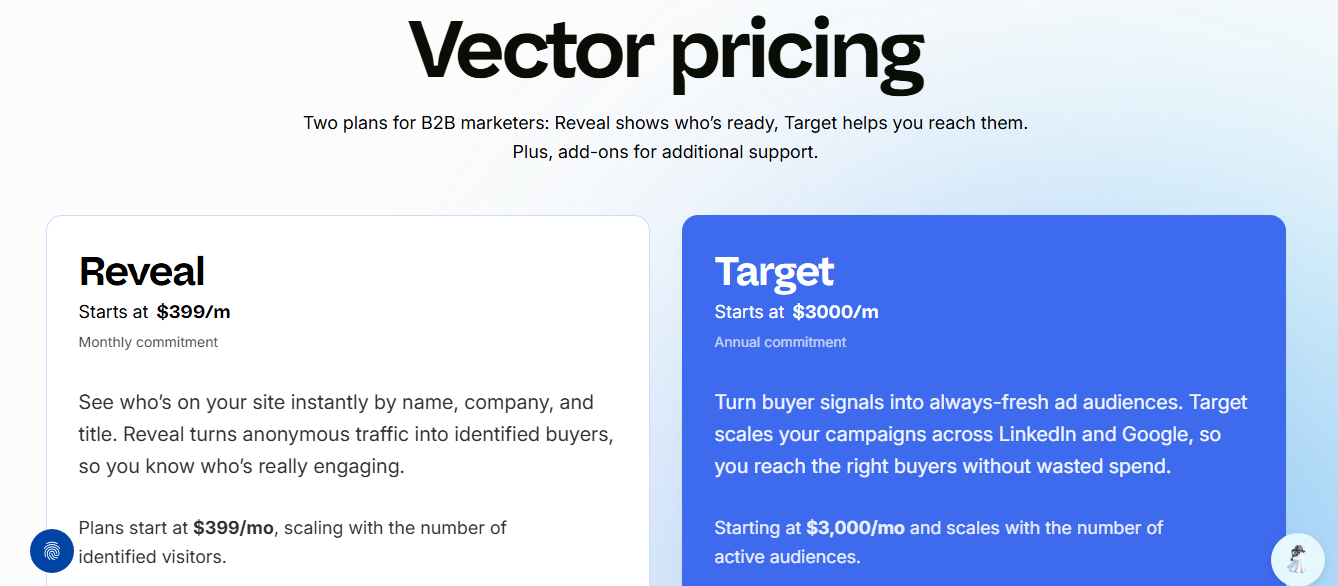
Vector offers two main plans:
Reveal: $399/month (for 2,500 identified visitors) with a monthly commitment. It scales with the number of identified visitors.
Target: Starts at $3,000/month (annual commitment) with access to 25 ad audiences.
Both plans include visitor identification, CRM, ad integrations, and setup support.
Pros
Clean, easy-to-use interface praised by non-technical users
Reliable company-level visitor identification for B2B traffic
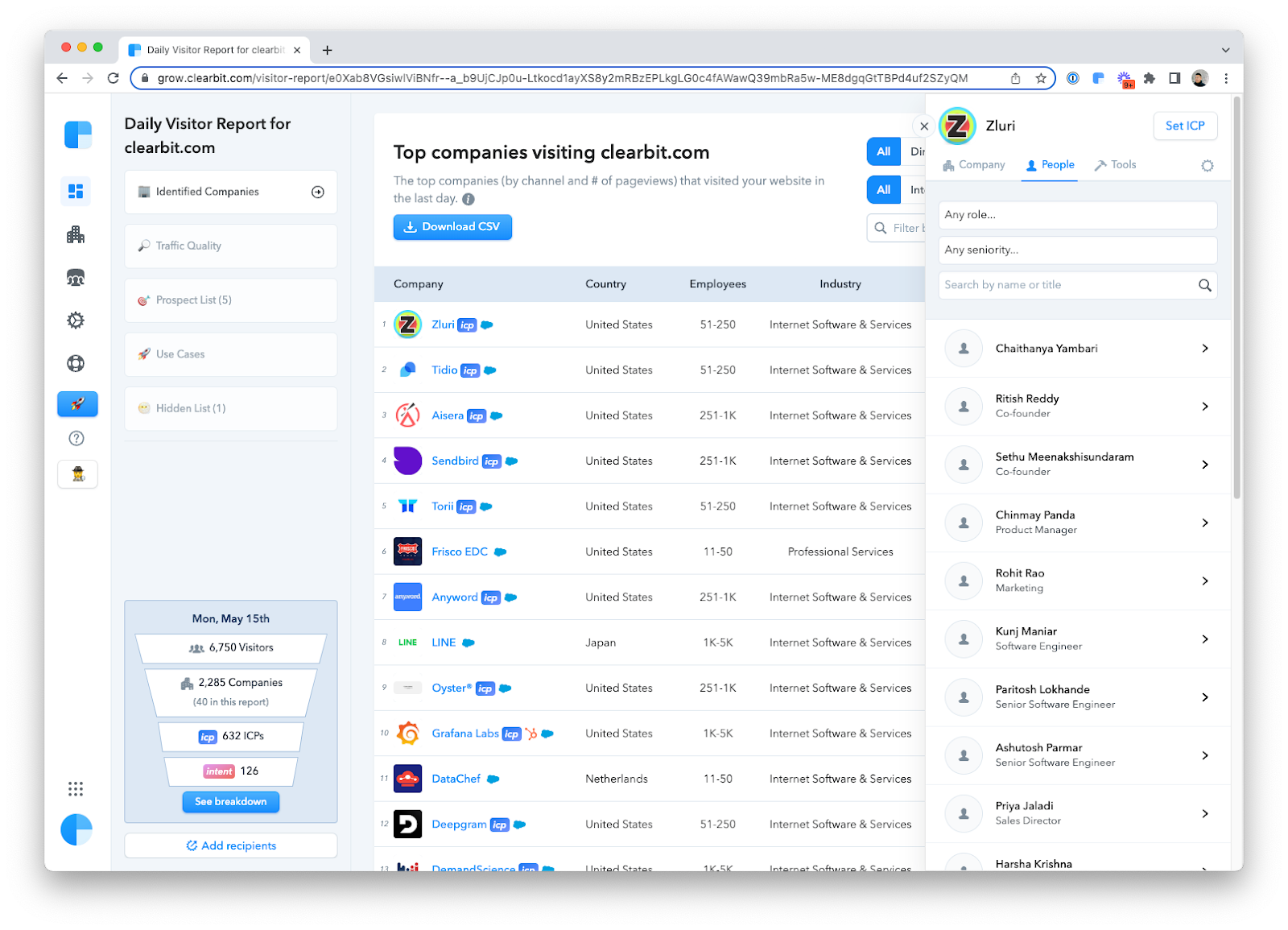
Helpful daily reports that keep teams aware of new visitor activity
Cons
Limited native integrations, requiring workarounds for some workflows
No person-level identification, which limits outreach precision
5. Warmly
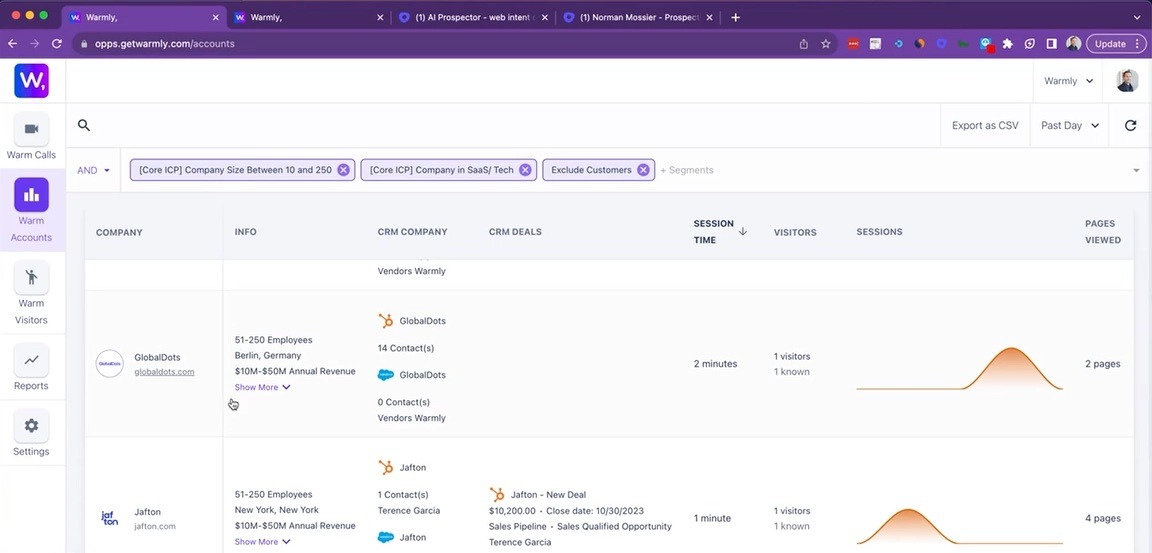
Warmly is a visitor identification tool that matches your website traffic to real companies. It gives clear details on who is browsing, what they viewed, and how engaged they are, making it easier for sales teams to spot active accounts and reach out with purpose. For more options, check out our guide on the best Warmly alternatives.
Key Features
Visitor identification: Matches website traffic to known companies using Warmly’s internal dataset and IP resolution.
Contact suggestions: Surfaces likely contacts from each identified company based on role, seniority, and department.
Page engagement tracking: Logs which pages each company viewed and how long they stayed on them.
Persona badges: Displays quick badges like fit level, industry, and team size for faster qualification.
Real time notifications: Sends instant alerts when target accounts land on important pages of your site.
Pricing
Warmly offers three pricing tiers:
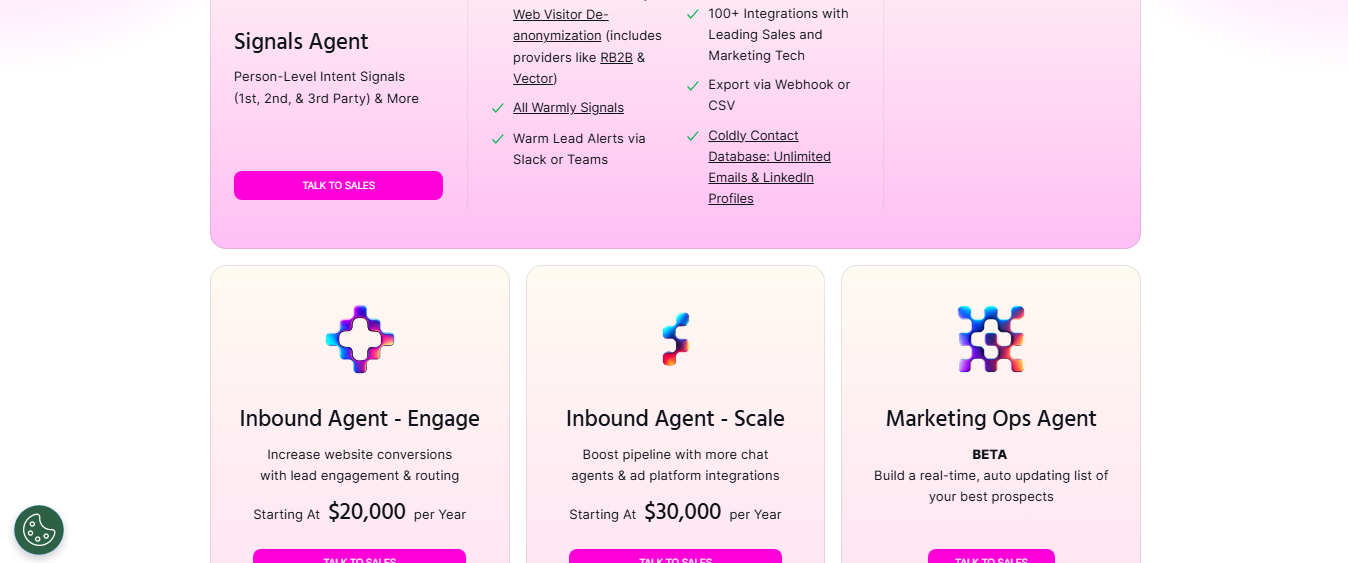
Signals Agent: Includes 10,000 monthly credits, full intent data, enrichment, Slack/Teams alerts, CRM integrations.Custom-quoted.
Inbound Agent: Starting at $20,000/year. Adds AI chat agents, outbound automation, ad audience sync.
Enterprise: Custom-quoted. Unlimited user seats, custom domains, SSO, advanced services and integrations.
Helpful in generating new leads from anonymous website traffic
Good intent-filtering capabilities to highlight higher-interest accounts
Cons
Inconsistent data accuracy leads to misidentified visitors
Unit pricing is high, making it less accessible for smaller teams
6. LeadIQ
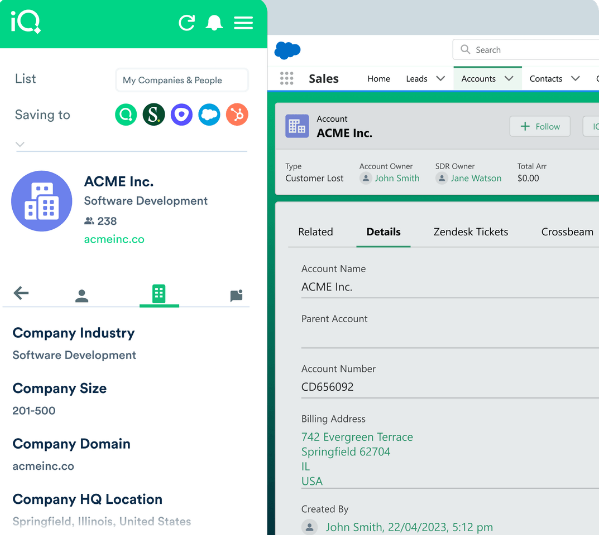
LeadIQ is a prospecting and enrichment tool that helps teams capture contact information while they browse LinkedIn and company sites. It fills in verified emails, titles, and firmographic details, making it easier for sales reps to build accurate lists and start outreach with intent.
Key Features
Contact capture: Pulls emails, phone numbers, and job titles directly from LinkedIn and company websites.
Identity resolution: Matches captured contacts to verified records using LeadIQ’s data graph and enrichment engine.
Data enrichment: Adds firmographic and technographic attributes to each saved contact for fuller profiles.
List building tools: Lets reps create and organize prospect lists with tags, filters, and saved views.
Duplicate detection: Flags existing contacts and accounts already in your CRM to avoid repeats.
Pricing
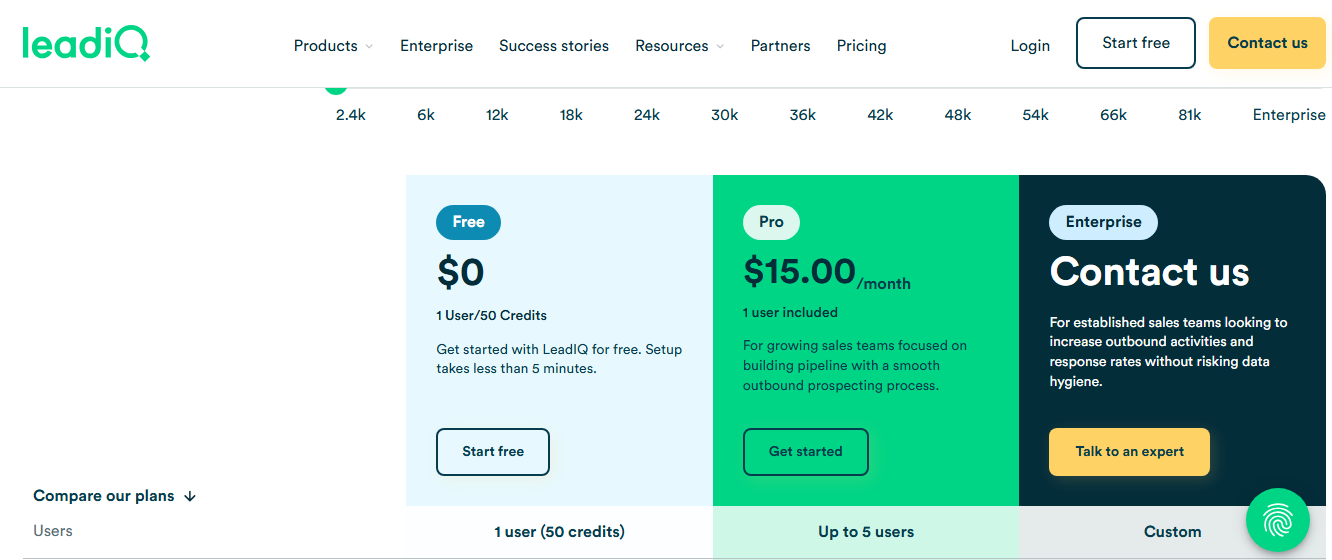
LeadIQ offers three pricing plans:
Free: $0/month (1 user / 50 credits). Access basic contact search and outbound tools.
Pro: Starting from $15/month. Intended for growing sales teams focused on outbound prospecting workflows.
Enterprise: Custom pricing. Designed for larger teams needing advanced features, governance, and scale.
Pros
Easy Chrome extension enables one-click lead capture
Strong email accuracy compared with many competitors
Reliable CRM integration pushes contacts into Salesforce, HubSpot, and Outreach
Cons
Contact data quality can vary, especially for mobile numbers and niche industries
Export/usage limits and credit-based model may force earlier upgrades than expected
7. Apollo.io
Apollo.io is a sales intelligence and enrichment platform that gives teams access to verified emails, direct dials, and detailed company data. It helps reps build accurate prospect lists, understand buyer fit, and run targeted outreach using cleaner, more reliable information. Learn more about Apollo in this detailed Apollo.io review.
Key Features
Contact database: Provides a large library of verified emails, phone numbers, and job titles across global companies.
Company intelligence: Supplies firmographic, technographic, and hiring data through Apollo’s internal company records.
Enrichment engine: Updates and completes existing CRM records with fresh contact and account details.
Sequence builder: Lets reps create outreach sequences with email, call steps, and task workflows.
Intent filters: Surfaces accounts showing buying activity using Apollo’s browsing and signal collection.
Pricing
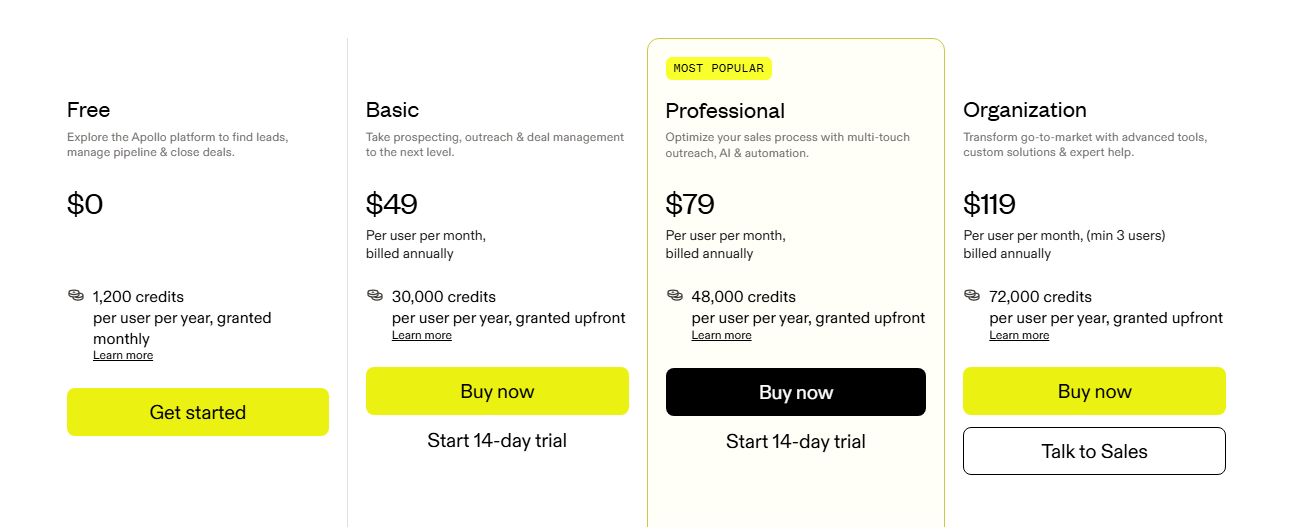
Apollo.io offers four pricing plans:
Free: $0/user/month. Includes unlimited email credits (fair usage limit), 5 mobile credits/month, 10 export credits/month.
Basic: $49/user/month (billed annually). Includes advanced filters, 6 intent topics, CRM & data enrichment features.
Organization: $119/user/month (billed annually); minimum 3 users. Includes custom intent topics, SSO, advanced security, and high credit limits.
Pros
Large contact database with verified emails boosts outreach effectiveness
Built-in multichannel sequencing supports email, calls, and LinkedIn
Robust search filters help teams find prospects easily
Cons
Export limits and credits model can restrict large-scale campaigns
Feature depth and settings may feel overwhelming for new users
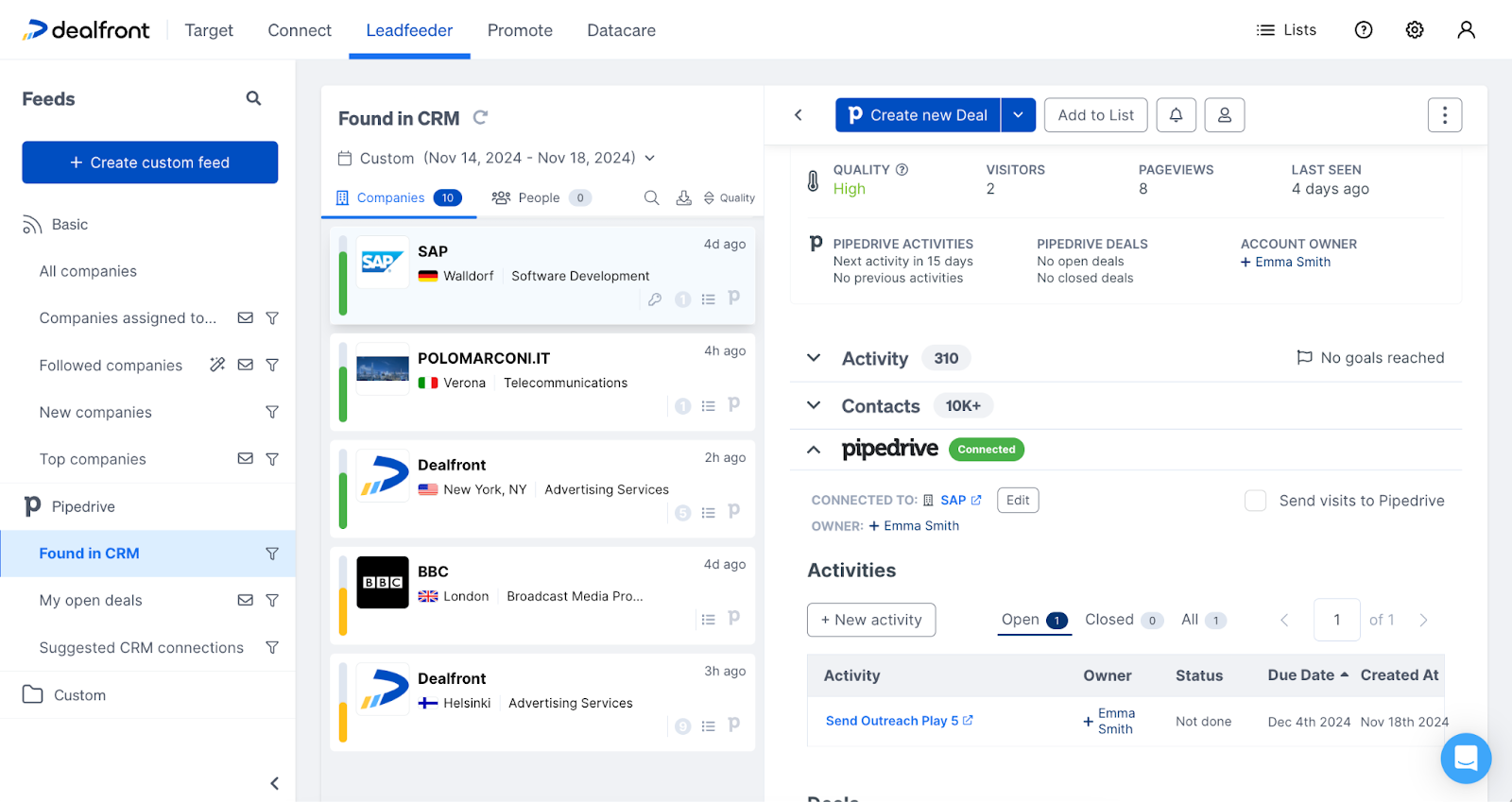
8. Leadfeeder
Leadfeeder is a company identification tool that shows which businesses visit your website and how they interact with your pages. The platform connects anonymous traffic to real companies and gives sales teams clear insights into buying interest so they can focus on accounts already showing intent.
Key Features
Visitor identification: Matches your website traffic to real companies using IP data and Leadfeeder’s proprietary database.
Company insights: Provides firmographic details like industry, size, and location for each identified visitor.
Page engagement tracking: Records which pages a company viewed and how often they returned.
Lead scoring: Automatically ranks companies based on activity levels and fit.
CRM integrations: Syncs identified accounts and activity directly into HubSpot, Salesforce, and other platforms.
Pricing
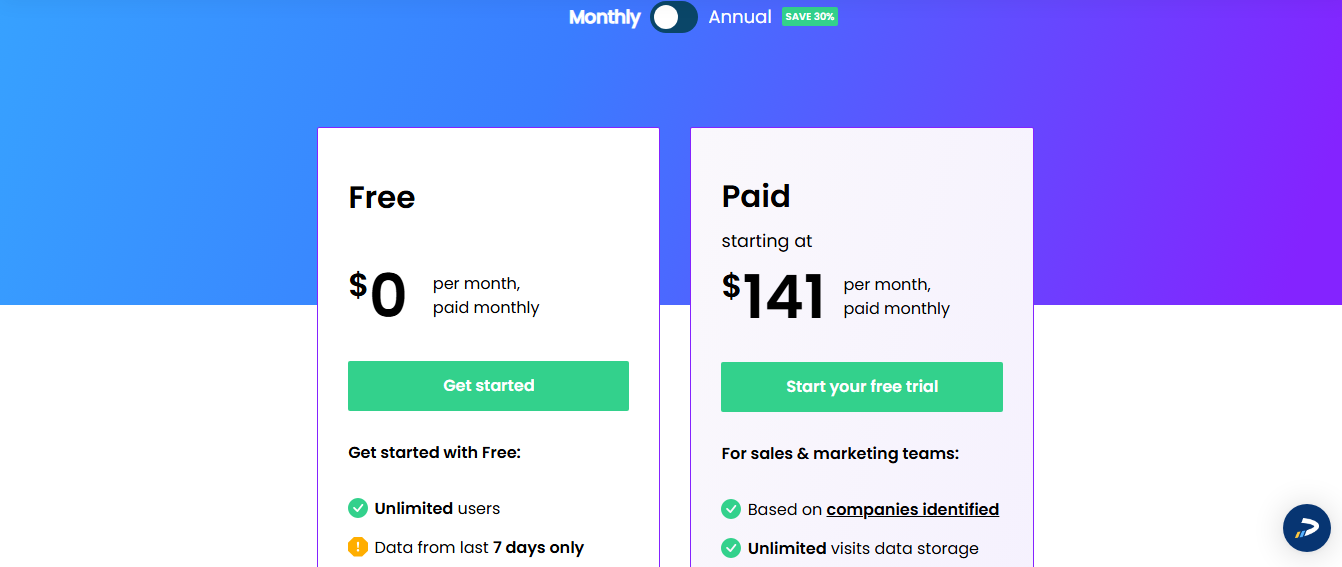
Leadfeeder offers two main pricing tiers:
Free: Identifies up to 100 leads, includes basic visitor identification and page tracking.
Paid: Starting at $141/month. Includes full lead history, advanced filtering, custom segments, CRM integrations, and unlimited users.
Pros
Easy to filter and segment visitor data for targeted outreach
Smooth integration with CRM systems like HubSpot and Salesforce
Solid value for teams managing higher website traffic volumes
Cons
Company-level only identification leaves out individual visitor details.
Data accuracy and lead quality can vary, especially for smaller firms
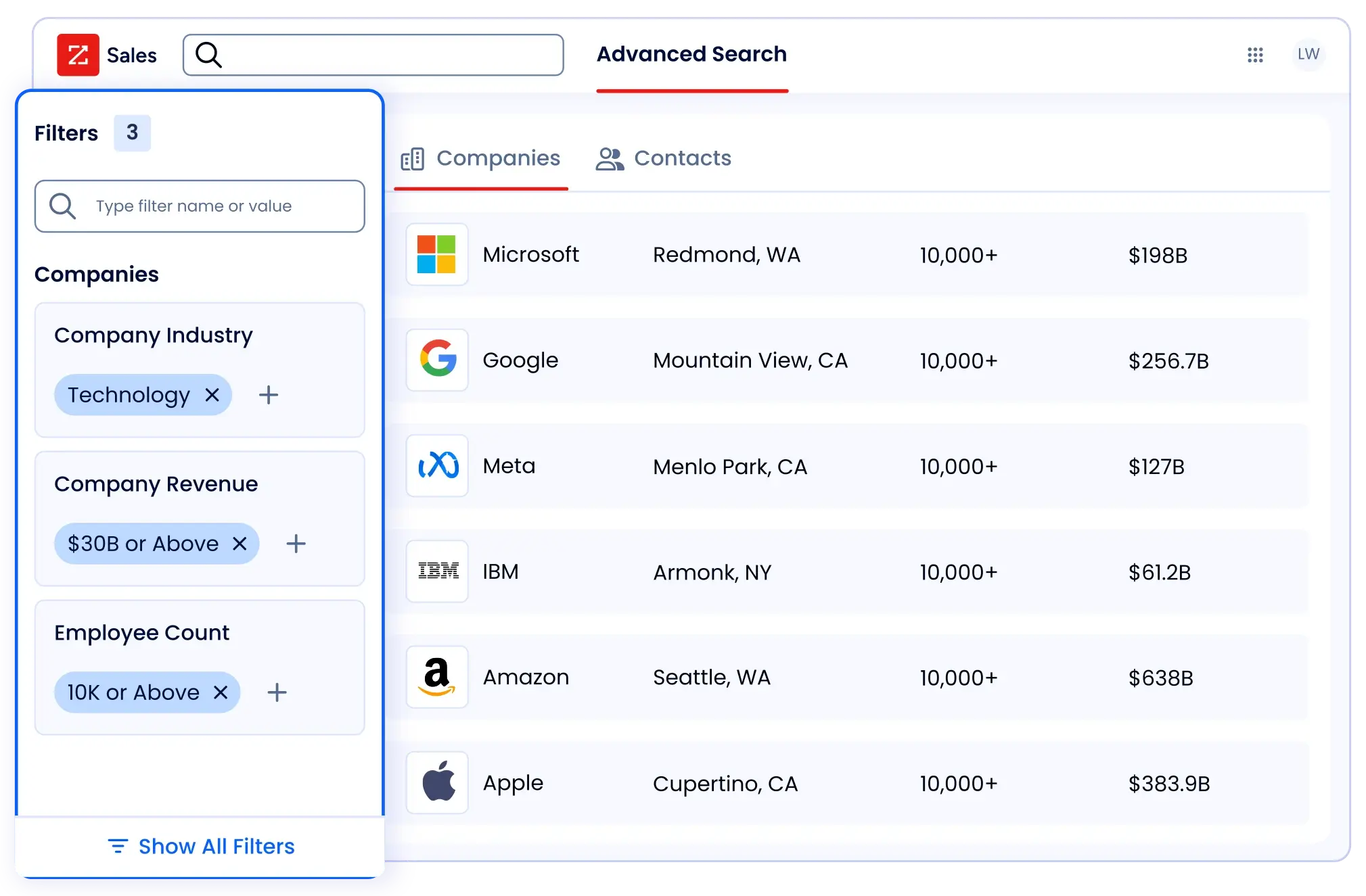
9. ZoomInfo
ZoomInfo allows teams to precisely define your ideal customer profile using highly specific targeting criteria. Once an email list is built, it enriches each account with firmographic and technographic data such as location, technology usage, and funding activity. This helps teams prioritize which ICP accounts are more likely to be ready to buy.
Key Features
Large B2B database: Includes an extensive contact and company database for prospecting and outbound sales.
Company-level data enrichment: Collates detailed and actionable company-level data, including firmographic, technographic, market signals and intent data.
Advanced search and filters: Teams can filter leads by location, industry, role, title, and custom segments making for more targeted outreach.
Lead routing: Automatically routes leads to the appropriate sales representatives based on predefined rules.
All-in-one platform: Combines prospecting, enrichment, intent data, and outreach tools into a single system, eliminating the need for multiple GTM tools.
Pricing
ZoomInfo's pricing is custom, and you have to book a demo to get a quote.
Pros
Can be used by multiple teams in the GTM motion
Has high data accuracy
Reduces manual tasks using automated workflows
Cons
Can get expensive as you scale
Set up takes a while
10. Clay
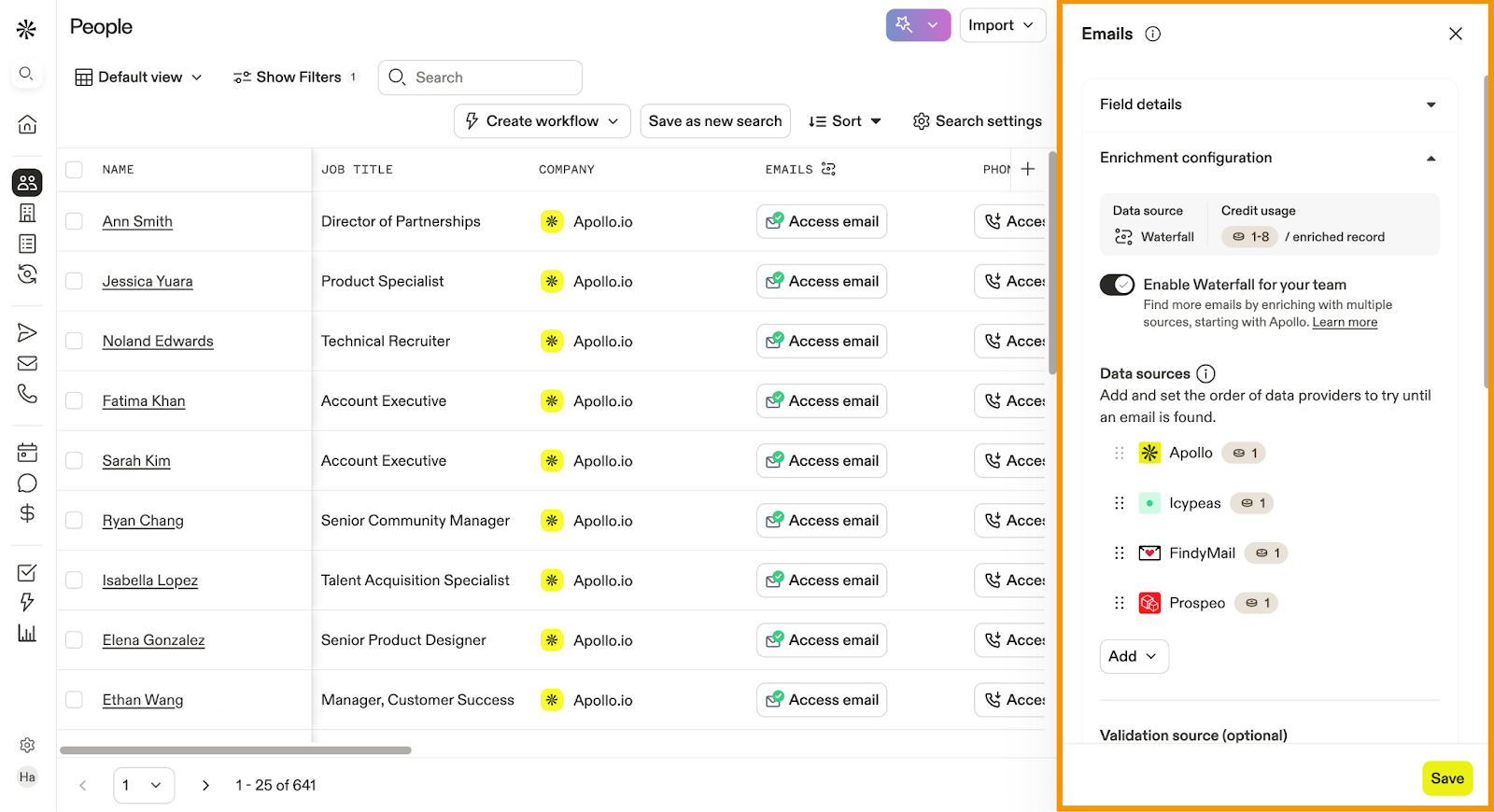
Clay helps B2B teams to build, enrich, and automate prospecting workflows using data pulled from various providers. Teams define their ICP then import or generate their account lists. Each record is then enriched with data pulled from multiple sources rather than a single database.
Clay’s workflow-driven approach makes it especially valuable for teams running targeted or high-volume outbound campaigns. Although, this also means it has a more complex setup when compared to other tools.
Key Features
Multi-source enrichment: Run waterfall enrichments across multiple data sources to increase accuracy.
Custom workflows: Build automated workflows for list building, enrichment, and updates.
Contact-level data: Access emails, roles, and additional attributes to create more targeted email lists.
Bulk CRM cleaning: Remove duplicates, standardizes formats, and updates outdated records from large datasets.
AI-powered actions: Uses Claygent, an AI web research agent, to generate insights and refine outreach.
Pricing
Clay has a free plan and 3 paid plans: Launch, Growth, and Enterprise. Pricing is credit and usage-based and starts from $167/month.
Pros
Highly flexible and customizable
Powerful automation capabilities
Continuously updates and enriches data
Cons
Steeper learning curve for new users
Can be expensive for heavy users
11. Cognism
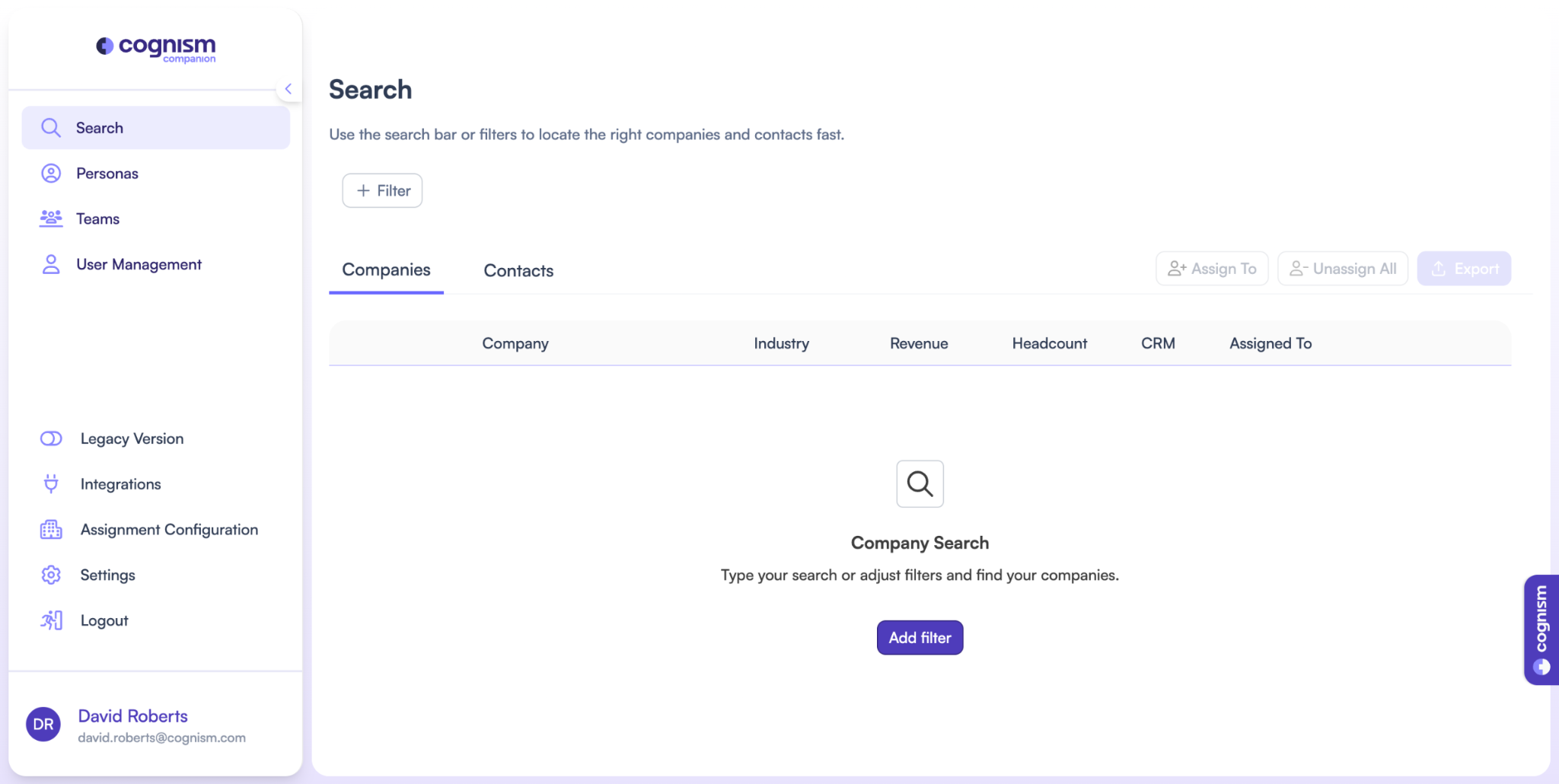
Cognism helps keep contact data up to date and usable for B2B teams. After defining the ICP criteria, Cognism surfaces matching companies along with relevant stakeholders within those accounts. It then enriches each contact with verified phone numbers, email addresses, and LinkedIn profiles, making outreach more direct and effective.
Key Features
ICP list generation: Build ready-to-contact prospect lists based on predefined criteria.
Buyer intent tracking: Identify signals like hiring, funding, and role changes for more personalized outreach.
Rule-based CRM enrichment: Clean and update CRM records with verified emails, phone numbers, and job information using defined workflows.
Strict global compliance: Cognism maintains strict GDPR and CCPA compliance, with strong coverage across European markets.
Comprehensive prospector tool: Filters, searches, and exports targeted company and contact lists.
Pricing
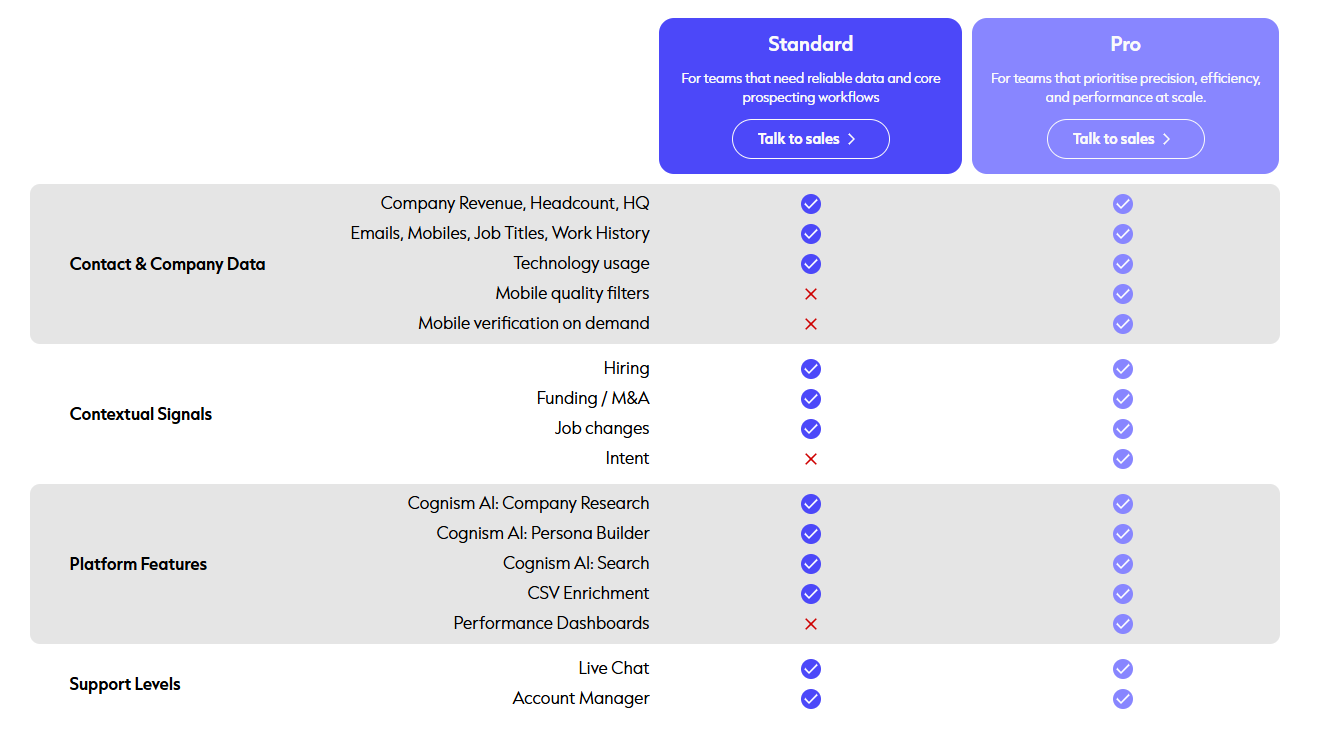
Cognism offers two plans: Standard and pro
Standard: Core prospecting and enrichment features
Pro: Adds AI-driven recommendations for identifying engagement opportunities
Pricing for Cognism is not publicly available. Interested users would have to contact the team to get a quote.
Pros
Integrates well with existing GTM tools
Easy to use with minimal onboarding requirements
High-quality EMEA data coverage
Cons
Limited individual-level behavioral signals
Segmentation options can feel restrictive in large datasets
12. Lusha
Lusha identifies high-intent leads and enriches them with accurate contact and company data. Its robust automation features ensure leads are engaged promptly, even when sales reps are unavailable.
Key Features
Verified contact database: Access a global database of verified B2B contacts for smarter prospecting and enrichment
Automated CRM enrichment: Continuously improves and updates existing prospect data with refreshed job titles, emails, and firmographic data.
Buying signal insights Identify accounts ready for outreach, so you can reach them while interest is still high.
Precise lead filtering: Use advanced targeting filters to route leads to the right people at the right time.
Workflow integrations: Pushes enriched and updated data directly into CRMs to reduce manual updates and data decay issues.
Pricing
Lusha offers five main pricing tiers:
Free
Starter
Pro
Premium
Scale
Pros
Strong global data coverage
Combines enrichment with automated outreach
Helps maintain consistent engagement without manual effort
Cons
Focuses more on third-party intent signals than first-party website behavior
How to Choose the Best Data Enrichment Tool
Getting the full value from a B2B data enrichment solution depends on choosing the right one in the first place. Here are 6 key features to evaluate when making that decision.
Data Accuracy: Can you reliably trust the information it provides? Inaccurate or outdated data leads to wasted outreach and poor targeting decisions.
Integrations: How well does it fit into your existing tech stack (CRM, marketing automation, sales tools)? A good tool should sync seamlessly with what you already use without manual data transfer.
Compliance: Does it respect data privacy regulations in your region (such as GDPR or similar frameworks)? Compliance is critical to avoid legal and operational risk. You want a tool that handles data responsibly and gives you clear documentation to back it up.
Company-Level Enrichment: How deeply does the tool uncover firmographic and organizational data about target companies? The best B2B data enrichment tools offer basic insights like industry and headcount along with signals you can use to prioritize leads and personalize outreach at scale.
Contact-Level Identification: Does it go beyond companies to enrich individual stakeholders? Your chosen tool must provide accurate decision-maker-level insights, not just account data.
Pricing Model and Scalability: Does the pricing fit your current budget? And can it scale with your usage without becoming disproportionately expensive as your data needs grow?
The right data enrichment tool is the one that helps you do three things consistently: identify the right prospects, personalize your outreach, and convert leads into revenue. Without these, even the best campaigns fall flat and opportunities slip through the cracks.
RB2B solves that by giving you verified, real-time data that transforms incomplete records into clear, actionable profiles. With features like real-time visitor identification, hot-page tracking, and hot-lead tagging, our platform empowers you to run smarter outreach, drive faster conversions, and build a healthier, more predictable pipeline.
Frequently Asked Questions About Data Enrichment Tools
1. What Is a Data Enrichment Tool?
A data enrichment tool adds missing details to your leads and accounts, such as job titles, company size, industry, and activity. This gives your team a clearer picture of who they are contacting.
2. How Does Data Enrichment Work?
Data enrichment works by expanding a limited dataset into something more complete. A single record like “john@example.com” is matched with external data sources to uncover additional details. This can include job title, company size, industry, and LinkedIn profile. The result is a complete profile you can qualify, segment, and use for outreach.
3. What Is the Best B2B Data Enrichment Tool for Teams in 2026?
RB2B. Unlike tools that only add firmographic data, RB2B shows you exactly who is on your site in real time with person-level details, LinkedIn profiles, and contact information. This gives sales teams clearer intent, faster follow-up, and a more accurate picture of active buyers.
4. Which B2B Data Enrichment Solution Is Best for Identifying Real People on My Website?
RB2B offers person-level and company-level identification, making it the strongest choice for teams that want to see who is on their site in real time.
5. Can Small Teams Use Data Enrichment Services?
Yes. Lightweight tools like RB2B, Warmly, and Leadfeeder are accessible for smaller teams. More advanced platforms like 6sense are better suited for large teams.
RB2B is the one worth starting with. It surfaces the actual people browsing your site and routes that data straight into your workflow. It’s also affordable and perfect
This guide covers ten sales prospecting techniques for B2B sales and marketing teams, from referrals and account-based prospecting to website visitor identification. Learn when each method works, how to apply it, and which signals deserve a closer look. The goal is more qualified conversations and booked demos, with less time spent on poor-fit contacts.
Lead routing best practices go beyond assigning leads to reps. The goal is to route the right leads with the right priority. Score on ICP fit and real-time intent, then act fast. High-intent buyers reach a rep first, and conversion rates climb.
High-intent B2B leads need follow-ups tied to their behavior, not a fixed cadence. This library gives you seven sales follow-up email templates for real buying signals. Each one maps to an action like a pricing visit or repeat session. Match the message to the moment, and replies climb.