
RB2B AI: ASK US ANYTHING
Happierleads require committing to paid plans before you can fully test their features, and costs can climb quickly as traffic grows. But a better lead identification platform lets you start for free. You can also test full features before paying, and scale affordably while identifying both the people and companies visiting your website in real time.
Happierleads helps you discover exactly who visited your website, enabling your team to reach out while the buying intent is highest. However, it requires committing to a paid plan before fully understanding how the product works. For small, non-technical teams, pricing starts at $99/month to identify even around 150 website visitors per month, and the setup process can feel steep.
If you've encountered any of these limitations and are wondering about other options, this article is for you. We'll break down 10 Happierleads alternatives, discussing the key features, pricing, pros, and cons of each. If you're short on time, here's a quick comparison table of three top alternatives.
Happierleads has clear advantages—person-level identification, ease of use, and multiple integrations. However, before purchasing, you should keep in mind its limitations, like:
Happierleads requires you to commit to a paid plan before accessing the platform's full capabilities. While it advertises a 30-day free trial, this trial only allows you to see which visitors land on your website.
Core features like emailing contacts or exporting leads as a CSV file are also restricted during the trial period. Since "identify, capture, and engage" is central to Happierleads' value proposition, not being able to test engagement features can make evaluation difficult.
Happierleads' entry-level paid plan starts at $99 per month, which allows you to identify up to 300 website visitors. If you're a small team needing around 150 identifications, you'll still pay the same $99/month.
Because pricing is tiered, even modest traffic increases can push you into higher brackets. For example:
For growing teams or traffic-heavy websites, costs can escalate further. Identifying 2,000 leads per month costs approximately $560/month, making scaling with the tool financially challenging.
Installing Happierleads requires only a simple tracking pixel. However, fully utilizing its broader features, like email outreach, segmentation, and automation, can take time to master.
As one G2 reviewer puts it: "I wish setting everything up wasn't such a schlog."
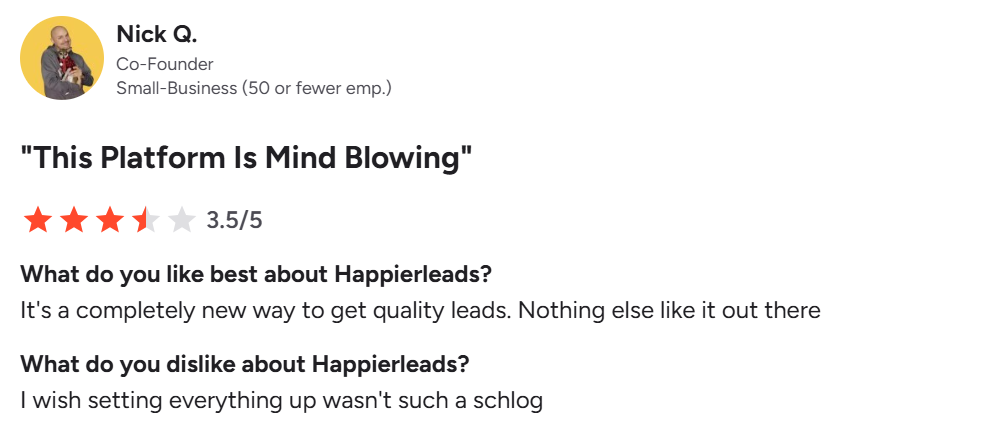
For teams without dedicated technical or RevOps support, onboarding may require additional effort.
At RB2B, we're not new to website visitor identification or account-based marketing (ABM). Our founder, Adam Robinson, has spent over half a decade helping e-commerce brands deanonymize website visitors, particularly those behind abandoned carts. So, that they can recover revenue they thought was lost. He later applied that same technology to build RB2B, a contact-level website identification tool designed specifically for B2B teams.
Today, we serve a wide range of customers. Many of whom switched from tools like Happierleads. That gives us a practical, inside look at the strengths and weaknesses of most tools in the ABM space. This review is based on that practical experience. If that isn't convincing enough, our 4.5/5 rating on G2, based on hundreds of user reviews, should be.
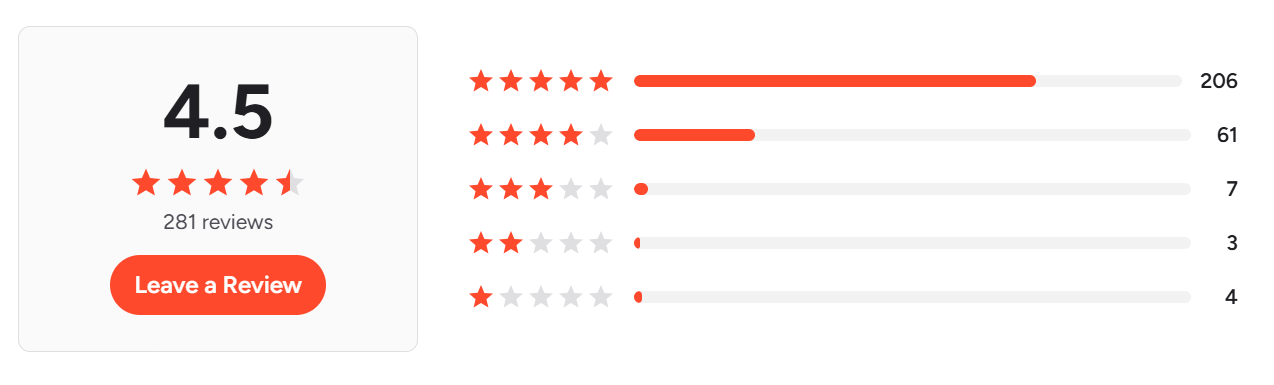
Here are the best 10 Happierleads alternatives for 2026. Below, we will break down each tool's key features, pros, cons, and pricing.
Best for: Small teams that want to start free and scale affordably
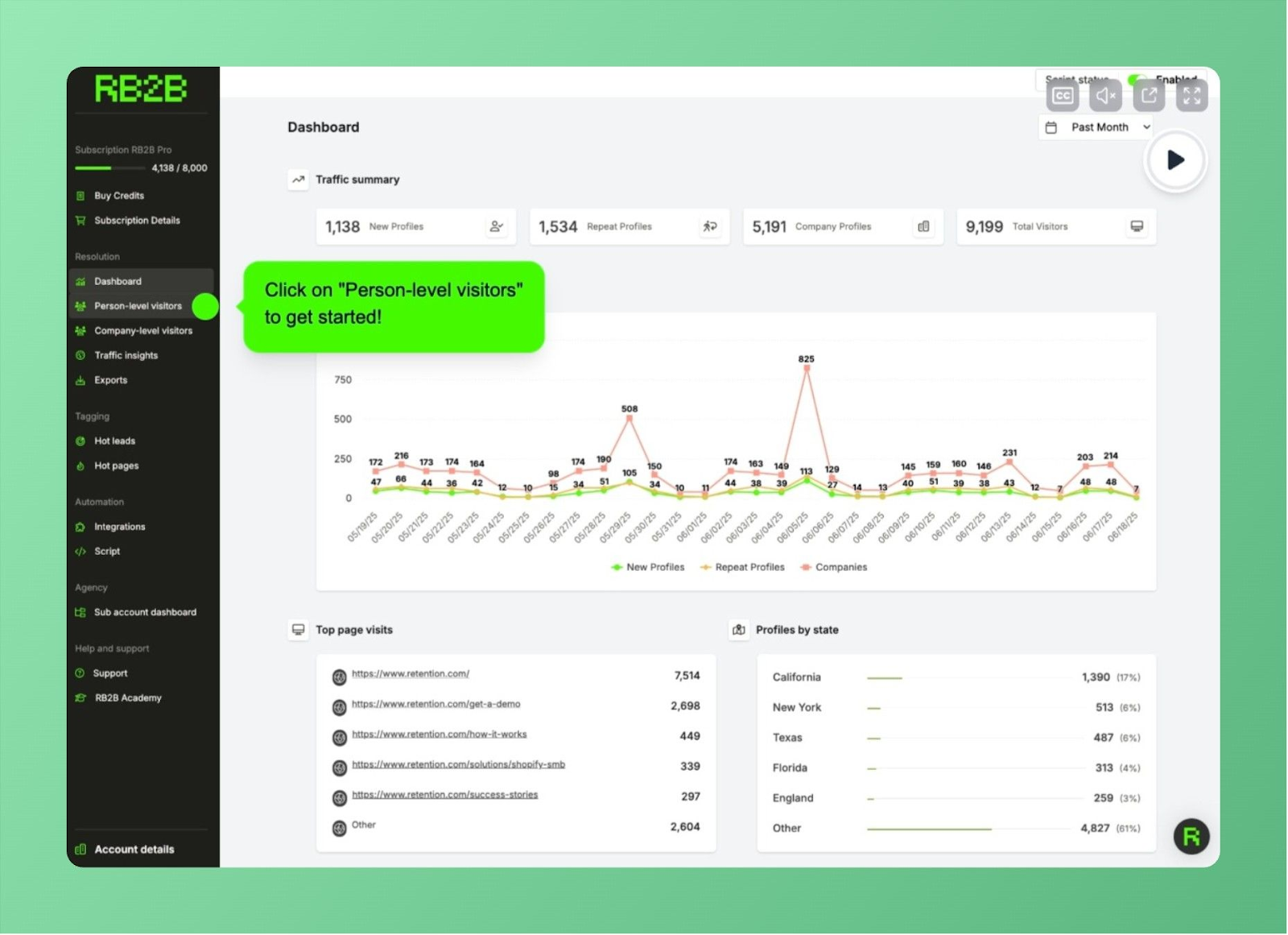
RB2B identifies the actual person visiting your website, not just the company they work for. It then pushes those leads directly to Slack, Microsoft Teams, or your CRM, so your team gets real-time alerts and can act immediately.
RB2B offers a freemium plan that allows you to identify up to 150 companies per month. As your website traffic grows, you can scale affordably to any of RB2B's 3 paid plans:
Best for: Teams that want highly detailed data on every ICP account.
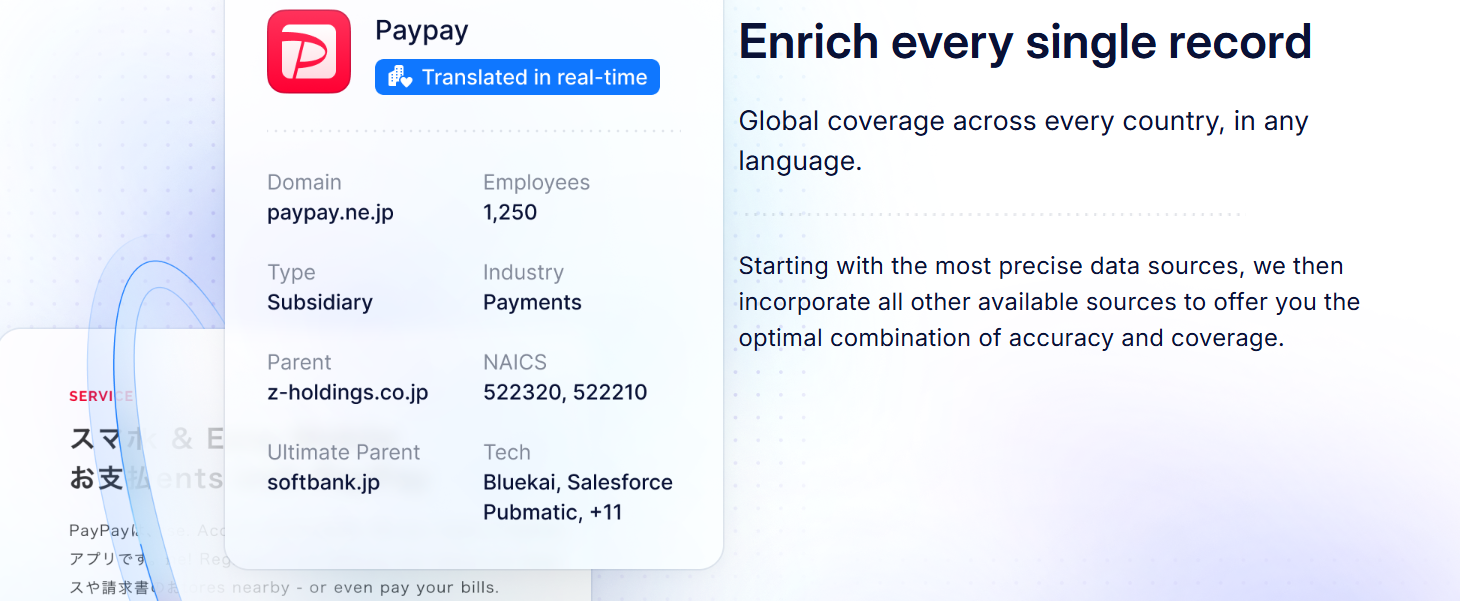
Clearbit, now part of HubSpot, enriches recognized leads and accounts, whether identified from website visits or already stored in your CRM, with up to 100+ B2B data points.
Beyond basic firmographics, Clearbit builds organizational hierarchy charts for each company, helping you identify stakeholders with the most purchasing influence. It also automatically scores and routes leads, so your team can prioritize outreach effectively.
Clearbit is bundled within HubSpot's ecosystem and cannot be purchased as a standalone product. HubSpot offers a free plan that allows up to 2 users and paid plans ranging from $9/month to thousands of dollars per month, depending on features and team size.
Best for: Teams that want to handle both lead capture and engagement from a single platform.
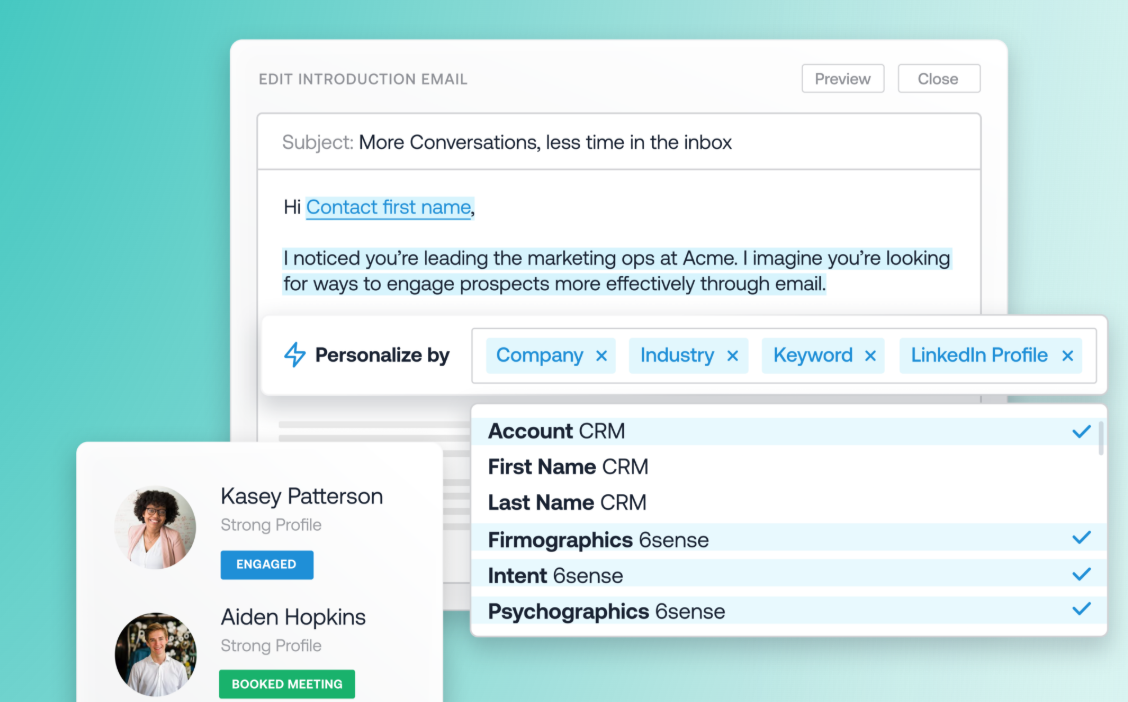
6sense doesn't just identify your ICP accounts based on website visits. It also analyzes additional buying signals, like competitive research, and then ranks accounts based on their likelihood of purchase.
Beyond identification, 6sense builds targeted, personalized email workflows for each account using the data it collects. This allows your team to both discover and engage prospects without constantly switching between tools.
6sense offers a free plan that includes 50 credits per month. However, its paid plans are custom-priced and require booking a demo. According to publicly available reviews, pricing averages around $65,000 annually, with costs reaching $150,000+ per year for large teams.
Best for: Teams that sell to audiences with unique or non-traditional buying behaviors.
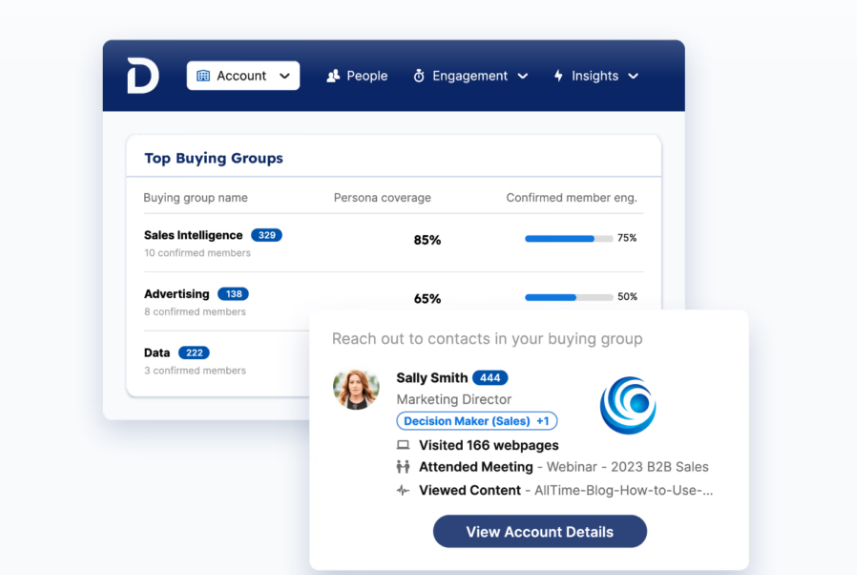
Demandbase identifies ICP accounts based on customized buying signals you define upfront. This allows your team to specify exactly what qualifies as buying intent to your audience.
If your buyers usually read several use-case blog posts before requesting a demo, Demandbase can treat those visits as strong buying signals. It then prioritizes those prospects for outreach, even if they haven’t viewed the pricing page yet.
Demandbase can also analyze how your existing customers converted. Then, it can use those insights to more accurately identify accounts that are close to making a purchase, helping your team focus outreach where it's most likely to convert.
According to online reviews, Demandbase typically costs $100,000+ per year. Pricing varies depending on your configuration, data needs, and team size. For an exact quote, you'll need to contact Demandbase's sales team directly.
Best for: Teams that want hands-free lead identification and engagement.
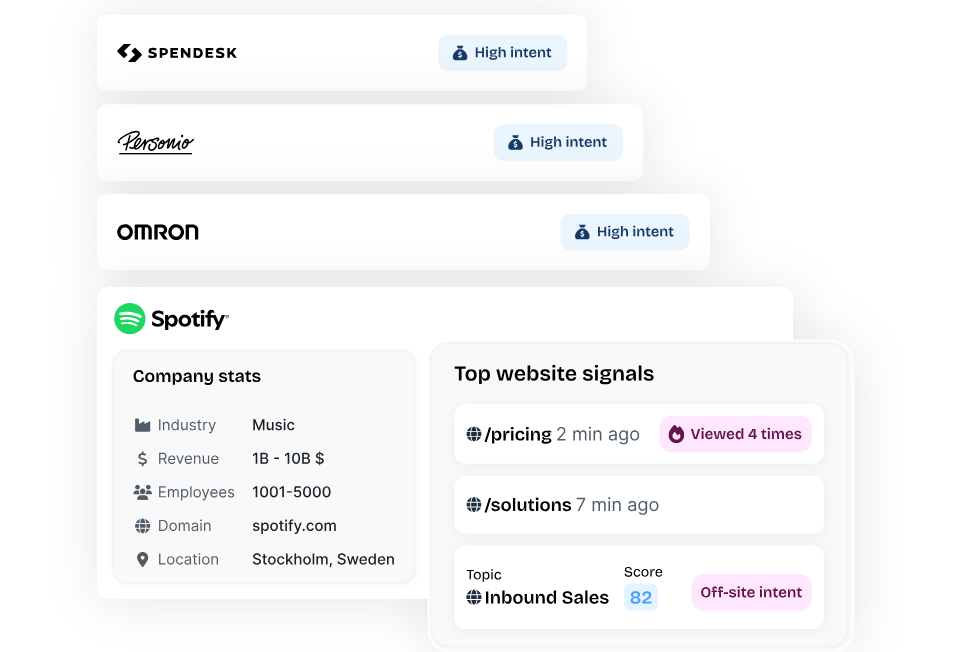
Albacross acts as a background GTM tool that automatically identifies, captures, and engages ICP accounts visiting your website.
Simply paste Albacross's snippet code on your website, connect your CRM, email, and LinkedIn accounts, and you have a fully automated system. It deanonymizes every website visitor, determines whether they match your ICP, and sends outreach messages if they do, all without requiring manual oversight. Albacross only notifies your team when a lead responds, allowing you to focus only on meaningful conversations.
Albacross charges based on the number of website visitors identified monthly. Paid plans range from €59 to €708 per month for 1 to 5,000 identified visitors. Custom pricing is available for teams that need to track more than 5,000 visitors per month.
Best for: Teams that need reliable data to power GTM decisions.
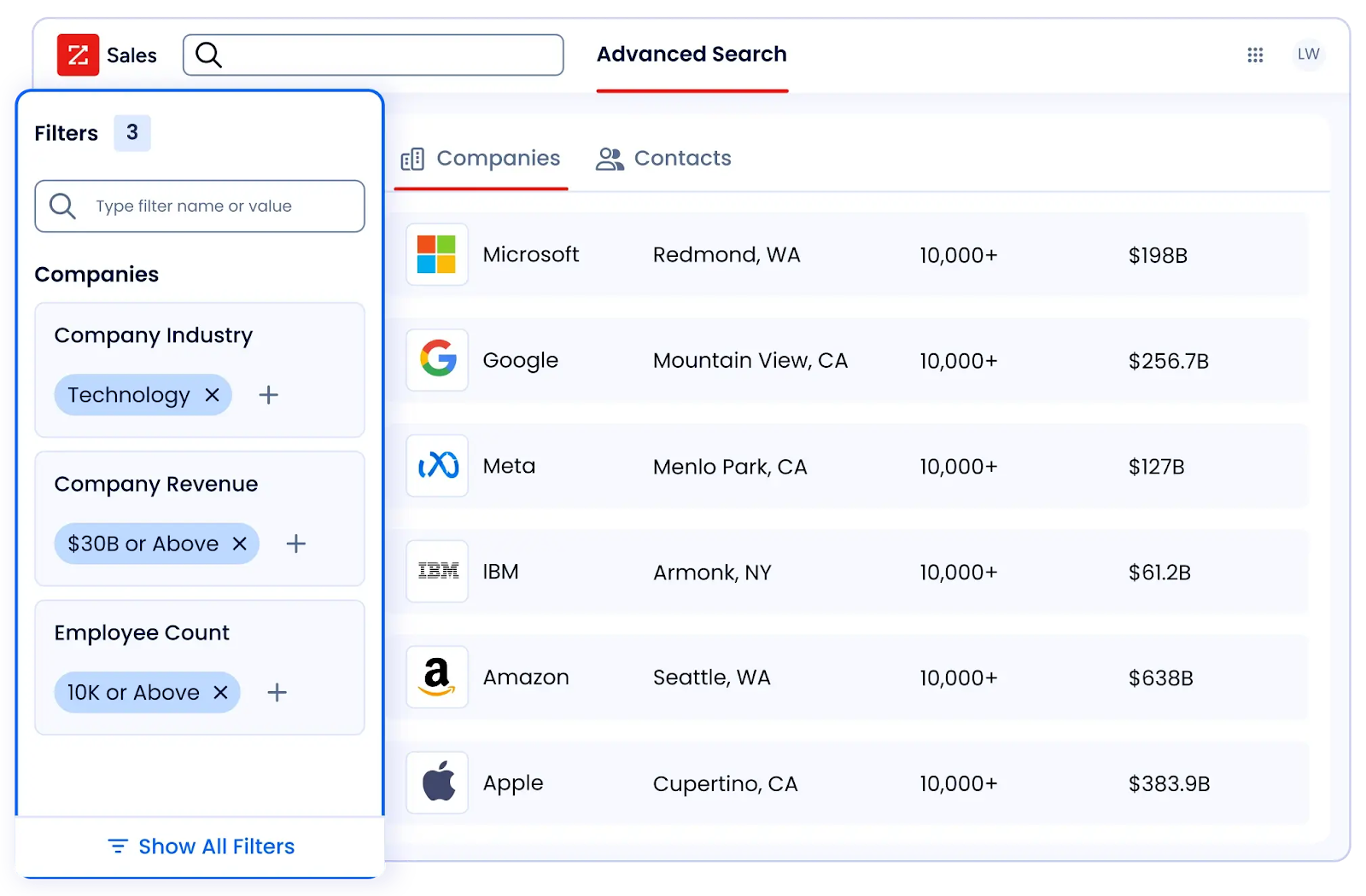
ZoomInfo serves as a trusted data backbone for GTM teams looking to maximize outreach efficiency and prioritize accounts most likely to convert.
Teams can define ICPs with fine-grained criteria, then use ZoomInfo's global B2B database to build and enrich a list of target accounts. The platform surfaces contextual signals like technology changes, hiring surges, and new decision-makers, helping your team know when and how to engage with each account.
ZoomInfo's pricing is custom and not publicly listed. Online reviewers report median costs of around $31,000 per year, though exact rates depend on your team size and configuration.
Best for: Teams that want accurate matching of every website visitor to their company, including remote workers.
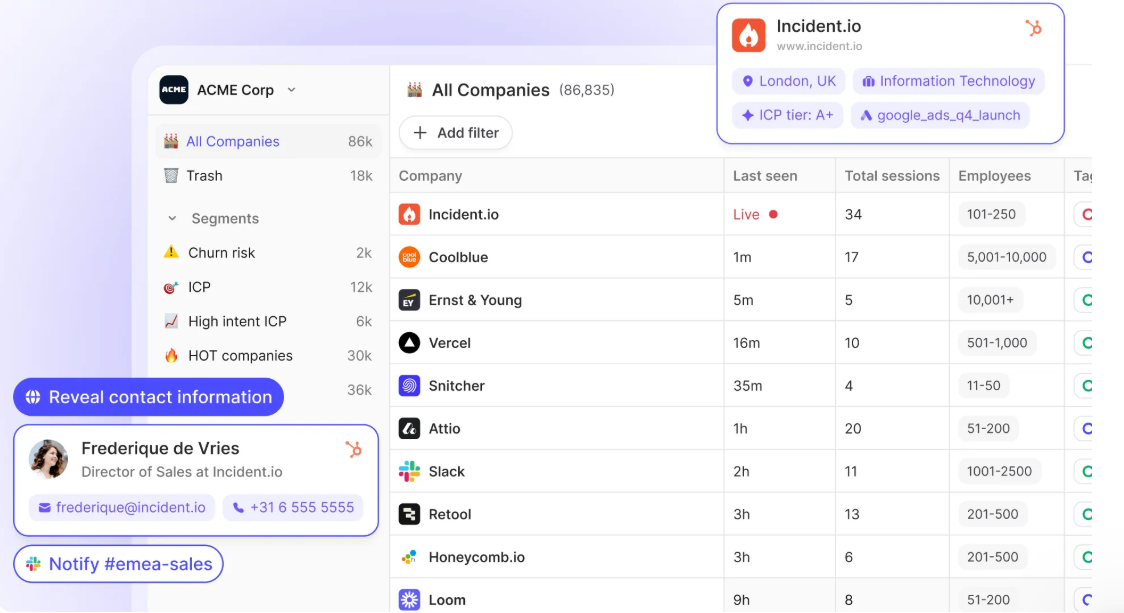
Snitcher solves the problem of identifying remote website visitors who cannot be matched via traditional IP addresses. Unlike static IP databases, Snitcher dynamically matches visitors, even remote employees, to the correct company.
In addition, Snitcher enriches each ICP company with contextual data, including technographic and firmographic attributes. This makes it easier to convert leads when your team reaches out.
Snitcher offers a 2-week trial for teams who want to test the platform before paying. Paid plans are tiered based on the number of identified visitors and start at $49/month.
Best for: Teams that want outreach data on both new prospects and existing customers.
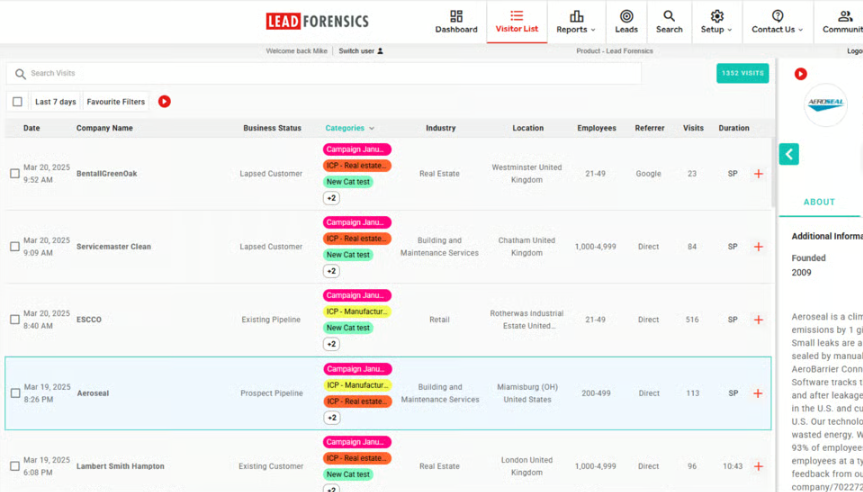
Lead Forensics helps B2B teams uncover both new ICP accounts by analyzing website visits, as well as track how current customers interact with their websites. This allows teams to catch upsell opportunities quickly and reach leads when buying intent is highest.
Lead Forensics uses custom pricing per user. Online reviews suggest a budget of $17,000 to $75,000 annually, depending on team size and enterprise needs.
Best for: Teams that want to build dynamic ad audience lists.
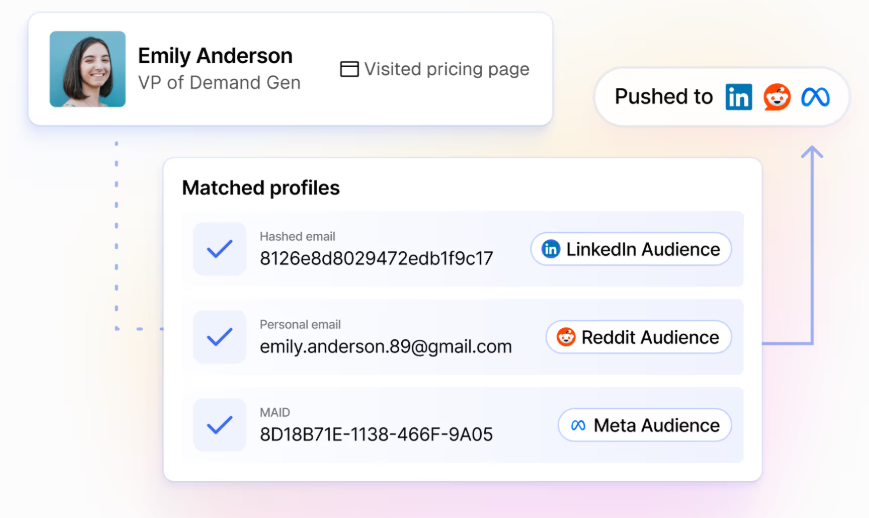
Vector helps paid media teams compile lists of ready-to-buy prospects based on signals like website visits, webinar attendance, and competitive research. This allows teams to run targeted ads instead of relying on generic ICP lists from outdated B2B databases.
Vector also tracks which ICPs engage with ads, whether they convert or not, for smarter retargeting and marketing follow-ups.
If you want to access only Vector's deanonymization technology, the Reveal plan is perfect for you and starts at $399/month. But if you want the full capabilities Vector offers, you'll need the Target plan, which starts at $3,000/month.
Best for: Teams that want an autonomous GTM platform.
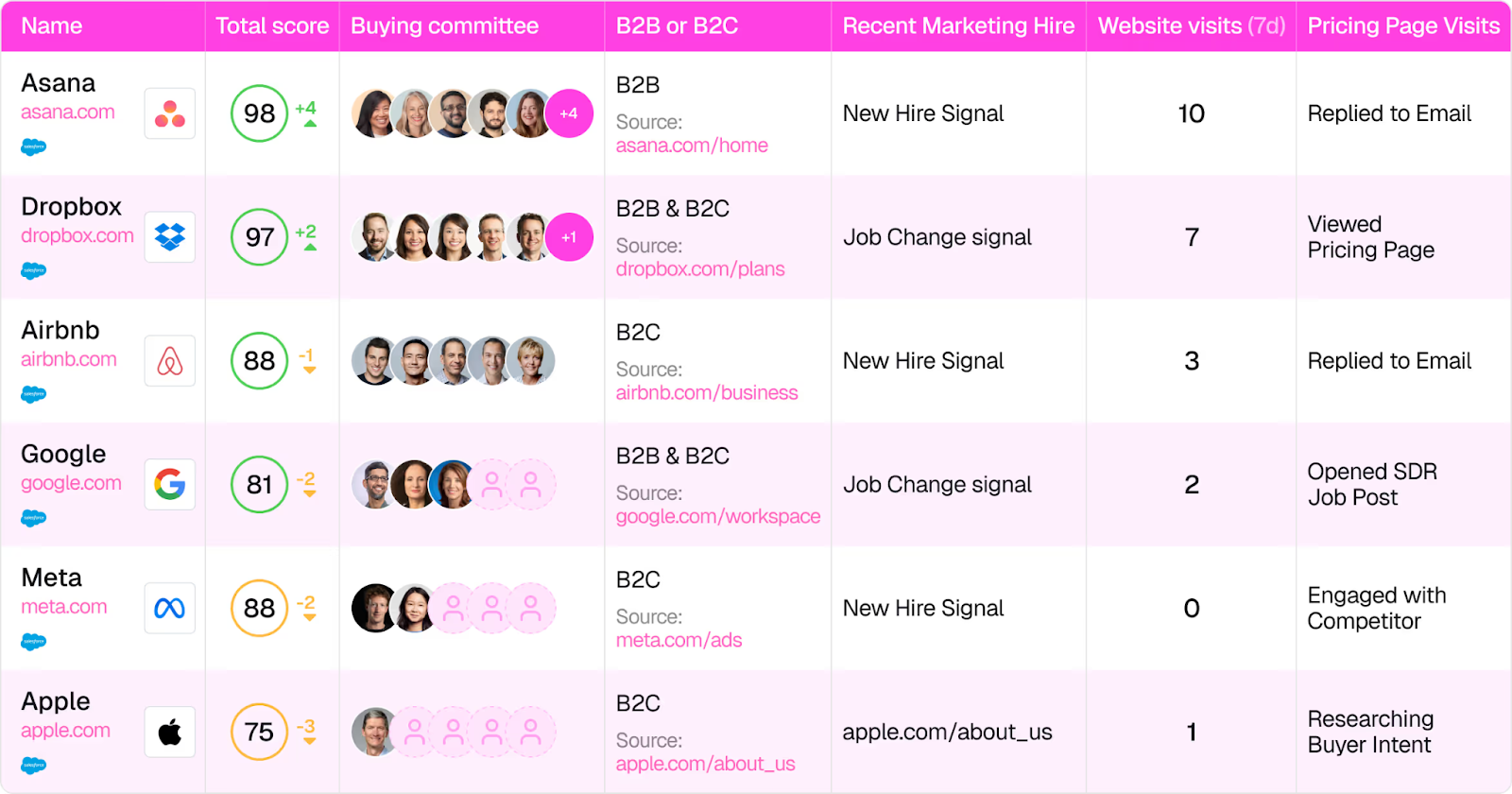
Warmly offers a fully autonomous GTM platform that manages your team's lead identification, lead scoring, and engagement using AI agents.
The platform first learns your business, then uses the TAM agent to find, score, and engage off-site ICPs, while the inbound agent converts website ICP visitors. This setup minimizes manual lead-finding and outreach while still allowing your team to maintain oversight.
Warmly's pricing starts at $20k per year, and pricing is tailored to your team size and goals. Need a custom quote? Visit Warmly's sales page and request a demo.
Happierleads may seem like an easy choice for lead generation at first. But you have to commit before fully testing the product and still pay at least $99 per month to identify just 150 leads. But as your needs grow, monthly costs will quickly add up. So, if you're new to lead intelligence and need a tool that lets you start small, scale affordably, and avoid costly migrations, RB2B is the best choice. You can identify up to 150 companies per month for free, and test every paid feature with a 7-day trial. Moreover, you can upgrade to plans that cost far less than most competitors.
Most importantly, RB2B goes beyond basic company-level tracking. It identifies both the person and the company behind your website visits, delivers those insights in real time, and plugs directly into tools like Slack, HubSpot, and Salesforce. That means your team can act on buying signals immediately, not hours or days later.
So, try out RB2B today for more visibility, faster outreach, and a better pipeline from the traffic you already have.
Yes. RB2B is a cheaper alternative to Happierleads. For example, RB2B's Pro plan costs $349/month for 2,500 resolutions, compared to $750/month on Happierleads. So, choosing RB2B will save your team hundreds of dollars per month.
Yes. RB2B is a Happierlead alternative that is designed for simplicity. From pixel installation to first lead identification takes just 5 minutes, and all lead data is automatically pushed into your existing workflow. No new tool learning curve is required as well.
Alert your reps, start automated outreach, and add to lead score in under five minutes.

