
RB2B AI: ASK US ANYTHING
B2B contact data providers are tools and services that help sales teams find, verify, and act on prospect information. The best ones go beyond static lists to deliver real-time buyer signals. Top picks: RB2B for real-time website visitor identification, ZoomInfo for enterprise-scale database coverage, and Apollo.io for budget-friendly all-in-one prospecting
Contact data is one of the most important investments in B2B sales. If the data is good, your sales team can drum up sales so easily that it would feel like cheating. For most B2B brands, their CRM is full of contacts who left their jobs two years ago. Because of stale or decayed data, cold emails bounce and reply rates tank.
Most SDRs think the problem is their messaging. It’s not.
It's your contact data. According to research, B2B contact information decays by about 30% each year. The right B2B contact data provider fixes that, and the difference shows up in your pipeline faster than almost any other change you can make.
RB2B works with more than 100,000 B2B teams to identify website visitors and turn buying intent into pipeline. That gives us a front-row seat to the challenges sales teams face with stale contact data, low response rates, and missed opportunities. Each tool on this list reflects insights from real users, plus our own research into features, pricing, data quality, and the gaps that can quietly cost teams revenue.
B2B contact data providers are platforms that help sales and marketing teams find professional contact information, build prospect lists, enrich CRM records, and support outbound campaigns. At the basic level, they give you emails and phone numbers. At the advanced level, they tell you when someone is ready to buy.
With that said, let’s briefly look at the three different types of contact data providers you’ll find on the market.
ZoomInfo, Apollo.io, and Cognism sit in this group. They hold massive third-party datasets containing tens or hundreds of millions of contact records. These are searchable using filters such as industry, company size, job title, and location. You run a search, export a list, and hand it to your SDRs.
The problem with these is timing. Having a contact in a database doesn't mean they're thinking about your product today. And because data decays so fast, a chunk of those records will be outdated by the time your team dials.
Clearbit, Clay, and Hunter.io fall under this category. These tools don't primarily help you find new leads. Instead, they help you improve the data you already have. You feed them a company domain or a partial record, and they fill in missing firmographics, verify emails, and flag bounces before you send.
Think of them as the quality control layer on top of your database.
This is where the market is moving. RB2B, 6sense, and Demandbase are examples of intent-driven contact data providers. This category of tools doesn't just find contacts. Instead, they identify active buying signals. Rather than prospecting broadly, you can prioritize the accounts and individuals already showing interest in your category.
RB2B takes this a step further by identifying individual website visitors, not just companies, in real time. Someone from your ICP lands on your pricing page, and within minutes, you have their LinkedIn profile and job title in your Slack.
The shift from static contact databases to real-time buyer intelligence is the solution to the age-old problem of contact data decay. Your SDRs can work with live data, resulting in higher response rates and increased sales.
Not all contact data tools are built the same. Here's what we looked at when putting this list together:
Best for: B2B teams who want to reach high-intent buyers before competitors do
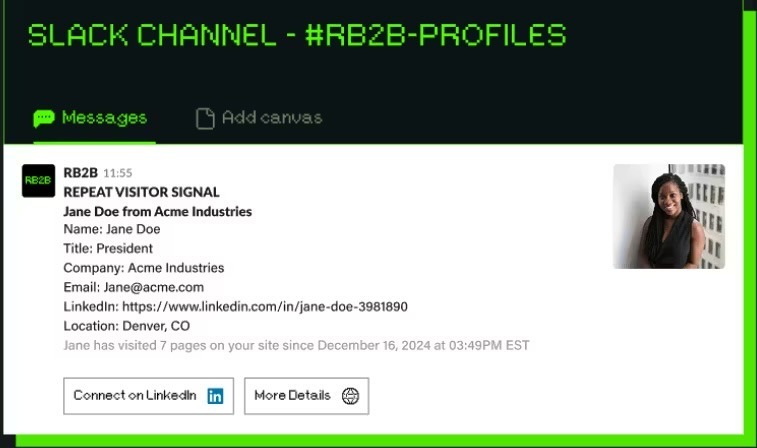
RB2B is the best B2B contact data provider for brands that want to move fast and accurately. It primarily functions as a real-time website visitor identification platform. All you have to do is drop a lightweight tracking pixel on your site, and it starts matching anonymous visitors to individual LinkedIn profiles, including their names, job titles, companies, and email addresses.
The data is first-party and captured at the moment of intent, not pulled from a static index that decays by the day. Additionally, it flows directly to your Slack, Microsoft Teams, or CRM.
What makes RB2B different from company-level visitor tools is the person-level match. The platform identifies 70-80% of U.S. website traffic at the person level. This means you don't just know that someone from a target account visited your site. Instead, you know exactly who visited, and you can reach out within the hour.
Best for: Enterprise sales teams that need massive contact coverage.
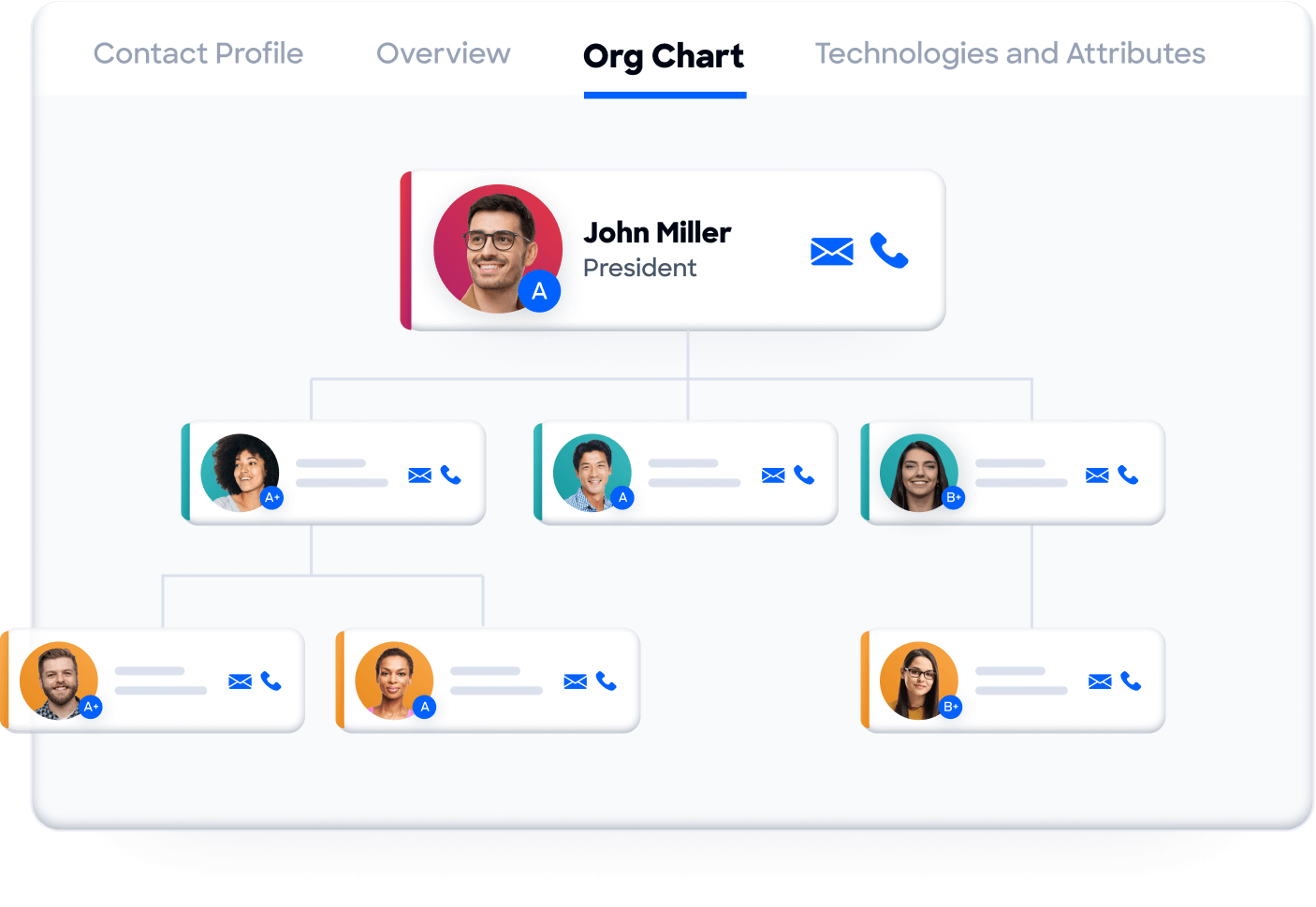
ZoomInfo is a B2B contact data provider that offers contact databases with hundreds of millions of contacts and company records. The database is searchable using dozens of filters, including intent data, technographics, org charts, and hiring signals.
The major tradeoffs of databases like this are cost and data freshness. First, ZoomInfo's pricing is enterprise-level, putting it out of reach for smaller businesses. Secondly, like all large databases, a portion of the records is stale. Teams that buy it without a clear ICP often end up with huge lists and mediocre results.
ZoomInfo does not list pricing plans publicly. Cost typically depends on company size, number of users, and data access needs.
Best for: Startups and growing teams that want outbound prospecting in one place
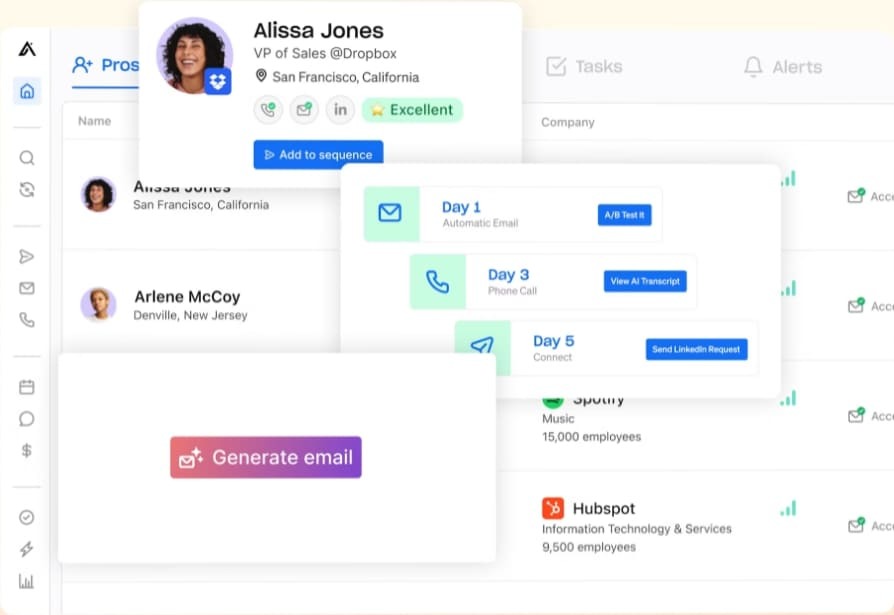
Apollo.io is a platform that combines sales intelligence, prospecting, and engagement tools. It also comes with a contact database of over 275 million records, built-in email sequencing, dialing, and analytics. For early-stage teams, it removes the need for five separate tools. You prospect, enrich, and run sequences without leaving the platform.
The data quality is solid at the contact level, though it varies by industry. Intent data is also available, but is lighter than tools like RB2B.
Best for: Revenue teams selling into Europe who need GDPR-safe contact data
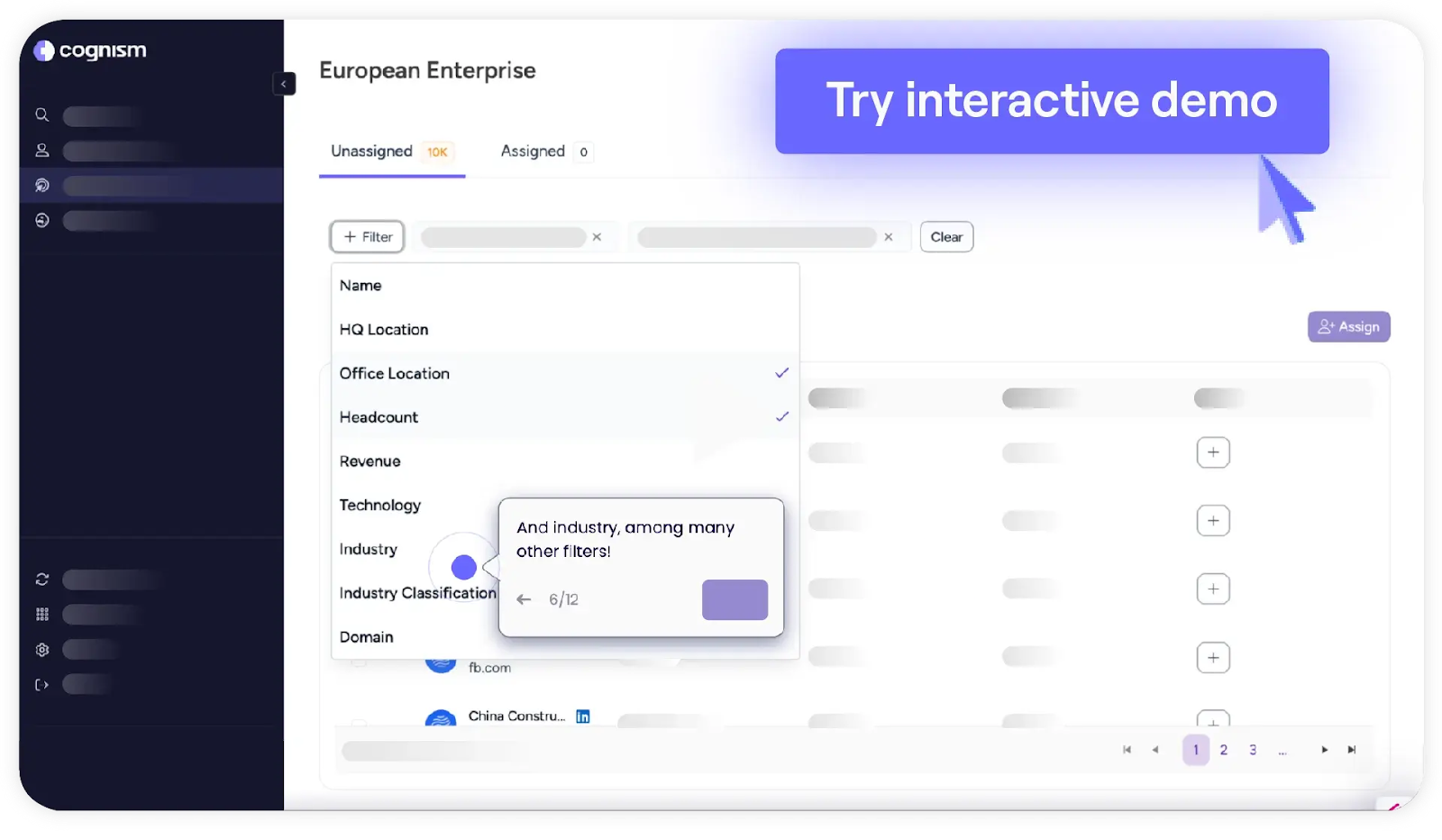
Cognism is a data platform specializing in compliant, verified contact data. Its main focus, however, is EMEA markets. It's one of the few providers that verifies mobile phone numbers before including them in your search results, which makes a real difference for teams doing cold calling.
If you're selling into the UK, DACH, or the Nordics, Cognism should rank high on your list of the best B2B contact data providers. It has better coverage than most U.S.-centric databases.
Custom, typically mid-market to enterprise pricing
Best for: Marketing and RevOps teams enriching CRM and website data
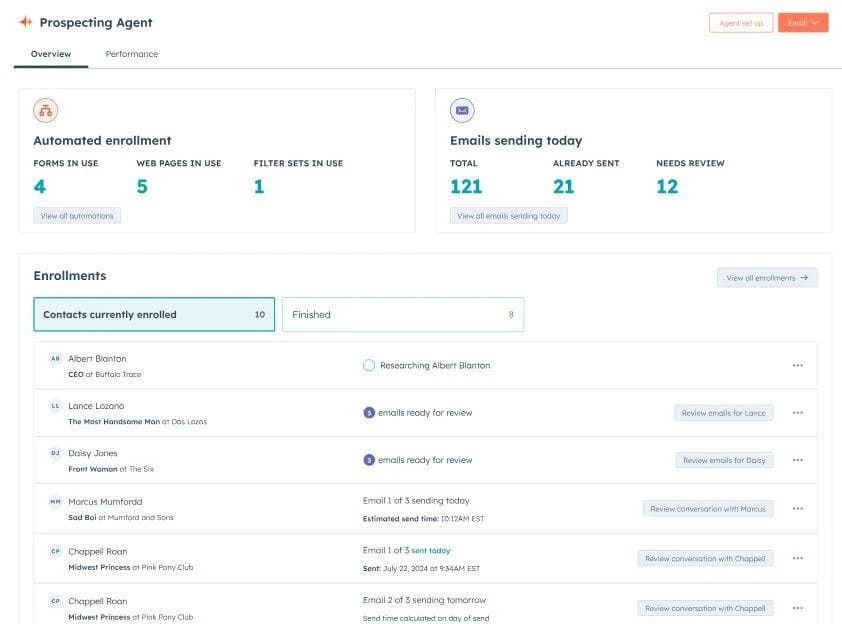
Breeze Intelligence (formerly Clearbit) is a data enrichment platform. You give it a company domain or email address, and it fills in job title, company size, industry, tech stack, and more. It also powers website personalization by showing different content to visitors based on their company profile.
Users get the most value when it’s layered on top of existing workflows, not as a standalone sales prospecting tool.
Custom pricing through HubSpot.
Best for: SMBs and solo reps who need simple, fast contact lookups
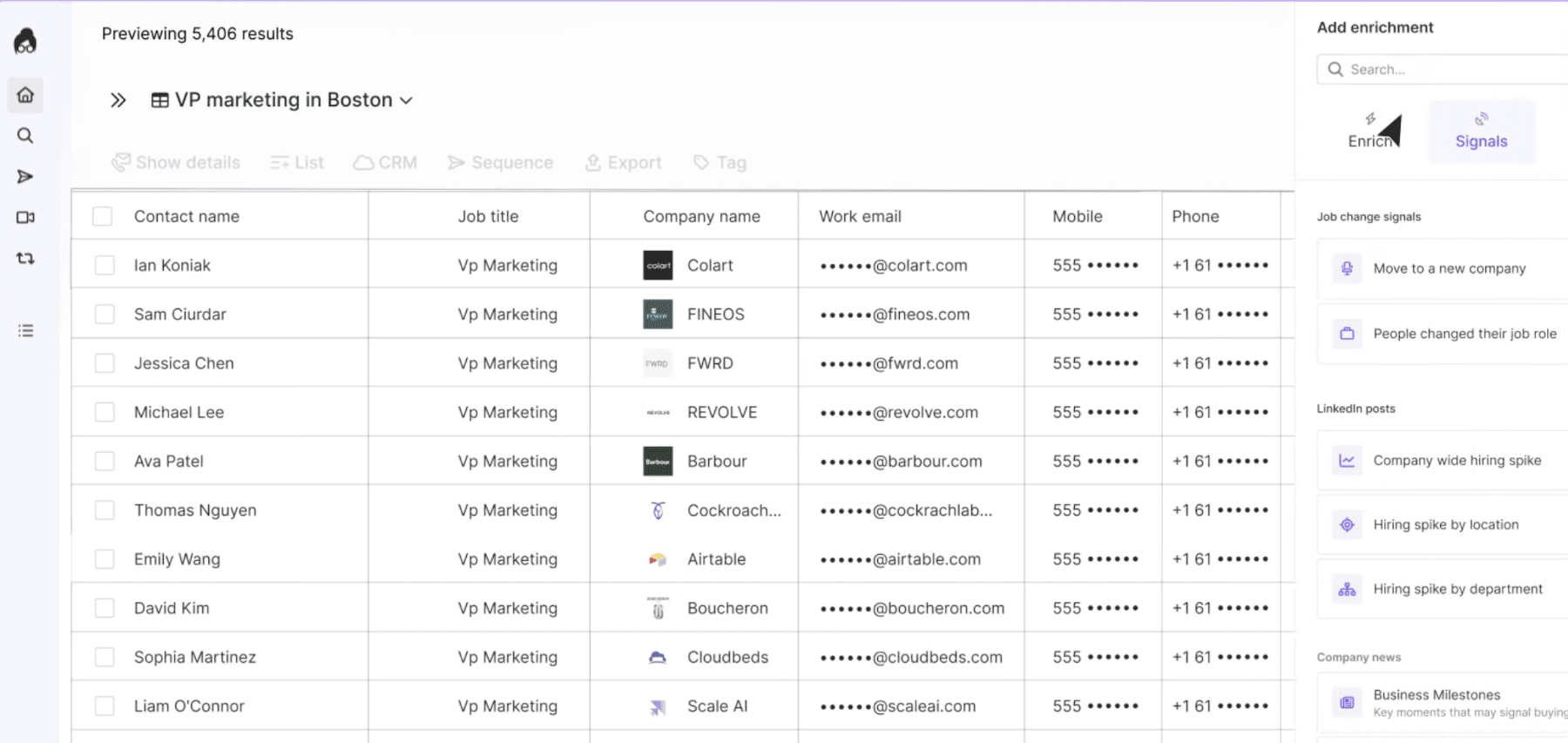
Lusha is a sales intelligence platform offering contact and company data. It also provides real-time buying signals, conversation intelligence, and AI-powered prospect recommendations. One of its biggest strengths is Workspace, a feature that brings your CRM data, Lusha-enriched records, and live buying signals together. This enables your team to prioritize the right accounts without switching between tools.
Lusha is GDPR, CCPA, and SOC 2 Type 2 certified, making it a solid option for teams selling across multiple regions.
Best for: Teams that prioritize data accuracy over database volume
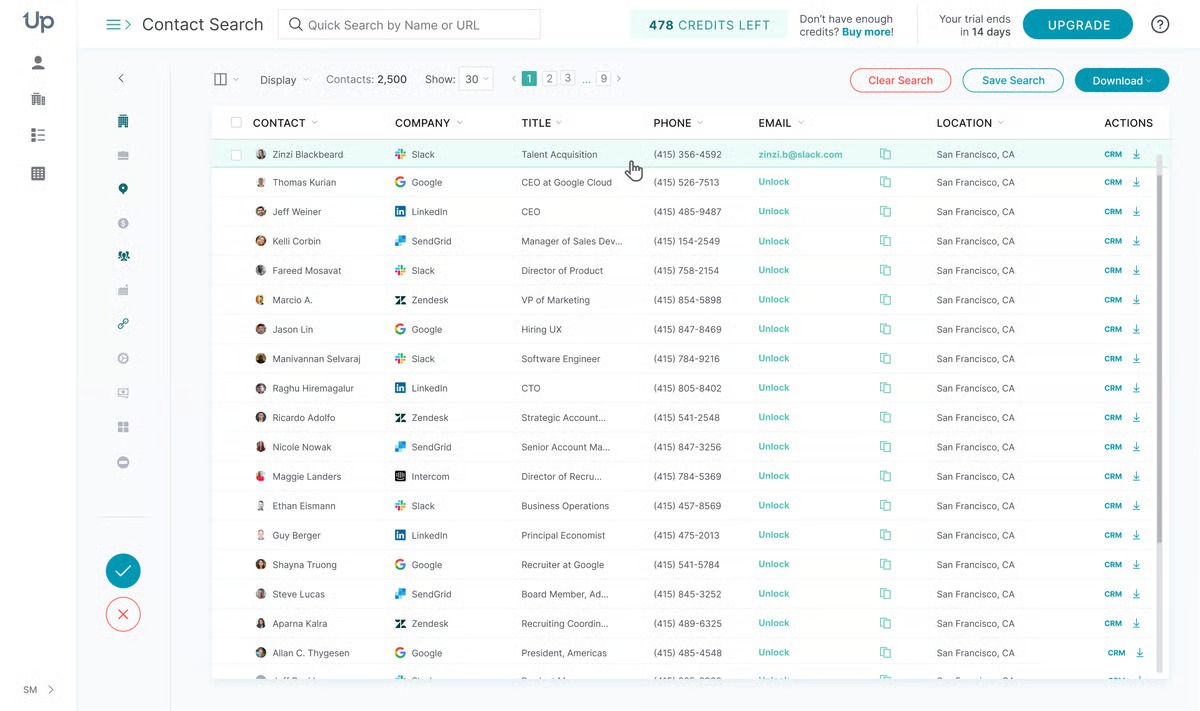
UpLead is a B2B contact data provider that offers verified emails, mobile numbers and intent data in real-time. The platform claims a 95% accuracy guarantee and backs it with email verification at the point of export. If a contact bounces, you get the credit back. For teams that have been burned by high bounce rates from other databases, that's a meaningful promise.
The database is smaller than bigger players, but the contacts you pull are more likely to be deliverable.
Best for: Teams that want AI to surface contact data in real time
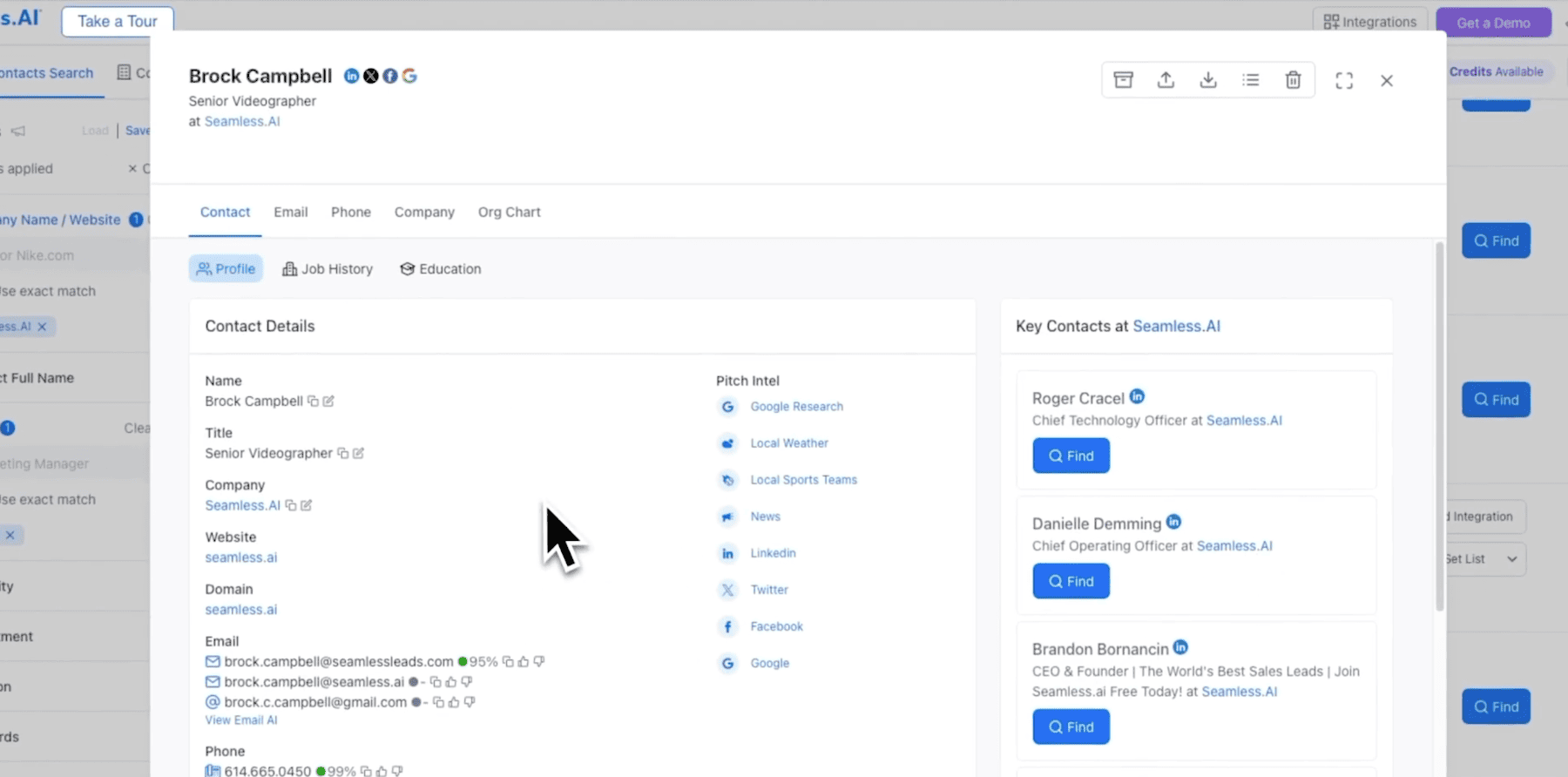
Seamless markets itself as a real-time search engine for B2B contact data rather than a static database. You search, and it builds a contact record by pulling from multiple sources simultaneously. In practice, results vary, with accuracy strong in some industries and weaker in others.
It's worth running a sample list before committing. Teams with narrow ICPs in well-covered industries tend to get more consistent results than those prospecting broadly.
Seamless doesn’t publish pricing information. Talk to sales for a custom quote.
Best for: Teams that need contact data for both sales and recruiting
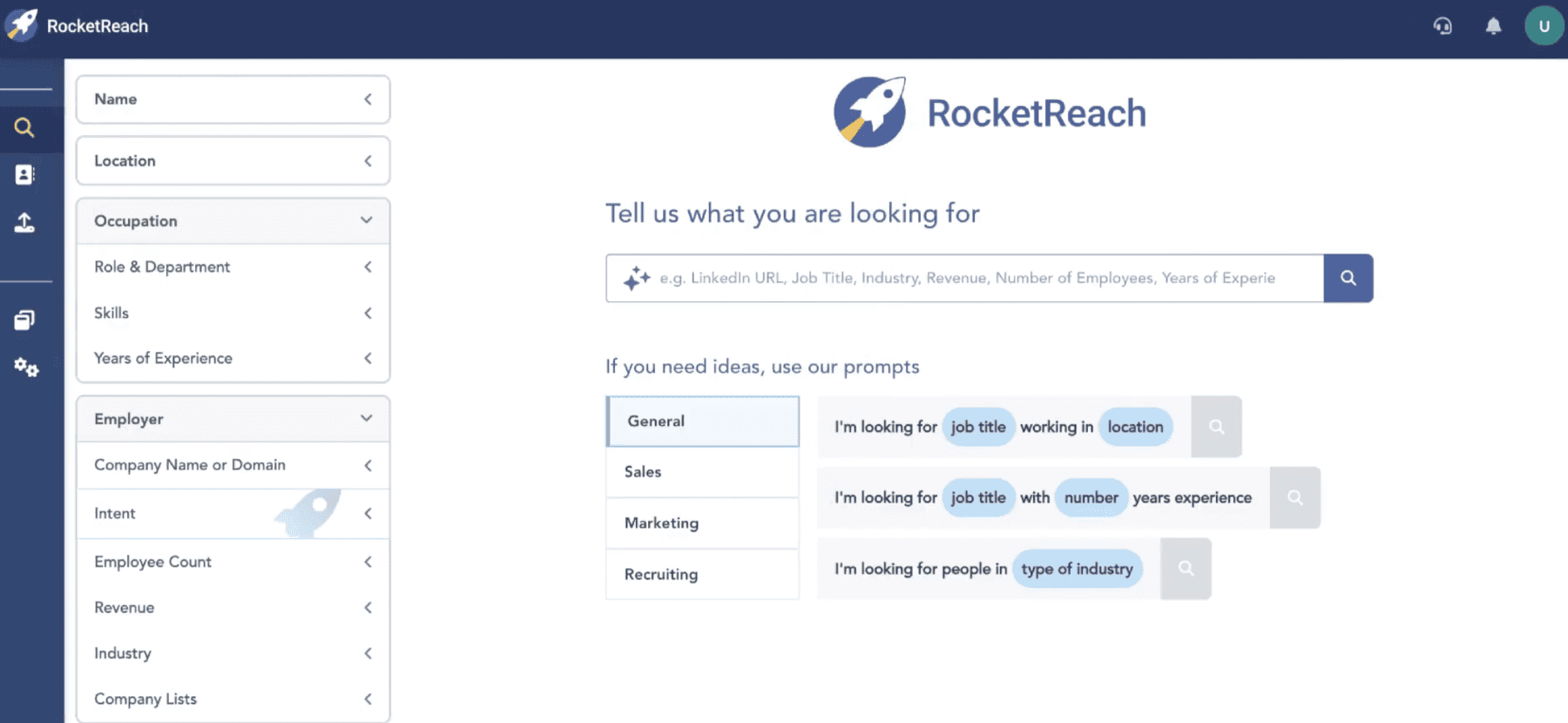
RocketReach covers a broad range of professional contacts across industries and roles, including many that more sales-focused tools miss. It's a good fit for teams with dual use cases or those needing to reach contacts in less-covered verticals like creative, media, or academia.
The API is a standout for technical teams. You can pipe RocketReach data directly into internal tools or enrichment workflows without manual exports.
Best for: SDRs who live in LinkedIn Sales Navigator and want faster prospecting
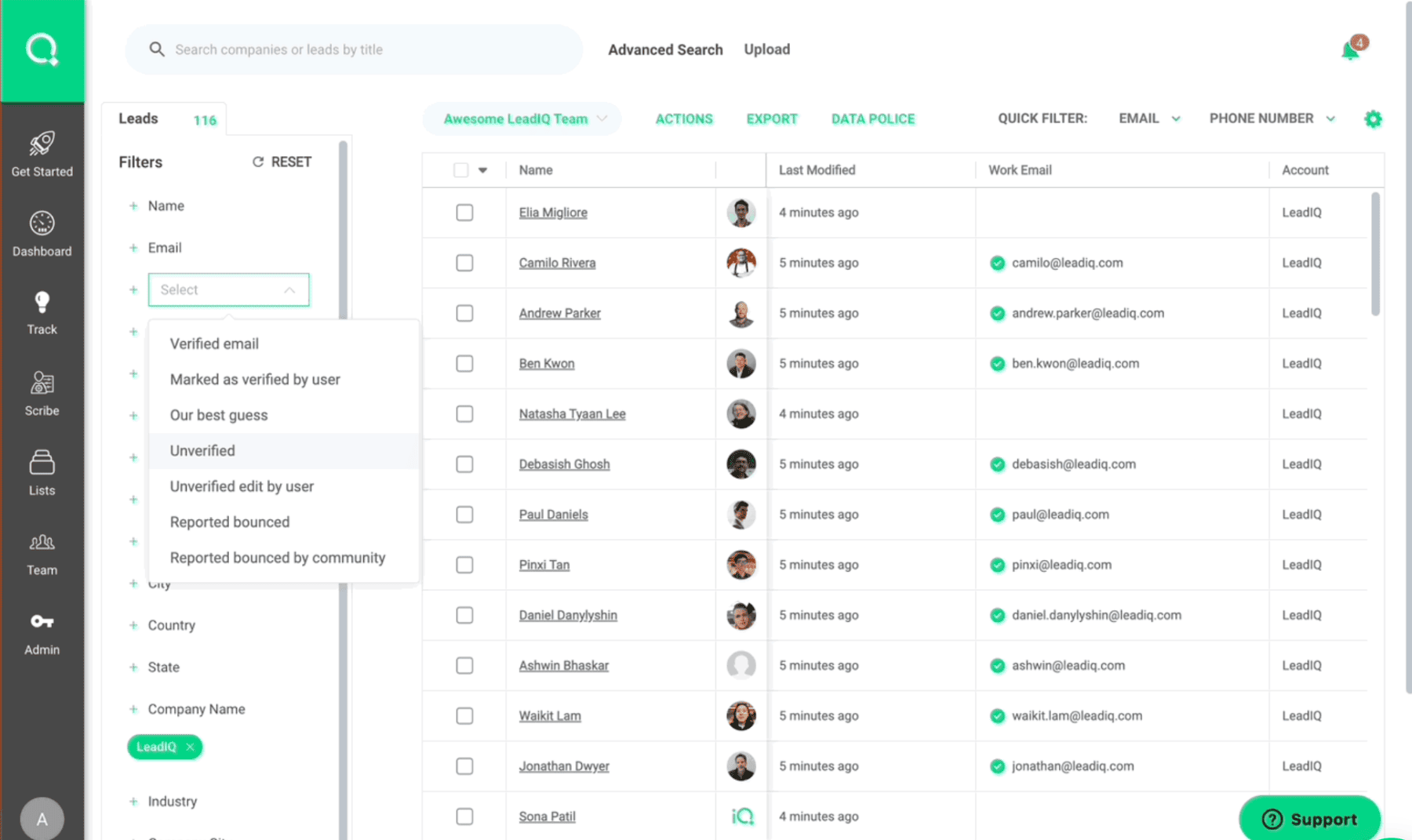
LeadIQ is a B2B contact data provider built for brands that mainly focus on LinkedIn prospecting. You browse Sales Navigator, and LeadIQ sits alongside it to capture contact data and push it to your CRM. It also helps you write personalized outreach messages with AI assistance. It's purpose-built for SDR efficiency rather than bulk list building.
Buying signal tracking is also baked in, so reps aren't just reacting to LinkedIn activity. Instead, they can reach out when an account shows a meaningful change.
Best for: Finding and verifying email addresses at a specific company
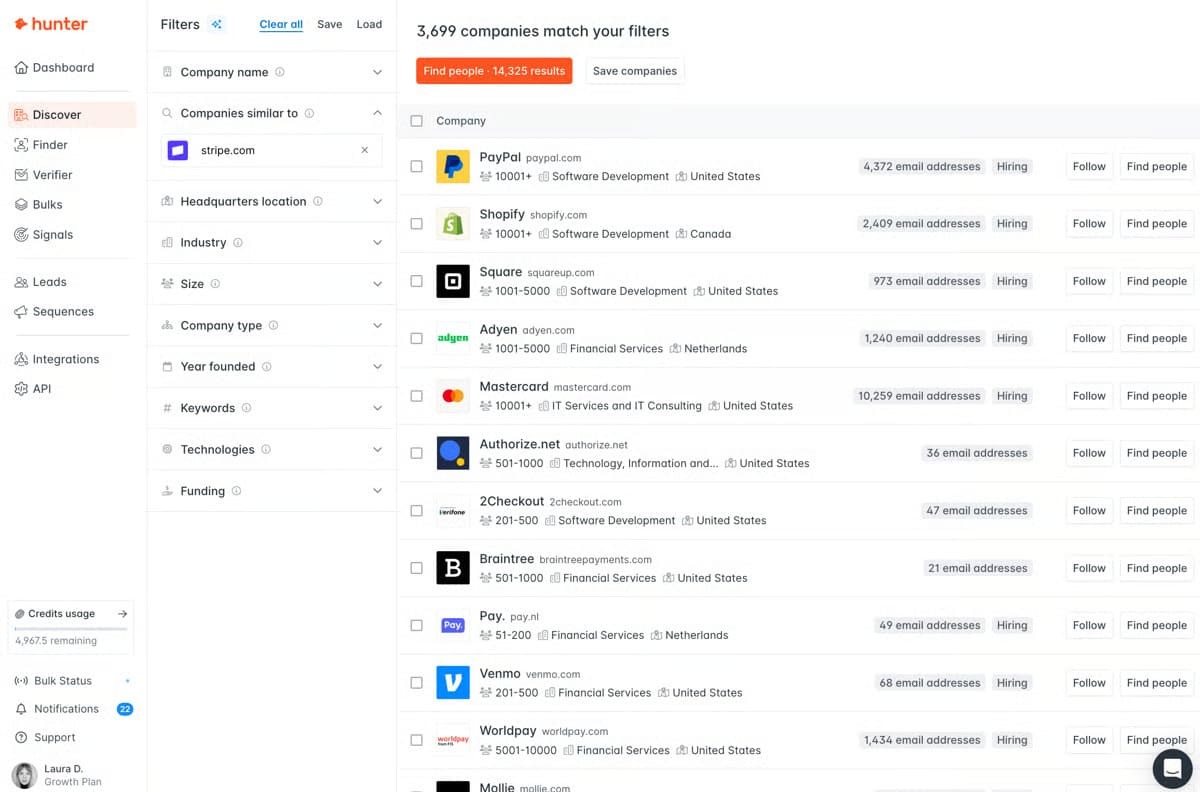
Hunter is a sales prospecting tool that does one thing really well: help you find contact details for prospects. Simply type in a company domain, and it returns the email addresses associated with that domain, along with a confidence score for each. It's the go-to tool for anyone doing manual research or needing to verify an email format before outreach.
Hunter also works well as a verification layer on top of larger databases — run your export through Hunter before a campaign and cut your bounce rate significantly.
Best for: European SDRs who need LinkedIn contact extraction with compliance
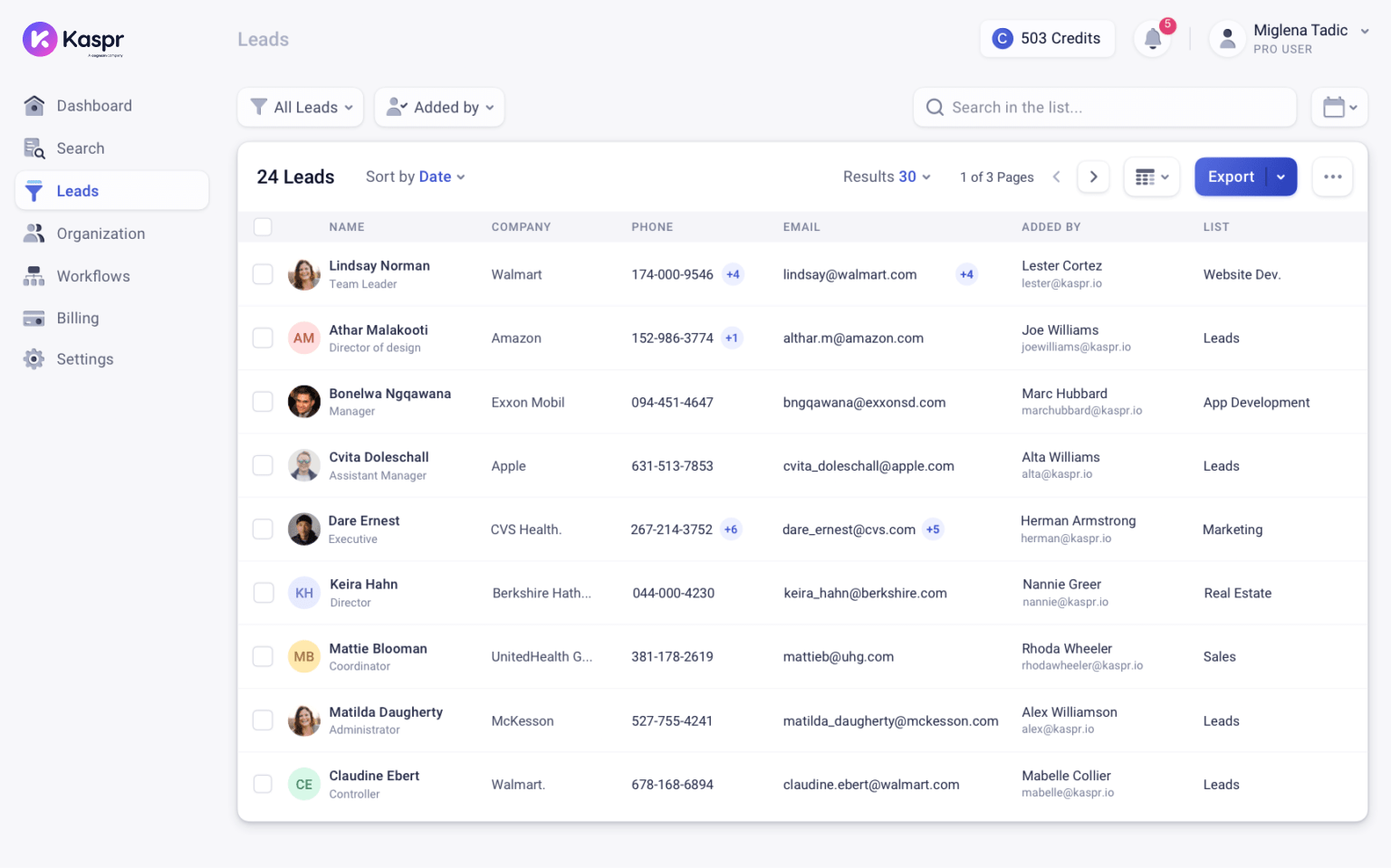
Kaspr is one of the best B2B contact data providers for European sales teams as it has a strong coverage in France, Germany, and the UK. It features a Chrome extension that pulls contact data from LinkedIn profiles and lists. GDPR compliance is built in, which matters more in Europe than most U.S. tools acknowledge.
For teams that find Lusha's European data lacking, Kaspr is the most direct alternative worth testing.
Best for: RevOps and growth teams building sophisticated enrichment workflows
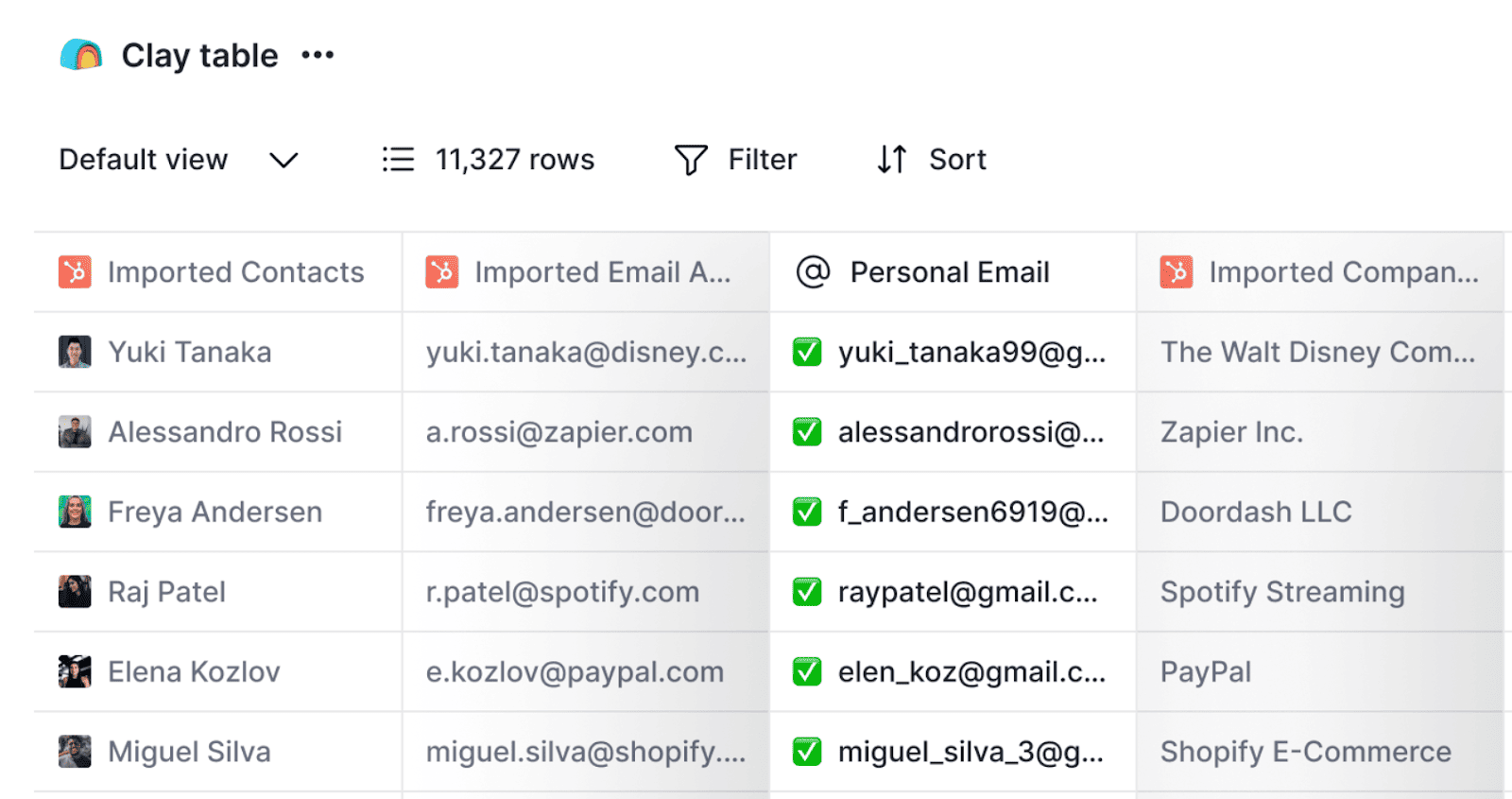
Clay is different from every other tool on this list. It's not a database but rather a data orchestration platform. You connect Clay to 50+ data providers (Apollo, Hunter, Clearbit, LinkedIn, etc.) and build enrichment waterfalls: if Provider A doesn't find an email, try Provider B, then Provider C. You only pay for successful enrichments.
For teams with technical RevOps talent, Clay can dramatically reduce enrichment costs while improving coverage.
Best for: Enterprise ABM teams running account-based go-to-market motions
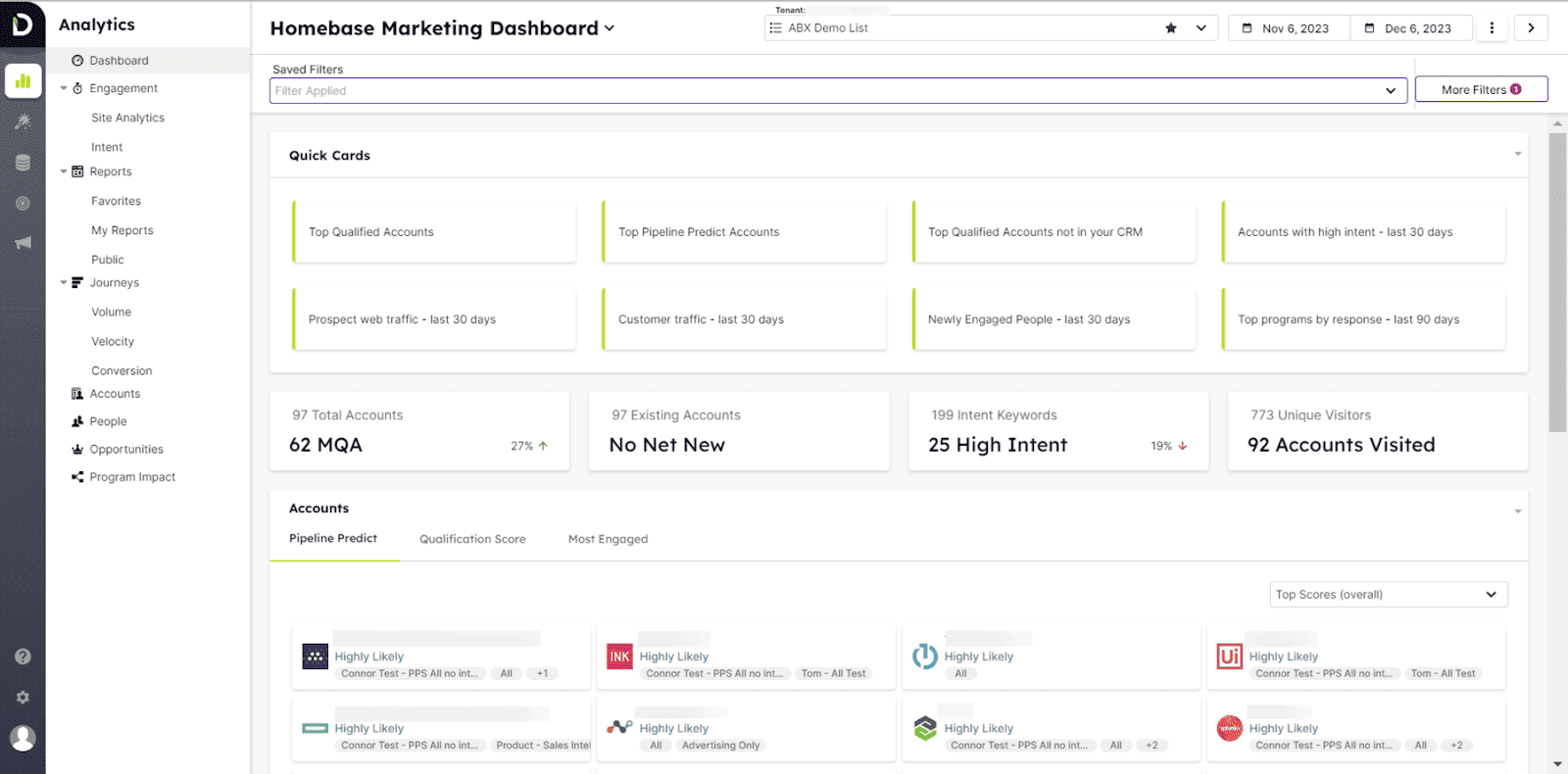
Demandbase is a popular account-based marketing platform that includes contact data. Its core value is account-level intent. The platform identifies which companies are researching topics relevant to your product across the web, then matches those signals to your target account list.
For enterprise teams running tight ABM plays, Demandbase is a solid B2B contact data provider to consider.
Enterprise custom pricing.
Best for: Enterprise revenue teams using predictive AI to prioritize accounts
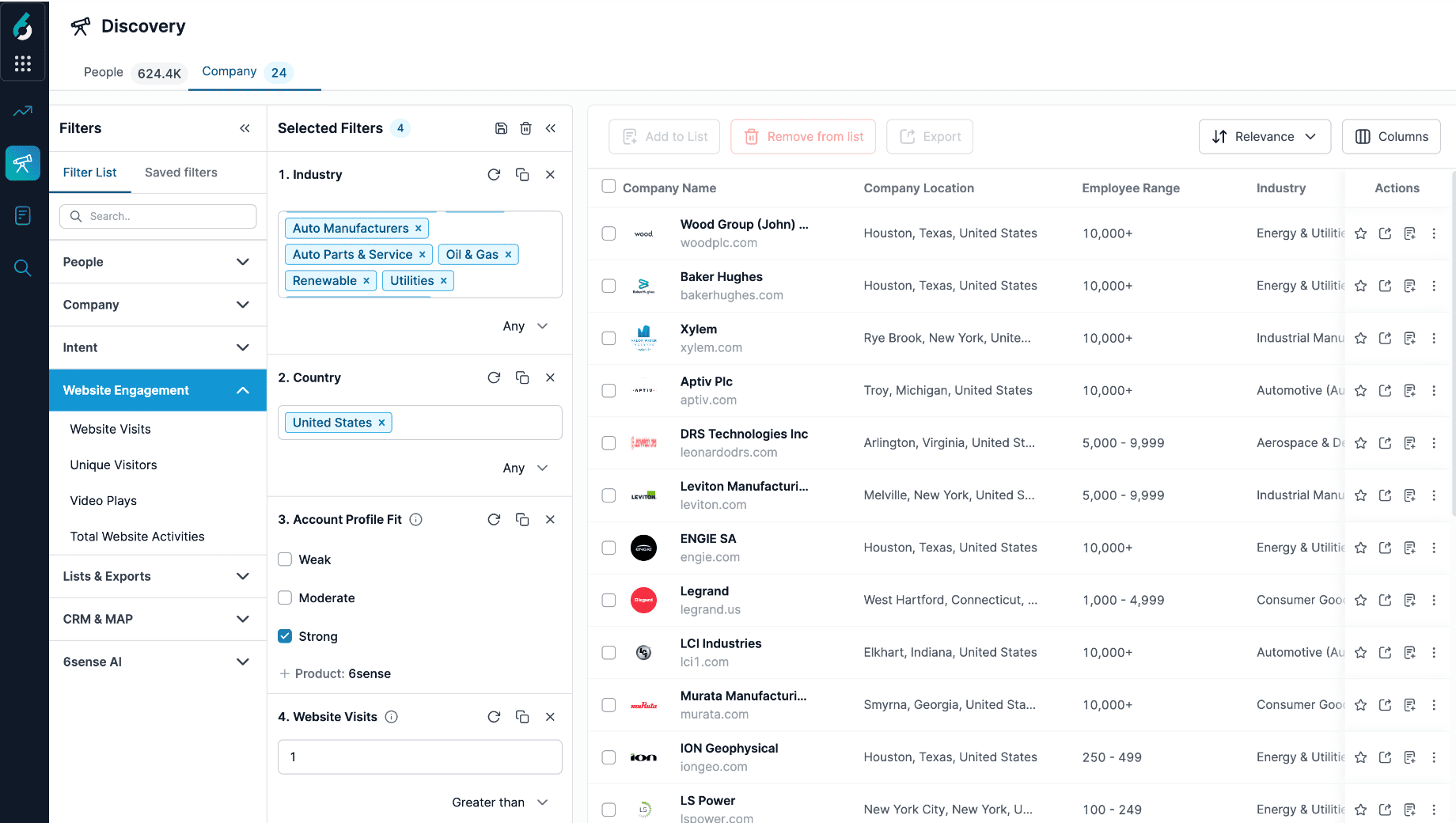
6sense is a B2B contact data provider built for enterprise revenue teams that need deeper account intelligence. The platform combines contact data, firmographics, technographics, CRM insights, and third-party intent signals to help sales and marketing teams identify high-value accounts earlier.
What makes 6sense different is its predictive AI engine. It analyzes buying behavior across the web to uncover accounts showing purchase intent, even before prospects fill out a form or contact sales.
Enterprise custom pricing.
The tool that's right for you depends on your go-to-market motion, not just your budget. Here's how to think through it.
Before evaluating any tool, answer this: how does your team prospect today? SDR teams doing high-volume outbound need a database with strong filtering, email verification, and sequencing integrations. ABM teams need account-level intent and coverage of their target account list. Founder-led sales teams often just need a simple Chrome extension and a reliable email finder.
Buying a $30,000 ZoomInfo contract for a five-person team doing LinkedIn outbound is a common, expensive mistake.
There are four distinct jobs to be done in contact data:
Many teams buy a single platform expecting it to do all four well. Most are genuinely strong at one or two and weaker on the others. Clay was built specifically for teams that figured this out — it lets you route each job to the best provider.
All databases go stale. The question is how fast and how the vendor handles it. Real-time tools like RB2B and Seamless.AI fetch data at the moment of lookup rather than pulling from a static index. Databases like ZoomInfo and Apollo refresh their records on a rolling basis, with some contacts updated more recently than others.
A practical test: before committing, run a sample of 100 current customers through the database and check match rate and accuracy. If the data on people you know is stale, it'll be worse for cold prospects.
If you're selling into Europe, GDPR compliance isn't optional. Cognism and Kaspr are built around it. Many U.S.-centric tools add a compliance checkbox without meaningfully adjusting their data practices. The difference matters if you're doing cold outreach in Germany or France.
For U.S. teams, CCPA compliance is increasingly relevant for California-based prospects. RB2B's focus on U.S.-based traffic includes compliance built into its core model.
This is where many teams get burned. Some providers charge per credit (one credit per contact export). Others charge per seat, per record, or per monthly usage. Enterprise platforms often lock you into annual contracts with minimum seat counts.
Map the pricing model to how your team actually works. A high-volume SDR team burning through contacts daily on a per-credit plan will spend far more than they projected.
Most B2B contact data providers still focus on static lists, which can help with scale but often miss timing. That works for broad outbound, yet it becomes less effective when your goal is predictable pipeline and stronger conversion rates.
That’s why RB2B is the best fit for teams that want to act on live buyer intent. It helps you identify who is already visiting your site in real time and turns that activity into faster, warmer outreach. If your team needs volume-first prospecting, a traditional database may still suit you, but for future growth, timing usually wins.
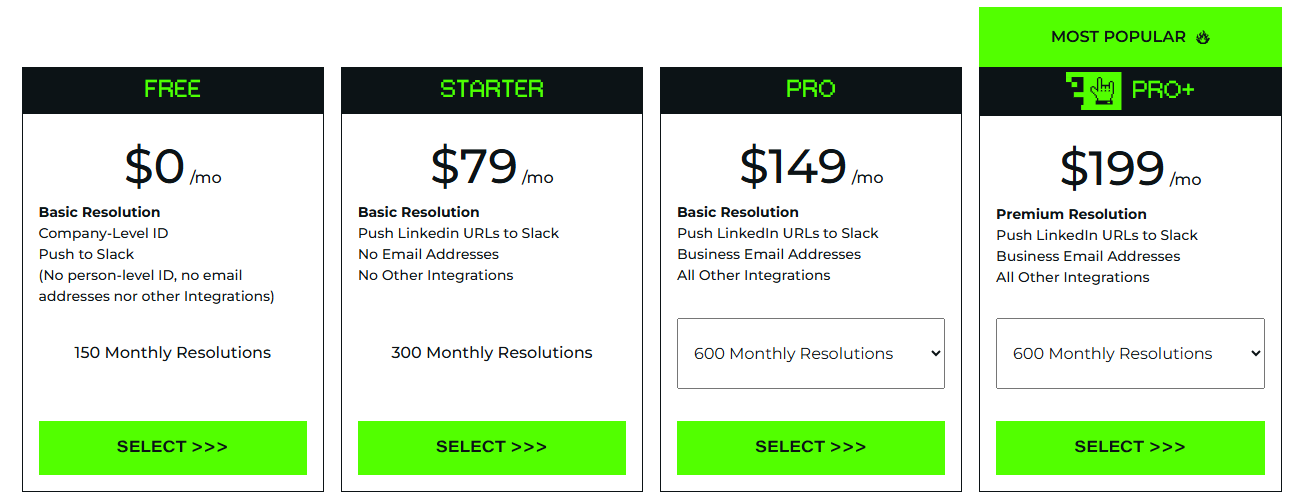
Sign up with RB2B and get 150 monthly credits and LinkedIn profiles sent to Slack. No credit card required. Get started with our 7-day free trial and discover new leads in minutes.
A B2B contact data provider is a platform or service that supplies business contact information to help sales and marketing teams find and reach potential customers. They range from simple email finders like Hunter.io to full revenue intelligence platforms like ZoomInfo and 6sense.
Contact data providers like RB2B capture people while they’re actively on your site and match them to live LinkedIn profiles in real time. That means the data reflects current buying intent, not stale records in a static list. For teams that care about timing as much as deliverability, RB2B is the more useful kind of accurate.
Most contact databases start with a list and ask, "Who should we contact?" RB2B starts with actual buyer behavior and asks, "Who is already interested?" Rather than searching through millions of records, RB2B identifies people visiting your website, matches them to professional profiles, and delivers that information in real time.
Contact data tells you who someone is. It generally includes their name, title, email, and company. Intent data, like you get with RB2B, tells you what they're doing. Contact data gets you in front of the right person. Intent data helps you reach them at the right time. The most effective outbound programs use both.
Yes. Many teams do. A common stack looks like: RB2B for real-time website visitor identification, Apollo or ZoomInfo for prospecting, Hunter or UpLead for email verification. Clay makes this multi-provider approach systematic by automatically orchestrating enrichment across sources.
Alert your reps, start automated outreach, and add to lead score in under five minutes.

