
RB2B AI: ASK US ANYTHING
Ready-to-buy B2B buyers are already out there. You just need the right demand generation strategy to attract them. Build a strong foundation with ICP definition, buyer journey mapping, content, SEO, ABM, and paid channels to drive the right audience to your website.
Then, use RB2B to identify the people behind your website traffic, uncover high-intent visitors, and capture the demand you’ve worked hard to create.
If you’re selling a B2B product or service, chances are the people who need your solution are already out there. They just don't know your brand exists.
And that creates one of the biggest growth challenges in B2B. Even with a great product and marketing budget, your growth will stall when the right buyers never discover you.
This article helps you fix that by teaching you how to generate demand and also how to convert that demand into qualified pipeline using RB2B’s first-party buyer intent data.
At RB2B, we are no strangers to the sales and marketing space. Our individual-level website visitor identification tool has helped 100,000+ sites identify the actual individuals behind their anonymous website traffic.
This article builds on the experience we've gained from helping businesses identify high-intent visitors and turn website activity into actionable sales opportunities.
B2B demand generation is the process of creating awareness, educating potential buyers, building trust, and generating interest in your product before people are ready to buy.
Think about how you buy software today. You probably don't start by booking a sales call. You search Google, read blog posts, compare different solutions, watch product videos, check reviews, and look at competitor options. Your buyers are doing the exact same thing.

Demand generation is about meeting them through and showing up throughout that research journey. It helps you educate your audience about the problems they face, build authority around possible solutions, and create enough trust that your brand becomes a preferred option when they are ready to make a decision.
The goal is to stay visible, useful, and relevant long before a prospect raises their hand and starts a conversation with sales.
Demand generation and lead generation are often mistaken as the same, but they are actually two different things.
Demand generation focuses on creating interest and awareness around your brand before a buyer is ready to take action. It helps potential customers understand their challenges, explore solutions, and build trust with your business.
Lead generation, on the other hand, focuses on capturing that existing interest by collecting information from people who have shown some level of intent, like through forms, demo requests, or content downloads.
This table simplifies their differences:
#
Factor
Demand Generation
Lead Generation
1
Purpose
Creates awareness and interest in your solution
Captures information from interested prospects
2
Primary KPI
Brand awareness, engagement, website traffic, market demand
Leads generated, conversion rates, sales opportunities
3
Buyer Stage
Early to mid-stage research
Mid to late-stage evaluation
4
Marketing Activities
Content marketing, SEO, social media, thought leadership, paid campaigns, ABM
Lead magnets, forms, webinars, demos, gated content
5
Typical Metrics
Traffic, engagement, content consumption, branded searches
MQLs, SQLs, meetings booked, pipeline created
In most settings, the two strategies work together. Demand generation creates demand, while lead generation captures and qualifies that demand for sales follow-up.
For example, a potential buyer might first discover your brand through an SEO blog that answers a problem they are researching. After finding your content useful, they might visit your website, download a guide, and end up booking a demo, moving from initial awareness to sales readiness.
Without demand generation, fewer potential buyers will enter the funnel in the first place. Without lead generation, it becomes harder to identify, nurture, and follow up with the prospects who are showing clear interest.
Many benefits come with setting up a demand generation strategy for your B2B brand. Some of them include:
B2B buyers rarely wake up one day and immediately book a demo. Most spend weeks or even months researching their options before they ever speak with a salesperson. They search for answers, compare solutions, read reviews, and consume educational content to understand their problems.
A demand generation strategy helps your brand show up during this early research stage. By creating valuable content and building visibility, you can influence buyers before they have narrowed their options or chosen a competitor.
B2B purchases are rarely made by one person. A typical buying decision may involve marketing teams, executives, finance, IT, and other stakeholders, each with different concerns and priorities.

At the same time, B2B buying cycles can stretch for weeks or months. A prospect might discover your brand today but only become ready to purchase much later.
Demand generation helps you stay relevant throughout this extended journey. By consistently educating and engaging your audience, you remain top of mind as different stakeholders evaluate their options.
Not every person who encounters your brand is ready to buy. However, demand generation helps attract audiences that are more likely to become valuable customers by focusing your efforts on educating and engaging the right market.
When combined with strong targeting and first-party intent signals, demand generation allows your marketing and sales teams to identify prospects who are not just interested in content, but showing buying behavior. This creates a stronger foundation for sales conversations and improves pipeline quality.
Cold outreach can still be effective, but it becomes more challenging when buyers receive countless sales messages every day. At the same time, rising customer acquisition costs make it more expensive to rely on only paid channels and outbound tactics.
Demand generation creates a more sustainable acquisition engine by building organic demand over time. Instead of constantly chasing prospects, you create an environment where more buyers discover your brand, engage with your content, and enter conversations with existing awareness.
Without demand generation, revenue growth often depends on unpredictable tactics: a successful campaign, a large ad spend increase, or a few outbound wins.
A consistent demand generation strategy, however, creates a repeatable system for attracting and educating potential buyers. Over time, this leads to stronger brand authority, more efficient acquisition, shorter sales cycles, and more predictable revenue.
Now that you know why investing in demand generation matters, let’s examine how modern B2B growth teams generate consistent demand. Here is the simple five-step process they follow:
The foundation of every successful demand generation strategy is knowing exactly who you are trying to attract. Because if you don’t, you risk spending time and money generating demand among people who are unlikely to ever become customers.
To identify the people most likely to benefit from your solution, consider factors like:
For example, a lead intelligence platform might define its ICP as B2B SaaS companies with growing sales teams, established outbound processes, and a need to improve prospecting efficiency. A cybersecurity company, on the other hand, may focus on regulated industries with dedicated security teams and strict compliance requirements.

Regardless of your niche, a clear ICP keeps your demand generation efforts focused on the buyers most likely to purchase your solution. Without one, even well-executed campaigns can attract attention from audiences that are unlikely to convert into revenue.
B2B buyers rarely move from discovering a problem to buying a solution immediately. They typically go through several stages of research, evaluation, and decision-making. And each stage comes with different questions, concerns, and information needs.
Understanding this journey helps you create demand generation campaigns that meet buyers where they are instead of pushing the same message to everyone. The goal is to provide the right information at the right stage, helping prospects move from initial awareness to purchase and beyond.
The typical B2B buyer journey features:
Understanding your buyer’s journey and mapping specific content to each stage ensures your demand generation efforts meet buyers with the right information at the right time. Instead of creating content just to attract traffic, you create resources that support the decisions prospects are already trying to make.
Once you understand who your buyers are and what information they need at each stage of their journey, the next step is creating content that helps them make better decisions.
B2B buyers spend a significant part of their research process looking for answers before they ever speak with sales. Educational content (like blogs, guides, original research, newsletters, social posts, etc) gives your brand the opportunity to become a trusted resource during that process.
But publishing content alone is not enough. Your content needs to be discoverable by the right audience and structured in a way that builds long-term visibility.
You can do this by creating content around topics your buyers are searching for, using keyword research to identify opportunities, and prioritizing terms with commercial intent. You can also build topical clusters instead of isolated articles to establish authority around important subjects.
Beyond traditional search, you should also consider AI search visibility by creating clear, authoritative content that can be understood and referenced by AI-powered search experiences.
Keep in mind, though: Building a strong content engine requires consistency. Publishing one article or campaign rarely creates meaningful demand. But if you consistently educate your audience, you’ll build trust, improve your brand visibility, and create a steady flow of potential buyers discovering your solution.
Content and SEO create long-term, compounding growth, but they take time to produce results. Paid acquisition complements those efforts by putting your brand in front of the right audience immediately. When used strategically, it can accelerate demand generation, validate messaging, and drive targeted traffic to your highest-value content.
The most effective B2B paid channels for demand generation are:
Paid acquisition works best when it amplifies content that already provides value rather than sending traffic directly to a sales pitch. Promoting guides, research reports, comparison pages, webinars, and case studies usually generates stronger engagement because buyers are still gathering information.
While investing in paid channels, though, try to avoid these two common mistakes: spreading your budget too thin across every platform and measuring success based only on clicks.
Instead, allocate more budget to channels that generate the most qualified pipeline, test campaigns systematically, and measure success using metrics like cost per qualified lead, pipeline created, and revenue influenced, not just impressions or traffic.
Selling a high-value B2B product or already have a shortlist of companies you'd love to have as customers? Then account-based marketing (ABM) should be a part of your demand generation strategy.
Instead of trying to generate demand across an entire market, ABM focuses your marketing and sales efforts on a carefully selected group of high-fit accounts. These target companies are usually chosen based on factors like industry, company size, revenue, technology stack, strategic value, or their likelihood of becoming long-term customers.
Once you’ve identified those accounts, the goal is to create very personalized experiences. That could mean publishing content tailored to their industry, running targeted LinkedIn campaigns, sending customized email sequences, or inviting them to exclusive webinars and events.
You could also employ multi-threading, where your team builds relationships with several stakeholders inside the same organization rather than relying on a single contact. This is especially important in industries where buying decisions often involve multiple departments and decision-makers.
Most B2B teams employ ABM along broader demand generation efforts. While demand generation creates awareness across your market, ABM helps you concentrate additional attention on the accounts that matter most, increasing your chances of turning those high-value prospects into star customers.
Now that you know how to execute a demand generation strategy, how do you know when demand for your product or service is happening?
Well, for some buyers, the signals are obvious. They download a gated guide, fill out a contact form, register for a webinar, or request a demo. These actions give your team a clear indication that someone is interested and may be worth following up with.
However, some of your most valuable buyers may never take these actions until much later in their journey. Before submitting a form or requesting a demo, they may spend weeks on your website, reading your content, visiting your product pages, and evaluating whether your feature set fits their needs.
But many website analytics and visitor identification tools only surface these activities as increased traffic or, at best, associate them with a company IP address.
This means you may know that your pricing page received more visits or that someone from a target account explored your website, but you still do not know which individuals are evaluating your solution at the moment or whether they are the right people to engage.
This creates a visibility gap. Your demand generation efforts may be successfully attracting interested buyers, but you lack the information needed to prioritize those opportunities, personalize outreach, or engage them while their interest is still high.
RB2B helps close this gap by providing first-party website intent data that connects buyer activity to real people. Instead of waiting for prospects to identify themselves, teams can uncover high-intent visitors, understand their behavior, and take action as demand is being created.
Once you have your demand generation engine up and running, RB2B, through its Demandbase-powered identification, helps you ensure that your strongest buying signals do not go unnoticed.

Here are the features that make it possible:
Also, unlike typical visitor identification platforms that rely on purchased third-party data, RB2B uses its own proprietary database and identity graph to match website visitors to real companies and individuals, giving you more accurate visitor identification.
With these smart features, RB2B helps you move beyond just generating website traffic and lets you start understanding the demand your efforts are creating. You can identify the buyers showing genuine interest, prioritize the strongest opportunities, and ensure the demand you worked hard to create has a clear path toward meaningful conversations.
Want to try RB2B out? Sign up for our forever free plan that lets you identify up to 150 accounts per month.
Here are some best practices to keep your demand generation efforts effective:
A successful demand generation strategy requires more than great content and effective campaigns. You also need the right tools to identify opportunities, organize buyer information, and help your teams act on the demand you create.
For example, website visitor identification tools like RB2B help reveal the people and companies engaging with your website, giving your team visibility into buyers who may already be evaluating your solution. Customer relationship management (CRM) platforms then help sales teams organize this information, manage follow-ups, and track opportunities through the pipeline.
Other workflow and automation tools can help streamline processes, distribute insights across teams, and ensure valuable buyer signals do not get overlooked.
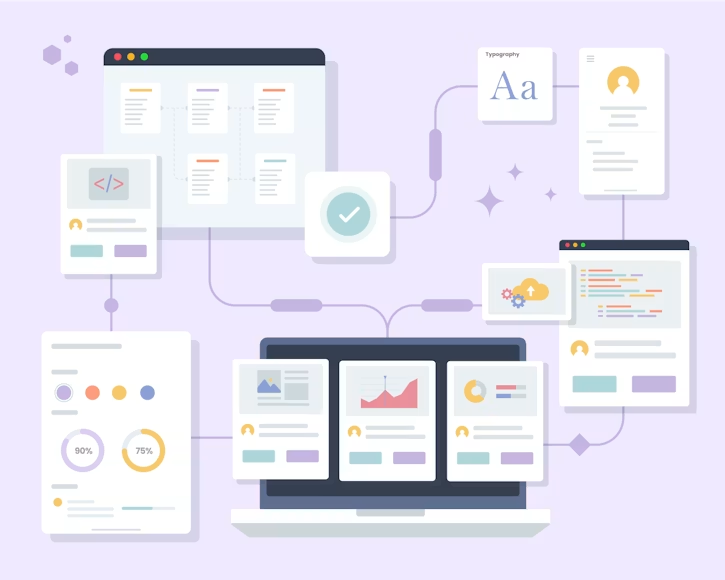
The goal is not to add more software for the sake of it. The right technology stack should help your team work more efficiently by turning marketing activity into actionable insights. When your tools work together, you can identify stronger opportunities, respond faster, and create a more effective path from initial interest to revenue.
Even if you successfully attract the right buyers, unclear positioning can prevent your demand generation efforts from producing results.
After all, most B2B buyers do not evaluate only one solution. They compare different products, providers, and approaches before deciding what best fits their needs. So if your messaging does not clearly explain what makes your solution different, why it matters, and what specific problem you solve better than alternatives, buyers will have little reason to choose you.

To prevent putting yourself out of the race before it even starts, avoid generic messaging that focuses only on features. Instead, position your solution around the specific outcomes your ideal customers want to achieve and the challenges they are trying to overcome.
This type of strong messaging will help your demand generation efforts attract and engage the right audience more effectively. When buyers immediately understand who your solution is for and why it is valuable, every channel—from content to paid campaigns—becomes more effective.
Demand generation works best when marketing and sales operate around the same understanding of who the buyer is and what signals indicate genuine interest.
Because without that alignment, Marketing often focuses on generating activity while Sales focuses on closing opportunities, with both teams operating with different definitions of what makes a prospect valuable.
This can create friction, where Marketing sends leads that Sales considers low quality, while Sales fails to provide feedback that helps Marketing improve targeting and messaging.
To prevent this, both teams should agree on key factors like the ideal customer profile, qualification criteria, buying signals, and when a prospect is ready for sales involvement.
For example, there could be an agreement that a prospect who’s visiting the website multiple times or engaging with feature pages should be ranked higher and prioritized for sales attention than someone who has been reading the brand newsletter for a year.
When both teams work from the same definition of a valuable prospect, demand generation becomes more effective. Marketing can focus on attracting the right audience, while sales can engage prospects with a clearer understanding of their needs and intent.
Demand generation often involves multiple channels working together. A buyer may discover your brand through search, engage with your content, see a paid campaign, and later visit your website before becoming a customer.
Without proper attribution, it is difficult to understand which activities are creating meaningful demand and which ones are just generating surface-level engagement.
Track the channels, campaigns, and content pieces that contribute to valuable outcomes—not just traffic or impressions. Understanding what attracts your best buyers allows you to invest more resources into the strategies that create high-quality demand.
No demand generation strategy starts perfectly. Even experienced teams need to test different messages, channels, content formats, and targeting approaches to understand what resonates with their audience.
Regular measurement helps you identify what is working, what needs improvement, and where opportunities exist. This may include analyzing website engagement, content performance, campaign results, buyer behavior, and pipeline impact.
The strongest demand generation teams treat their strategy as an ongoing process rather than a fixed plan. They learn from performance data, adapt to changing buyer behavior, and continuously improve how they attract and engage their ideal customers.
You’ve built your demand generation engine, created valuable content, and brought potential buyers to your website. But generating traffic is only one part of the process.
To turn that interest into sales opportunities, you need to know which visitors are showing genuine buying intent and who your team should prioritize.
RB2B helps you identify the people and companies engaging with your website, understand their behavior, and act on high-intent signals before those opportunities go cold.
Don’t let the demand you worked hard to create remain hidden. Try RB2B today and turn your anonymous website activity into actionable buyer insights.
Alert your reps, start automated outreach, and add to lead score in under five minutes.

