Quick Summary
Leadfeeder and Lead Forensics are two of the most popular lead intelligence tools for identifying, capturing, scoring, and routing leads. However, they also come with high costs, limited website visitor identification, and slow implementation timeframes which hinder their usability. RB2B solves this by identifying individual visitors, delivering real-time insights, and offering more predictable, scalable pricing.
Every B2B Team Needs a Lead Intelligence Solution
Running ABM or outbound without lead intelligence software means you’re operating blind. Most teams start with generic databases and cold email lists before moving to lead intelligence tools that surface real buying signals from website traffic.
Among the most popular are Leadfeeder and Lead Forensics. Leadfeeder is known for its ease of use and accessibility, making it a common choice for smaller teams getting started. Lead Forensics, on the other hand, is built for larger organizations that need deeper insights and hands-on support.
To give you a clearer view, we’ve compared both tools across features, pricing, and limitations, and when RB2B becomes the better fit.
Why Trust This Comparison Article?
RB2B supports over 100,000 websites, including many B2B teams that previously used Leadfeeder or Lead Forensics and have since improved their lead identification workflows.
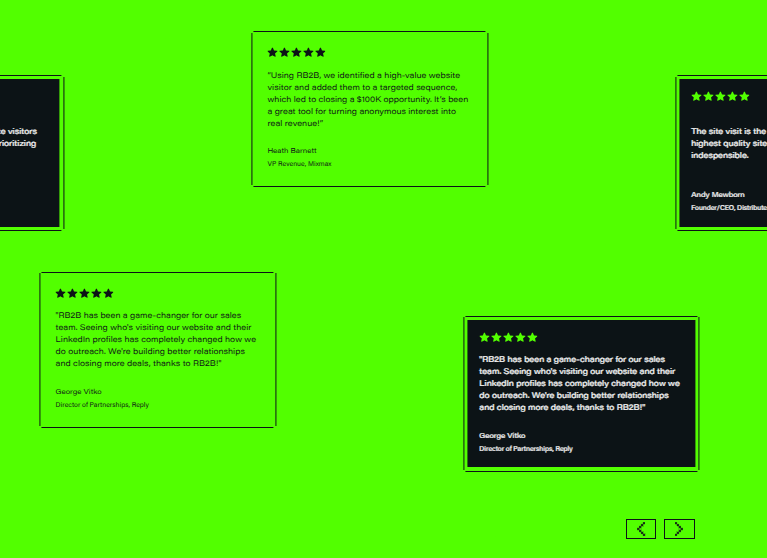
Through working closely with these teams, we’ve gained firsthand insight into the strengths and limitations of both tools, which informs this comparison.
Leadfeeder vs Lead Forensics: Side-by-Side Comparison
Both Leadfeeder and Lead Forensics are designed to help you figure out who’s visiting your website, but they go about it very differently.
Leadfeeder is built for B2B teams that rely on website traffic and outbound sales. It leans more into behaviour, helping users build targeted lists based on how companies interact with their site. You can see who’s visiting, what they’re doing, and easily filter and push those leads into your CRM.
Lead Forensics, on the other hand, focuses more on identification. It’s designed for teams that want to uncover anonymous website traffic. Using IP-based matching, Lead Forensics can reveal company details that would otherwise stay hidden.
To give you a better view of both, we compared both tools using seven criteria:
- Website lead capture and identification: This refers to each platform’s ability to identify the companies visiting your site so your team can act on real intent.
- Lead enrichment quality: How accurately does each tool engage and qualify each lead with relevant firmographic and contact data to support targeted outreach.
- Integrations: How easily the tool connects with your CRM and existing workflows without manual work.
- Implementation timeframe: We assess how quickly your team can get started with the platform without needing technical support
- User interface and experience: How simple it is to navigate the platform and turn insights into action.
- Pricing: Whether the tool stays affordable and scalable as your traffic and usage grow.
- Customer support: Finally, we look at how responsive and helpful the support team is when any issues come up.
Now, let’s break down how both tools compare across each of these areas.
1. Website Lead Capture and Identification
Leadfeeder focuses on identifying companies visiting your website and enriching them with behavioural and firmographic data. This makes it easier to filter, score, and route leads based on engagement, so you can quickly see which accounts are actually showing interest.
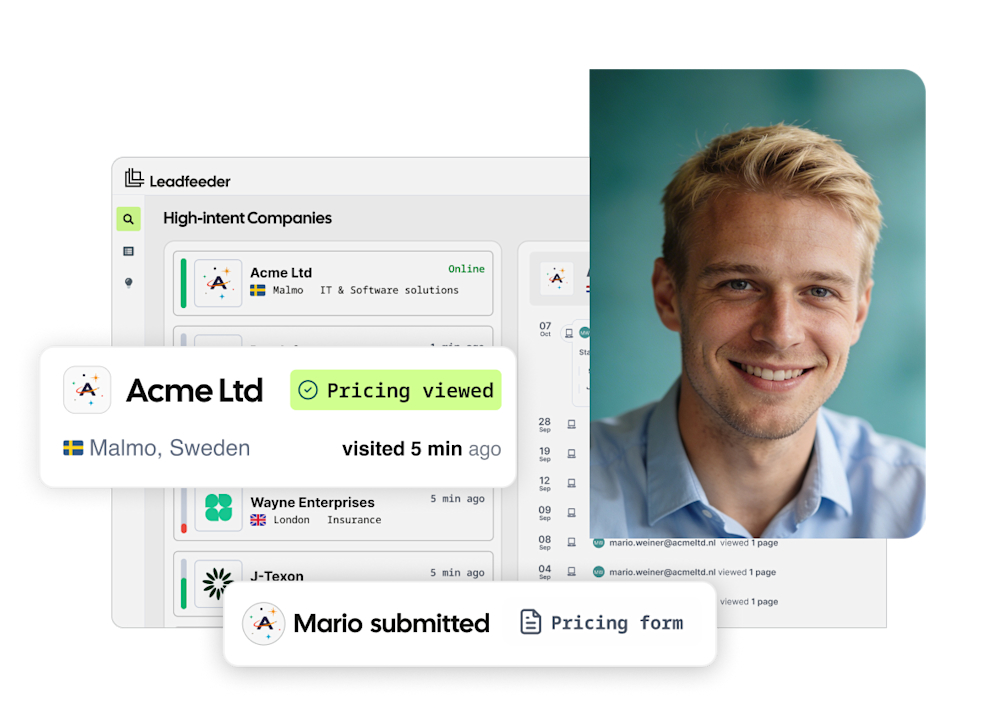
Lead Forensics offers a similar capability. It reveals the business identity behind website visits and enriching these accounts with data from its B2B database.
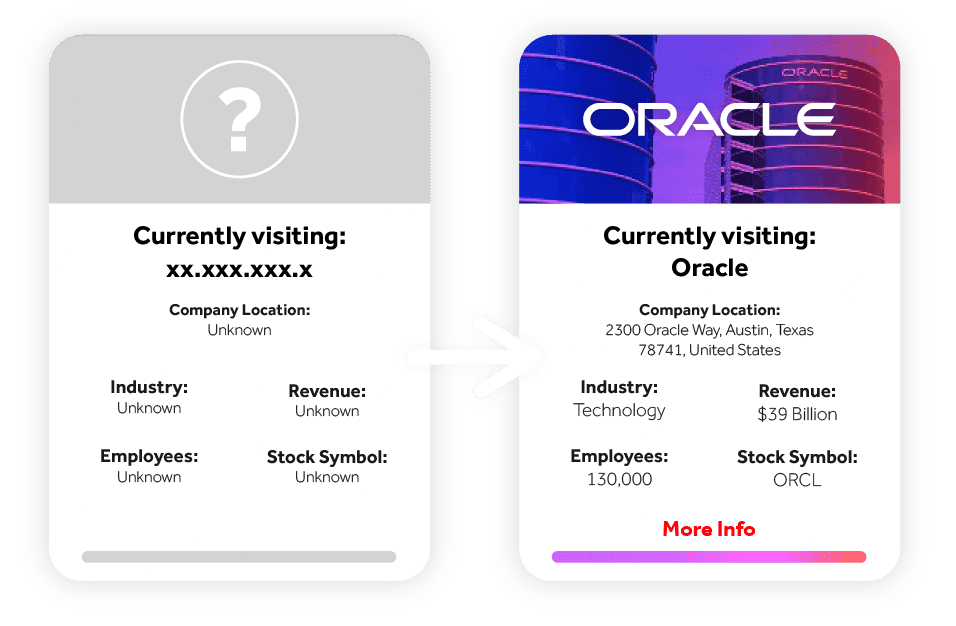
Where it goes a step further is in how it handles existing customers who might be revisiting your website. By syncing your customer records, you can detect when current users return, giving your team a chance to spot upsell or cross-sell opportunities. So instead of only focusing on new leads, Lead Forensics also helps you get more value from the customers you already have.
In practice, both tools provide solid company-level visibility into website behavior. If your primary goal is identifying new accounts showing interest, Leadfeeder does that well. But if you also want visibility into existing customer activity, Lead Forensics broader approach may be a better fit.
2. Lead Enrichment Quality
Lead enrichment quality directly impacts how accurately your team can qualify and engage leads. While no tool guarantees perfect data, the margin of error matters.
Based on user feedback on G2, Leadfeeder appears to maintain higher data accuracy, with a relatively low percentage of reported issues involving outdated or incorrect contact information. Lead Forensics, on the other hand, has a higher volume of similar complaints, suggesting more frequent inconsistencies in its data.
This difference can significantly affect outreach. More accurate data means better targeting, more relevant messaging, and fewer wasted touchpoints. In this area, Leadfeeder has a clear edge for teams that prioritize data reliability in their lead qualification process.
3. Integrations
Both Leadfeeder and Lead Forensics offer integrations with popular CRMs and GTM tools, but the depth of their ecosystems differs.
Leadfeeder integrates with major platforms like Salesforce, HubSpot, Pipedrive, Zoho, Microsoft Dynamics, Slack, Google Ads, Mailchimp, ActiveCampaign, and Zapier. It also provides an API, allowing teams to connect additional tools when needed. For many teams, this covers the essential stack required to capture, enrich, and route leads effectively.
Lead Forensics, however, offers a broader network of integrations. In addition to the tools listed above, it integrates with a wider range of platforms across project management, marketing, and storage, making it more adaptable for teams with complex or highly customized workflows.
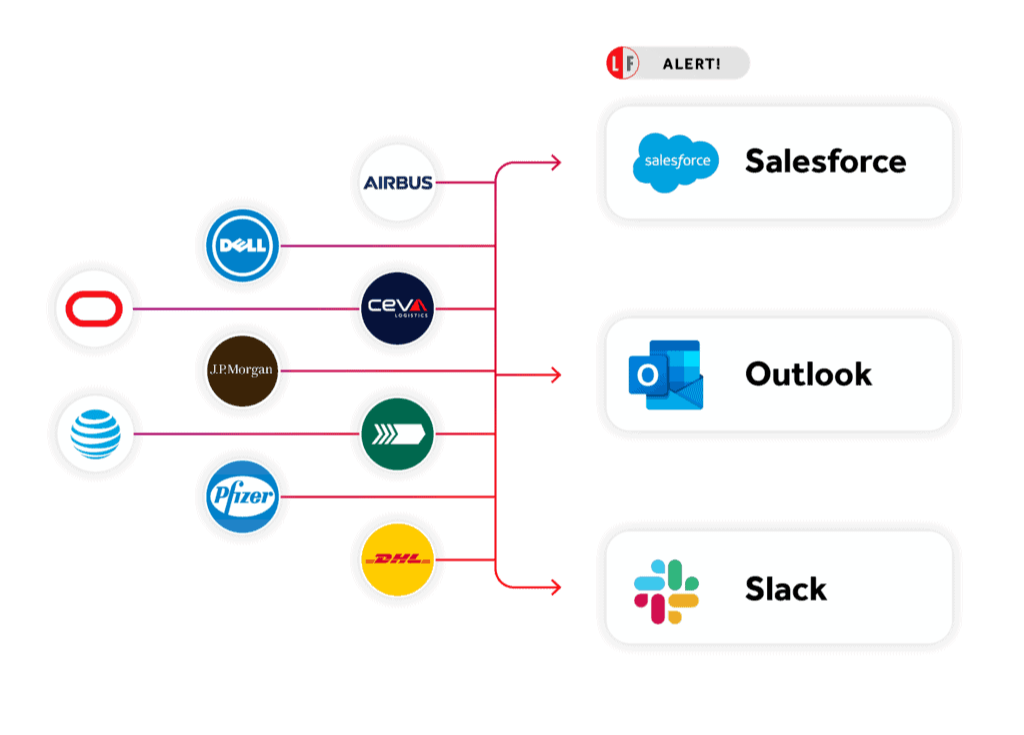
In practice, the difference comes down to scope. If your current stack is already covered by Leadfeeder's integrations, it will serve your needs well. But for larger teams or those planning to expand their tool stack, Lead Forensics provides more flexibility out of the box.
4. Implementation Timeframe
Ease of implementation has a direct impact on how quickly your team starts seeing value from a lead intelligence tool.
Leadfeeder is designed for simplicity. Its structured workflow, from identifying visitors to qualifying and routing them, makes it easy to get started without heavy onboarding. Most teams can sign up, install the tracking script, and begin using the platform within an hour to a month.
Lead Forensics, on the other hand, requires a longer setup process. Its broader capabilities come with a steeper learning curve, and most teams need additional training and support before they can use the platform effectively.
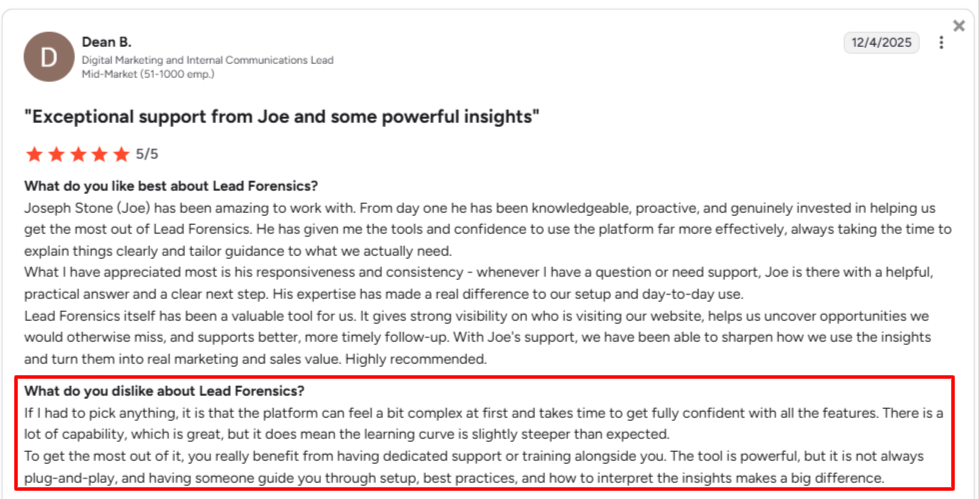
As a result, teams may take longer to move from setup to actually identifying and acting on high-intent leads.
5. User Interface and User Experience
Leadfeeder offers a clean and straightforward interface that most users find easy to navigate. Its simplicity makes it accessible, especially for teams new to lead intelligence tools. Many G2 reviewers highlight its ease of use, though a few note that the interface can feel slightly limited compared to more advanced analytics platforms.
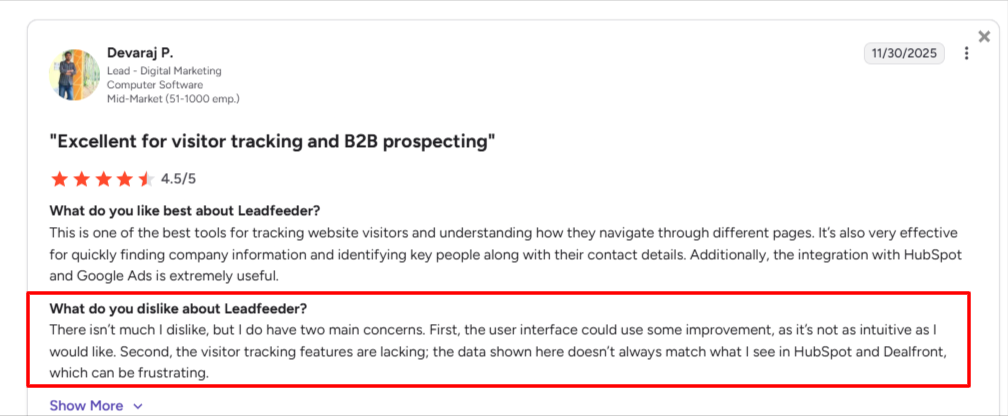
Lead Forensics also receives positive feedback for usability, with users appreciating how its dashboard presents different types of leads. However, some reviewers mention that the interface feels dated and can be less intuitive in certain areas, particularly when navigating deeper reports.
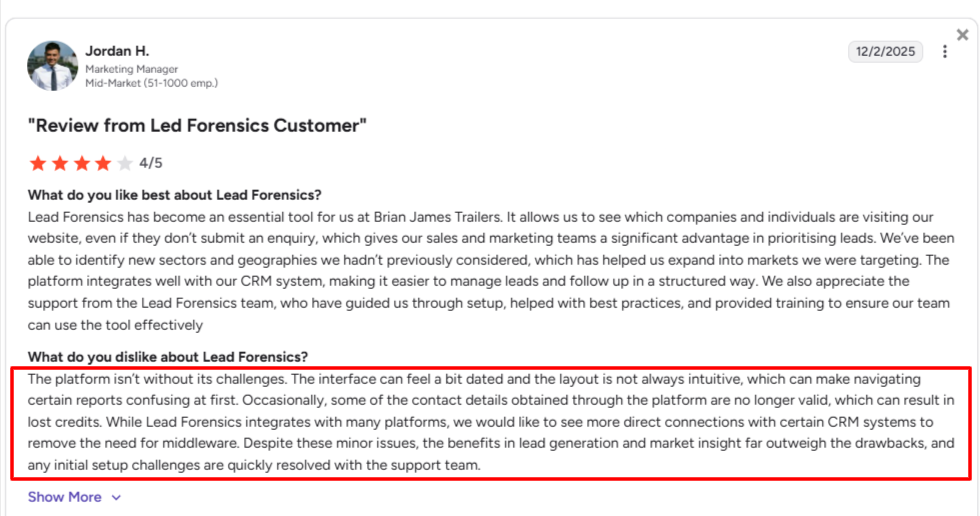
Overall, both tools are relatively easy to use, but Leadfeeder's simpler, more modern interface makes it easier for teams to get comfortable quickly.
6. Pricing
Leadfeeder and Lead Forensics structure their pricing differently, which can impact how you scale. Here’s a closer look at them.
Leadfeeder Plans
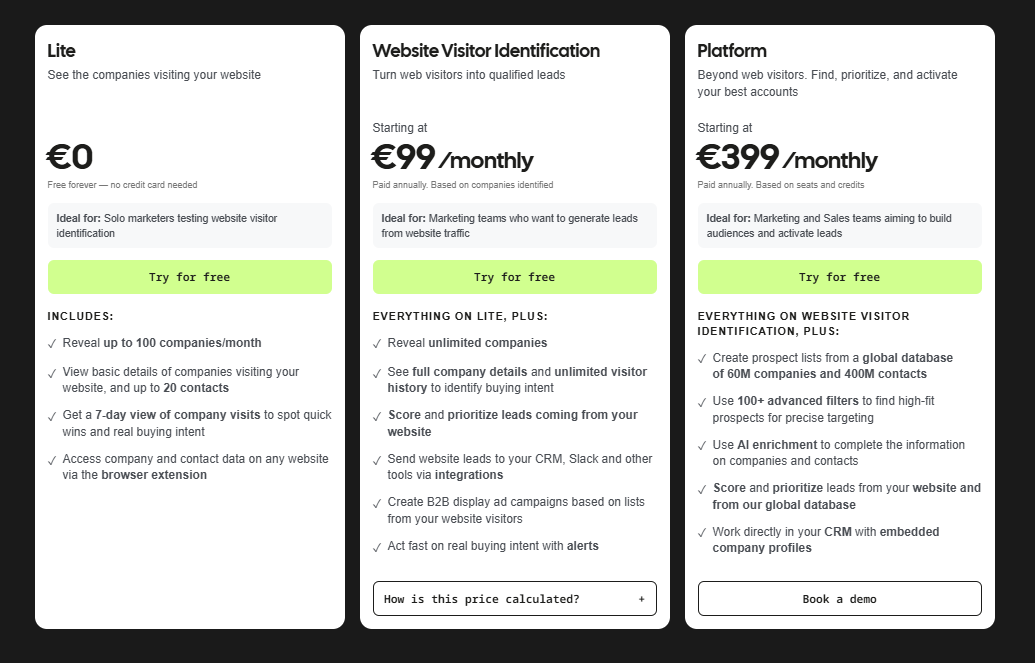
Leadfeeder offers tiered plans with pricing based on usage and features.
- Lite (Free): Basic company details with up to 20 contacts and a 7-day visitor history to spot early intent signals
- Website Visitor Identification (€99/month or $114/month): Unlimited company identification and visitor history, with lead scoring, CRM integrations, and real-time alerts
- Platform (€399/month or $459.67/month): Access to the platform’s contact database, AI enrichment, and CRM-based workflows
Leadfeeder works best for teams that want flexible pricing and have low-traffic websites. However, as identification volume grows, costs increase significantly. This makes it a difficult tool to scale with.
Lead Forensics Plans
Lead Forensics offers two main plans with custom pricing based on traffic and business needs.
- Essential: Access to business contact details and a Lead Manager portal
- Automate (Custom pricing): Advanced CRM integrations, customizable workflows, and automated sequencing
To get a quote, you’ll need to contact the Lead Forensics team first. They’ll then invite you to a 14-day free trial, during which they assess your website traffic and usage.
After the trial, pricing is tailored based on those insights. Online reviews estimate that the average cost for B2B teams is around $17,000 annually, but it can go as high as $75,000. This makes Lead Forensics best suited for larger teams that want a tailored setup and are comfortable with custom pricing based on usage.
7. Customer Support
Leadfeeder provides support through a live website chat, a well-organized help center, webinars, and an academy for learning how to use the tool. Users can also email the support team if other resources don't resolve their issues. Support isn't tiered. Both free and paid users have access to all options.
For Lead Forensics, users can contact support via live chat on the website or by submitting a form. Additionally, every Lead Forensics customer is assigned a dedicated customer success manager to guide them through setup, implementation, and maximizing the platform's capabilities.
For teams that value dedicated, hands-on support and guided implementation, Lead Forensics offers a stronger support experience. Leadfeeder's resources, on the other hand, are sufficient for smaller teams or those who prefer self-service help.
Tips for Making the Most of Your Lead Intelligence Tool
Choosing between Leadfeeder and Lead Forensics is only part of the equation. The real value comes from how well your team uses the tool after implementation.
These six tips will help you get consistent, measurable results regardless of which tool you choose.
1. Define What a Qualified Lead Looks Like
Start by clearly defining your ideal customer profile and what counts as a high-intent visitor. If you don’t do this, your tool will surface data, but your team won’t know what to prioritize. Your sales and marketing team should be aligned on firmographics, behavior signals, and deal potential so your efforts stay focused.
2. Prioritize High-Intent Pages
Not all website visits carry the same weight. Focus on pages like pricing, demos, and product comparisons. These signal stronger buying intent. Use your tool to monitor and flag these visits so your team can act quickly on the most valuable opportunities.
3. Set Up Lead Scoring Early
Lead intelligence tools become far more effective when scoring is in place. Assign value to behaviors like repeat visits, time spent, and key page views. This helps your team separate casual browsers from serious buyers and focus efforts on high-intent leads only.
4. Integrate with Your Existing Stack
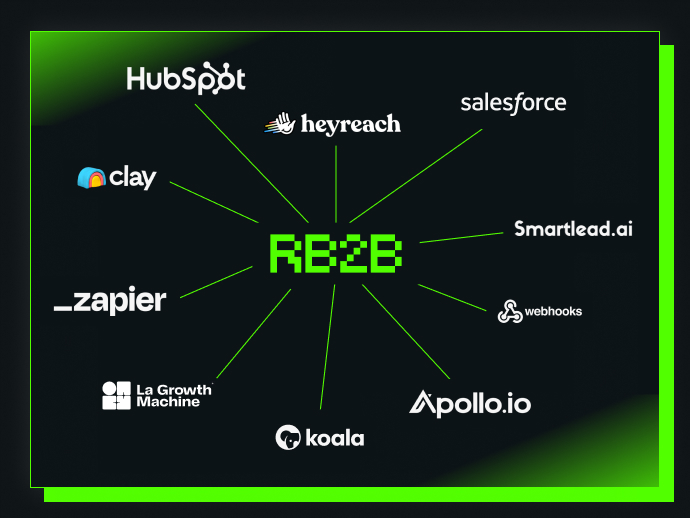
Avoid working in silos. Connect your tool to your CRM, Slack, or email platforms so data flows automatically. This ensures your sales team can act on insights immediately instead of manually transferring information between systems.
5. Act on Data in Real Time
Speed is critical. When a high-intent company visits your site, timing can determine whether you win or lose the deal. Set up alerts and workflows so your team can follow up while interest is still high.
6. Continuously Optimize Based on Results
Track what’s working and what isn’t. Look at which leads convert, which pages drive engagement, and where drop-offs happen. Use these insights to refine your targeting, messaging, and workflows over time.
When used strategically, both Leadfeeder and Lead Forensics can become powerful revenue drivers. The difference comes down to how well you turn their data into action.
Limitations of Leadfeeder and Lead Forensics
Leadfeeder and Lead Forensics can provide reliable website visitor identification, but looking closer at their offerings reveals some key limitations:
1. Website Visitor Identification Is Limited to the Company Level
Both tools unmask website activity by matching visits to company IP addresses, showing which organization is visiting your site, but not who the individual visitor is.
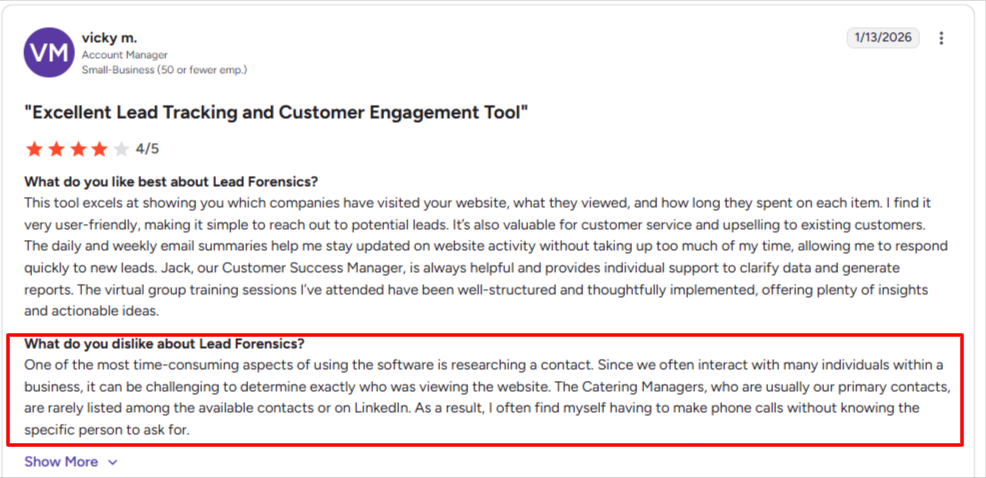
While they surface potential ICPs within that company based on your set criteria, this often requires reaching out to multiple stakeholders just to connect with the actual visitor, consuming valuable time and resources.
2. Long Implementation Times
Leadfeeder typically requires about a month to be fully set up as part of a team's workflow. Lead Forensics often takes even longer and frequently requires support from a representative or customer success manager.
If your team needs a solution that can be plugged in and used immediately, neither tool meets that requirement.
3. High Costs Make it Difficult to Scale
Leadfeeder's tiered pricing rises quickly as traffic grows. For instance, identifying just 1,250 leads costs €399/month ($459.67/month), and that's with a 30% annual plan discount. Also, Lead Forensics is designed for enterprise teams and can cost upwards of $50k annually.
These pricing models make neither tool accessible for small or growing brands looking for scalable solutions.
How RB2B Helps Your B2B Team Bypass These Limitations
RB2B is a next-generation, individual-level website visitor identification tool designed specifically to help B2B teams overcome the limitations of company-level lead intelligence platforms like Leadfeeder and Lead Forensics.
RB2B does this by having these standout features:
1. Person-Level Website Visitor Identification
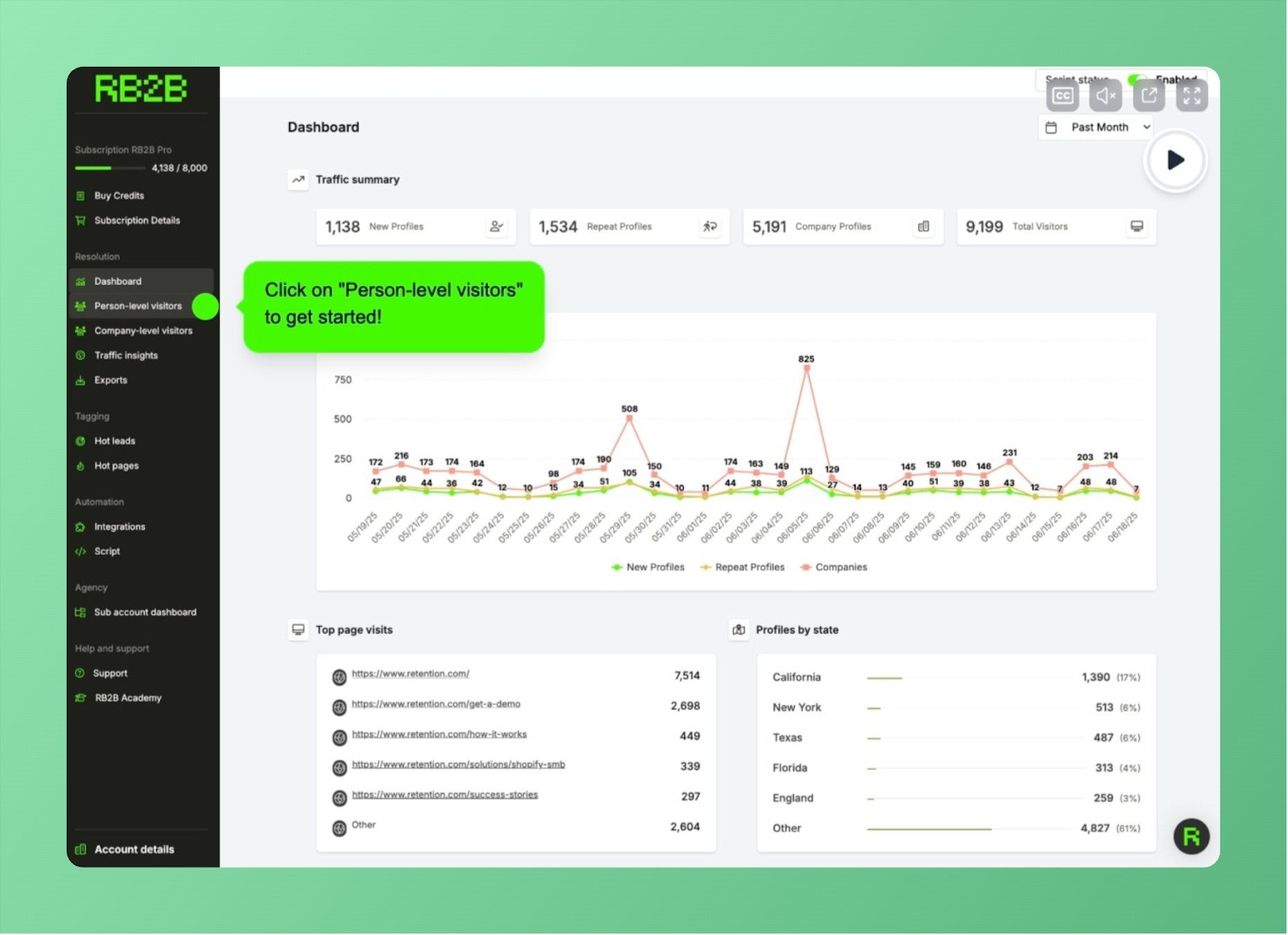
Similar to Leadfeeder and Lead Forensics, RB2B can unmask every website visitor and match them to company IP addresses. However, it doesn't stop there.
Using a GDPR- and privacy-compliant process, RB2B identifies the actual individual visiting your site. This means it can identify up to 80% of website traffic. This granular, company-level data with detailed firmographic and demographic insights for every visitor eliminates the need to reach out to several ICPs within a company just to find the right contact.
Every identified individual is enriched with key details like their job title, email address, LinkedIn profile, and precise website activity, including pages visited and the number of visits. For example, if a Marketing Manager revisits your demo page three times and explores your pricing page, RB2B not only identifies them but also highlights their high purchase intent.
This information is also automatically scored and routed to your preferred CRM, Slack, or Microsoft Teams channel, ensuring your sales team can engage the right person with personalized messaging immediately.
2. Five-Minute Implementation Time
RB2B is designed for agile teams that want results fast. From the moment you install RB2B's tracking pixel on your website, your first lead notifications will arrive in under five minutes. Unlike Lead Forensics, which often requires days or even weeks of setup with dedicated support, RB2B lets your team spend less time on installation and more time engaging prospects.
For example, your sales team can install RB2B in the morning and begin outreach by the afternoon, without wading through lengthy guides or waiting for onboarding calls. This speed is particularly valuable for fast-moving teams or campaigns where every minute counts in capturing high-intent leads.
3. Accessible, Scalable Pricing
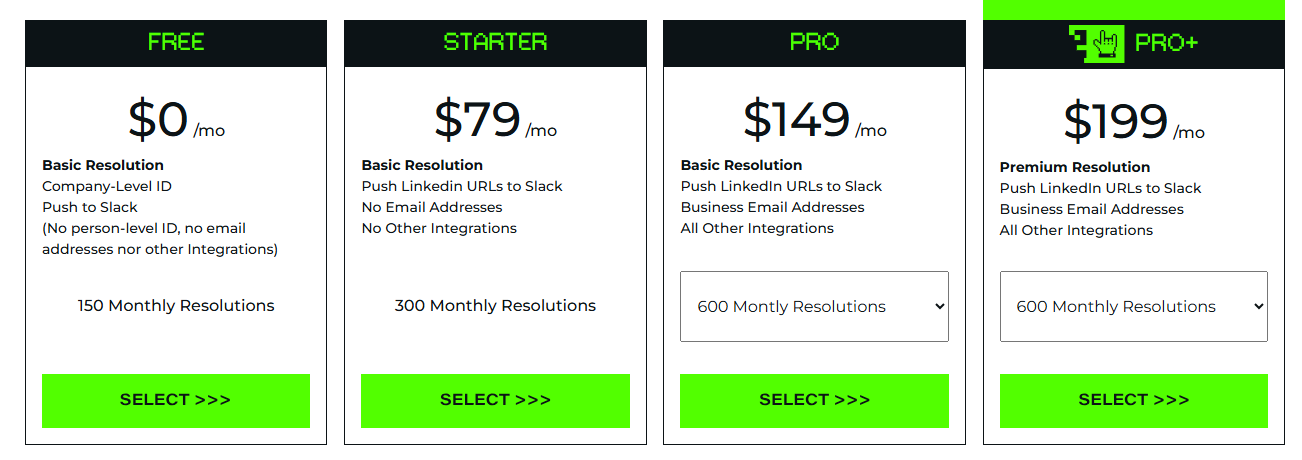
RB2B addresses the cost barrier that often comes with traditional lead intelligence software by offering flexible, tiered pricing that scales with your needs.
- Forever-Free Plan: Identify up to 150 companies per month, compared to Leadfeeder’s 100. Includes 20% company-level site identification, reporting, and integrations with Slack and Teams
- Starter Plan ($79/month): Up to 20% coverage for both company and contact-level identification, 300 monthly identifications, and more advanced reporting capabilities
- Pro ($149/month): Up to 600 monthly identifications, email enrichment, and deeper integrations including Zapier, Webhooks, and Apollo
- Pro+ ($199/month): Premium resolutions, up to 45% company and contact-level identification, and full access to integrations and platform capabilities
Unlike Leadfeeder and Lead Forensics, where costs rise quickly with traffic, RB2B remains predictable as you scale. For example, identifying 1,250 website visitors can cost €399/month ($459.67/month) with Leadfeeder or significantly more with Lead Forensics custom plans.
For RB2B? The same volume costs around $299/month. RB2B’s pricing structure allows teams to start for free, scale confidently, and avoid budget surprises as website traffic grows.
4. Better Control Over Data and Lead Prioritization
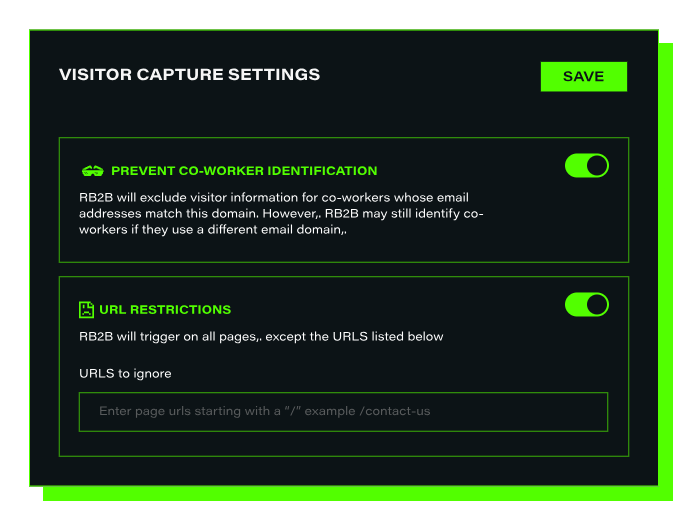
One of the key gaps with tools like Leadfeeder and Lead Forensics is the amount of noise teams still have to work through. Both platforms surface company-level visits, but they don’t always help you filter out what’s irrelevant or prioritize what actually matters.
RB2B gives you more control over what enters your pipeline in the first place. It offers features like Page Suppression, which lets you filter out irrelevant traffic or competitors
It also adds structure to lead prioritization with its Hot Pages and Hot Leads features. These features help teams quickly define their best-fit buyer criteria and identify which visitors show the strongest intent, making it easier to focus effort where it counts.
5. Real-Time Insights and Faster Response Times
Leadfeeder and Lead Forensics provide valuable visibility into website activity. But delays between when a visit happens and when a team is able to act on it still occur.
RB2B places more emphasis on speed and immediacy. B2B teams receive instant notifications when high-intent visitors land on key pages, along with enriched details such as role, contact information, and on-site behavior.
This allows sales teams to respond while interest is still active, rather than after it has cooled. Combined with a straightforward interface and broad integrations, this makes it easier to move from insight to action with ease.
With RB2B, B2B teams can focus on engaging the right buyers at the right time, rather than spending resources chasing incomplete or ambiguous leads.
Leadfeeder vs Lead Forensics: Key Takeaways
Leadfeeder and Lead Forensics both deliver reliable company-level website visitor identification, lead enrichment, and integration capabilities, making them solid options for teams that need basic lead intelligence. However, their focus on company-level data often means sales teams must reach out to multiple stakeholders to engage a single visitor.
RB2B solves these challenges by providing individual-level visitor identification, a fast, five-minute setup, and more affordable, scalable pricing.
For B2B teams seeking precision, speed, and cost-effective lead intelligence, RB2B is a smarter alternative that combines the strengths of Leadfeeder and Lead Forensics while overcoming their limitations.
Sign up for RB2B's 7-day full-feature trial today to testify to these claims yourself.