
RB2B AI: ASK US ANYTHING
UpLead's intent data focuses primarily on product, category, or competitor research, rather than stronger buying signals like website behavior. Its credit-based pricing can also become prohibitively expensive as teams scale their lead generation efforts.
But better alternatives analyze website activity and behavioral intent signals, while offering more scalable and affordable pricing models.
Many teams start looking for UpLead alternatives when they realize its credit-based pricing can get expensive and its database-driven leads lack real buying signals. Instead of relying on static contact lists, they want tools that show who is actually researching their product and help them prioritize real opportunities.
In this article, we’ll share the best UpLead alternatives available in 2026, with their features, pricing, pros, and limitations. So, you can choose a platform that offers stronger buying signals, person-level identification, and pricing that scales with your team.
If you're short on time, here's a quick comparison of the top three alternatives:
UpLead is a solid lead intelligence platform for B2B growth teams that want to build prospect lists with verified email addresses and phone numbers.
However, despite its strengths, the platform has several limitations that cause some users to explore alternatives.
UpLead's intent data is powered by Bombora and is based on a list of topics users select. After selecting those topics, UpLead identifies and matches you with companies that are actively researching or consuming content related to them.
But while category research can be a useful buying signal, this approach has a key limitation. It focuses primarily on content consumption signals, and does not account for other behavioral signals that often indicate stronger purchase intent, like:
Because of this, some teams find that UpLead's intent signals highlight companies that are researching a topic broadly, rather than prospects actively evaluating your product.
UpLead uses a credit-based pricing model in which each lead or contact you export incurs a credit charge. Paid plans include a fixed number of monthly credits, with the option to purchase additional credits if you need more contacts.
For smaller teams that only need the credits included in their plan, this structure can work well. However, for teams that need to build large prospect lists, the cost of additional credits can increase quickly.
For example, on UpLead's Plus plan ($199/month), users receive 400 credits per month. If you need more leads beyond that limit, you must purchase additional credits at $0.5 per credit. But if you need to generate a list of 1,000 credits, you have to pay an additional $300 per month.
Although UpLead claims high data accuracy, some users still report occasional issues with outdated contact information. For example, one reviewer on G2 shared that "I have had some numbers come back as non-working numbers. I have also run into companies not having an employee by the name I received for quite some time."
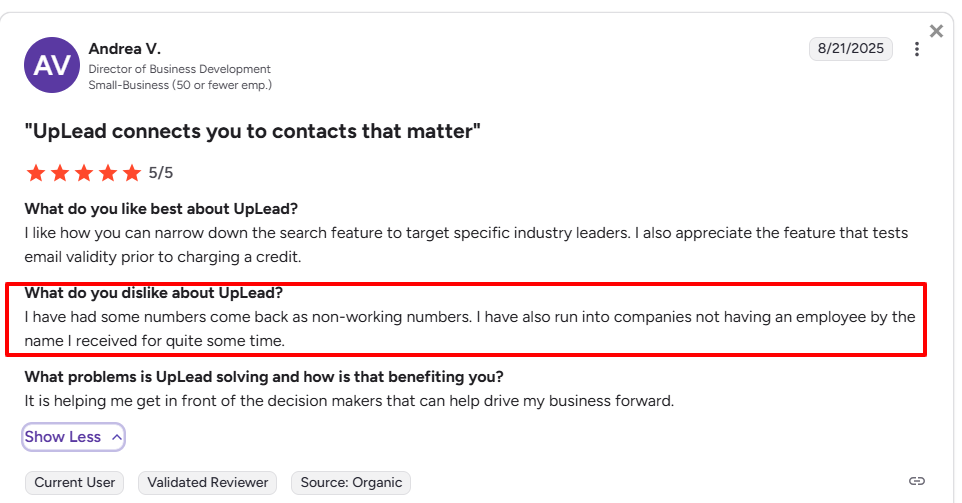
This can create challenges for sales teams because inaccurate contact data leads to higher bounce rates, failed cold calls, and wasted time researching replacements.
The RB2B team is deeply familiar with the lead intelligence space. Our founder, Adam Robinson, previously built a platform that helped e-commerce brands deanonymize website visitors who abandon carts, allowing them to recover lost revenue.
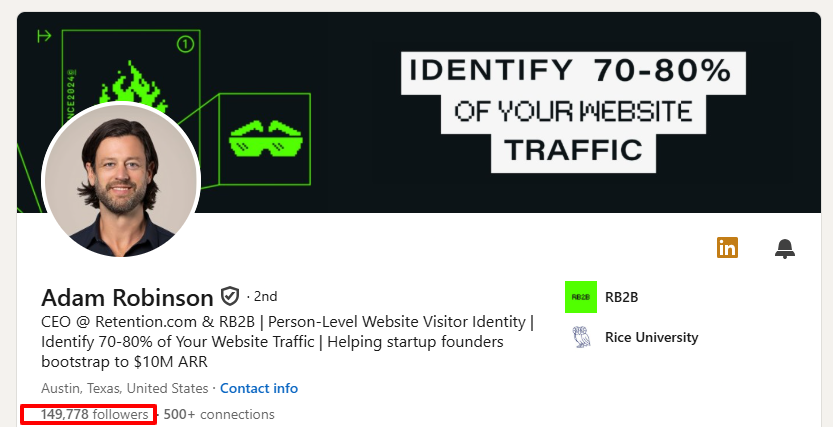
Today, we run RB2B, a person-level website visitor identification platform that helps B2B companies identify the individuals behind their website visits, not just their workplaces. Through our work with over 1,500 RB2B customers, we've helped teams transition from other tools or integrate RB2B into their existing lead intelligence workflows.
These experiences have given us firsthand insight into the strengths and limitations of many tools in this space, including UpLead. This review is based on those firsthand experiences.
Here are the 13 best UpLead alternatives, freshly reviewed for 2026:
Best for: Teams that want to add website behavior signals to their intent data
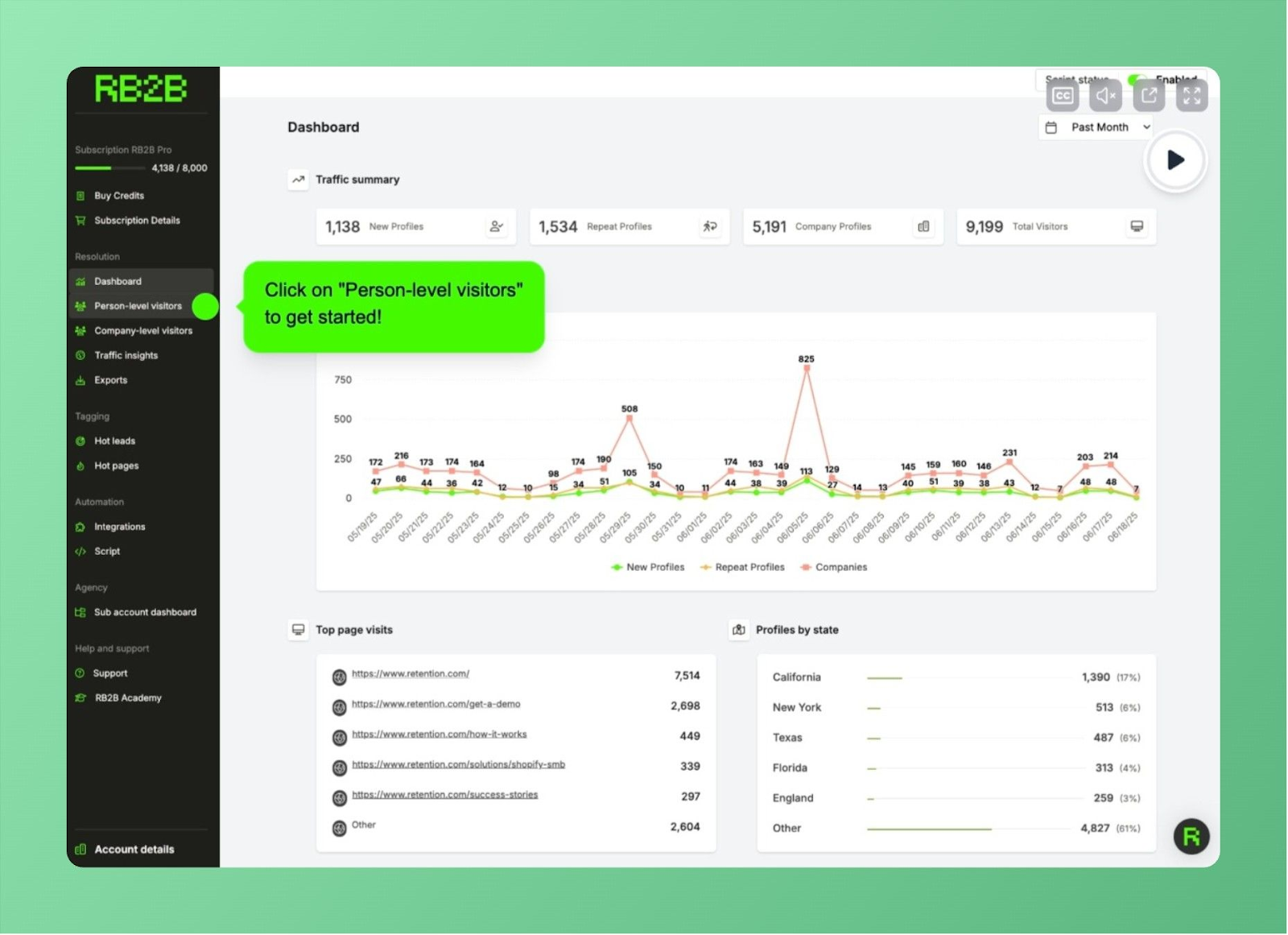
RB2B helps B2B teams move beyond weak intent signals like topic searches and competitor research. Instead, it focuses on stronger signals such as pricing page visits, demo requests, and repeat website visits.
It does this by identifying website visitors and tracking their behavior across your site. This helps your team see exactly which prospects are researching your product. As a result, you can prioritize in-market buyers and improve your chances of converting them when you reach out.
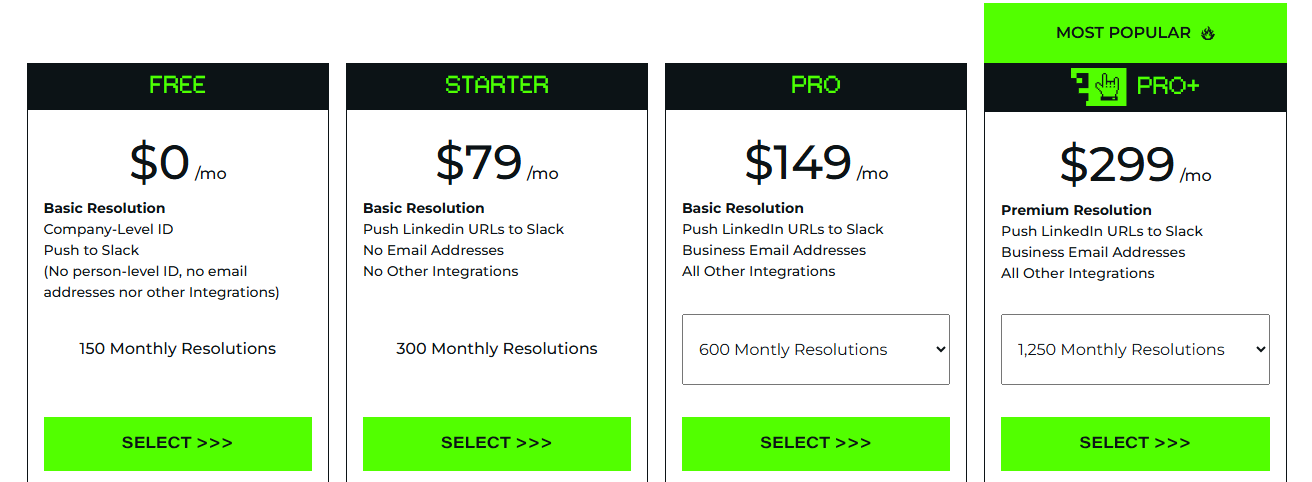
Unlike UpLead, RB2B's pricing is more accommodating for both small and large teams. Smaller teams can start with RB2B's free plan, which lets you identify up to 150 companies per month. They can then upgrade to one of the two paid plans (PRO or PRO+) as needed.
Larger teams also spend far less on bulk identifications on RB2B. For example, identifying around 1250 individuals will cost $624 per month with UpLead, while on RB2B, it costs only $249 per month, saving you $375 every month.
Best for: GTM teams that want a single source of truth for ICP account data.
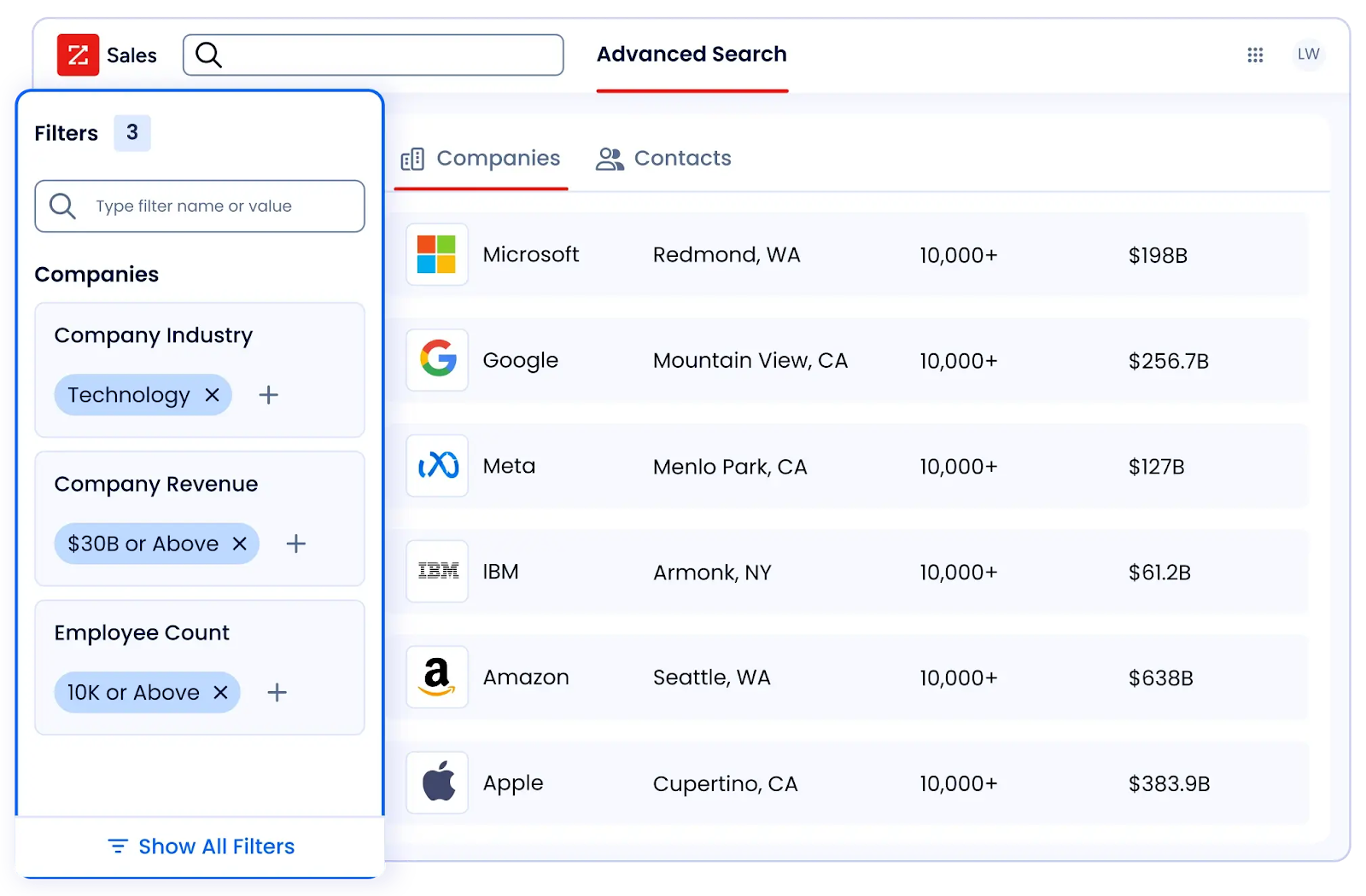
ZoomInfo's all-in-one AI platform helps B2B GTM teams find prospects most likely to convert using highly specific targeting criteria. Once your team generates a list of potential leads, ZoomInfo enriches each account with detailed contact information. It also adds buying signals like hiring surges, technology changes, or competitive research.
These insights help your team understand where each account is in the buying journey and which prospects to prioritize for outreach.
ZoomInfo uses custom pricing, and exact plans are not publicly listed. However, based on reports from current and past users, the median annual cost is around $31,000.
Best for: B2B teams that want to handle both lead generation and engagement in one platform.
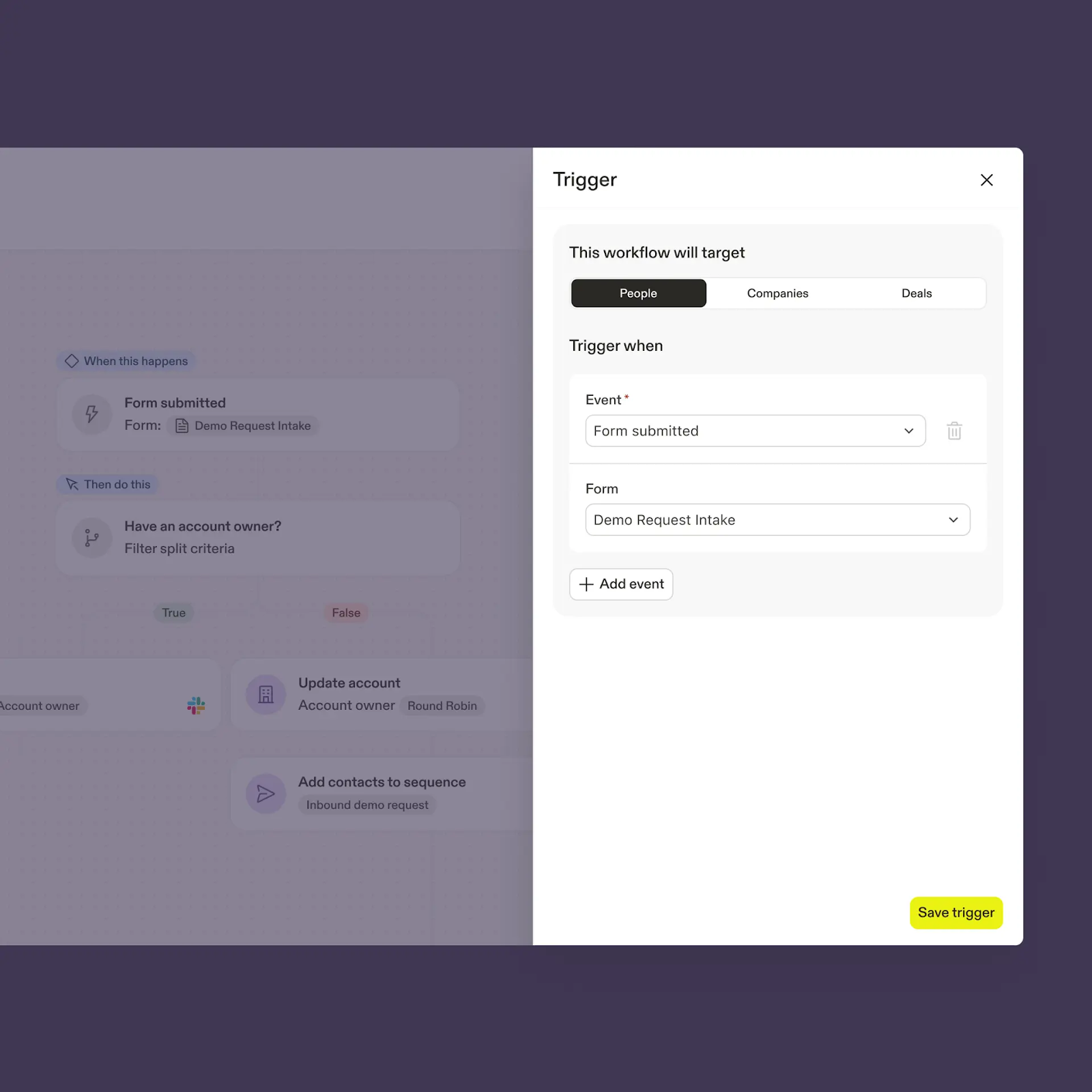
Apollo captures every lead that enters your business ecosystem, whether from website visits, form submissions, or other sources. It then enriches each lead with firmographic and demographic data for better scoring.. Once scored, Apollo routes these leads to the appropriate sales reps, helping your team reach out to the most ready-to-buy prospects.
Apollo also lets you create and execute multi-channel campaigns directly from its dashboard. This allows you to engage leads in real time without losing context from switching between tools.
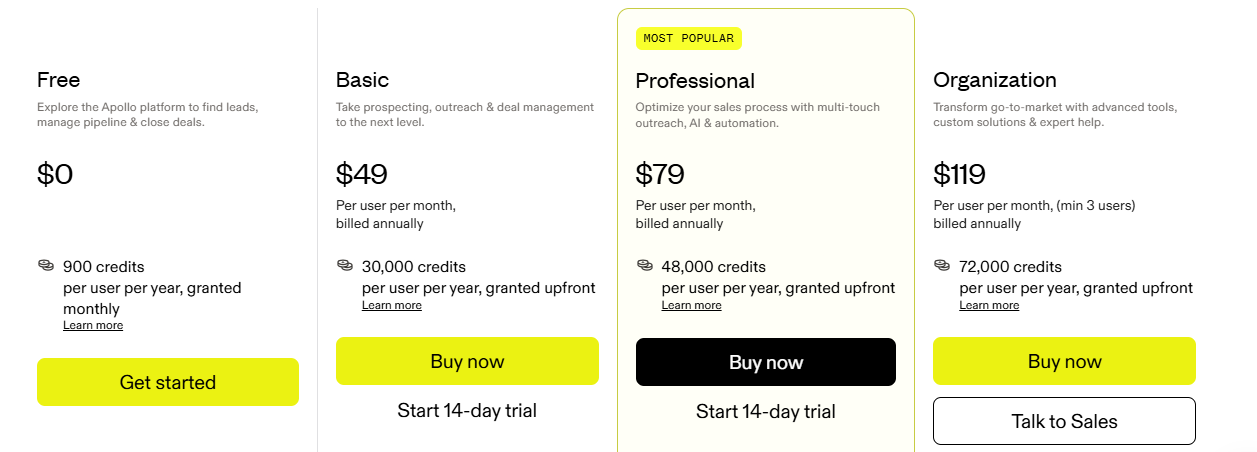
Apollo uses a credit-based pricing model and offers a freemium plan with 900 credits per year. Paid plans include Basic, Professional, and Organization, ranging from $49 to $119 per month.
Best for: Sales teams that want powerful AI agents to handle manual GTM efforts.
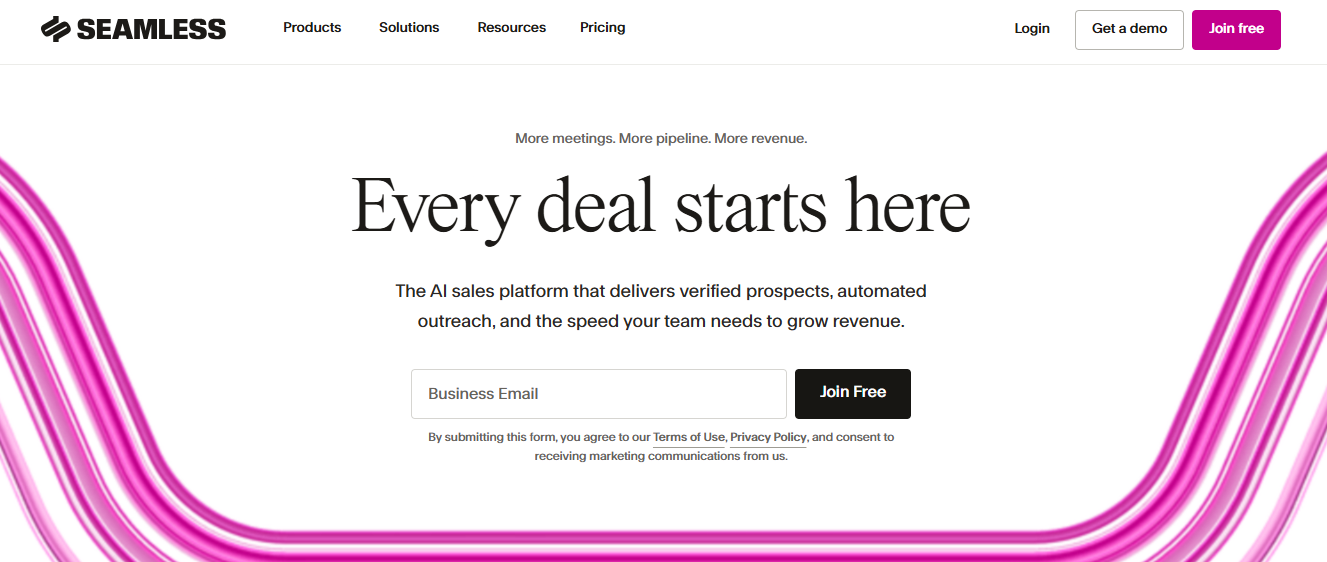
Seamless automates the repetitive work of lead research, outreach, and pipeline building. Using AI agents that run continuously, it identifies potential buyers through signals like job postings, funding events, company news, and more.
The system can also automatically engage prospects, book meetings, and alert your team only when a lead shows real interest.
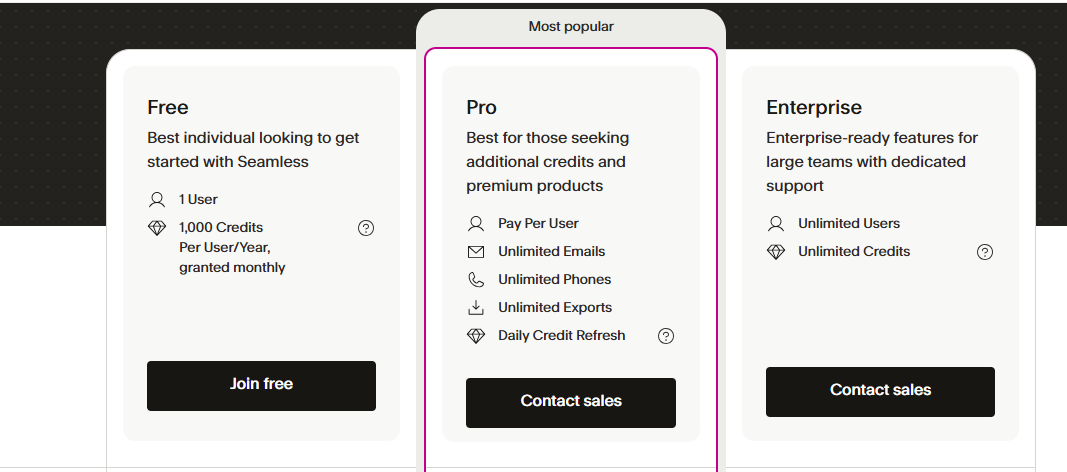
Seamless offers custom pricing for its paid Pro and Enterprise plans, and you'll need to contact their sales team for a quote. There's also a free plan that provides 1,000 credits per year, letting smaller teams experiment with the platform.
Best for: Teams that want to understand how every company's ICP fits into the bigger picture.
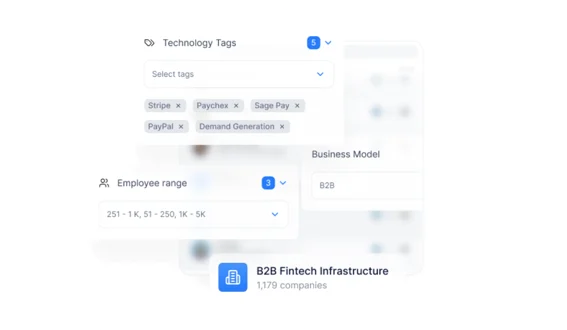
Clearbit, now part of HubSpot, lets you enrich inbound website leads or existing CRM leads with up to 100+ B2B data points.
These data points include organizational hierarchy context, showing where each ICP contact stands in the decision-making pyramid. Clearbit then scores accounts and leads and routes them to your HubSpot account. This allows your team to see at a glance which accounts are ready to buy and which contacts to prioritize.
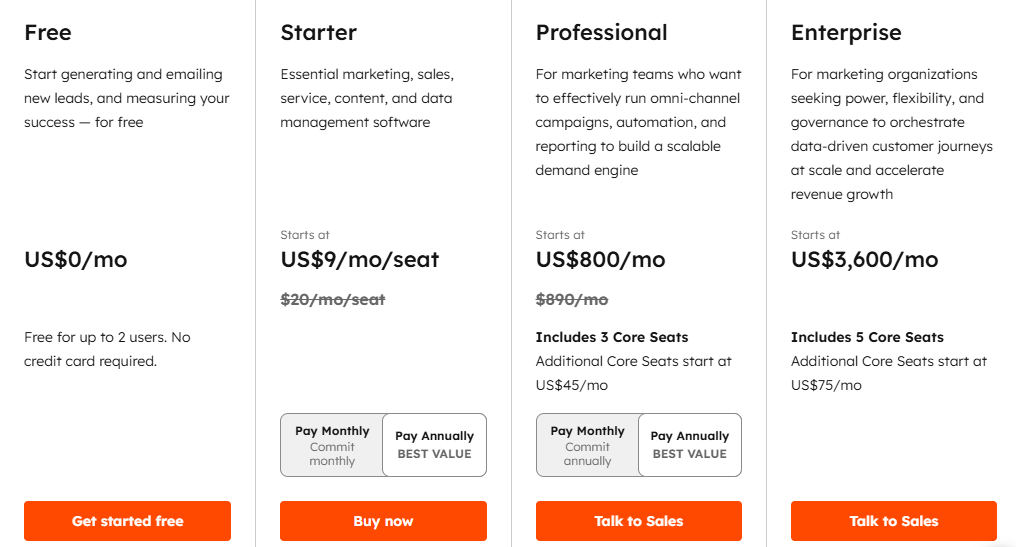
Clearbit is purchased as an add-on for HubSpot CRM users. HubSpot offers a free plan and two paid plans starting at $9/month, with pricing scaling into the thousands depending on configuration and volume.
Pros
Best for: Teams that want a tool that can identify hot leads and automate personalized email outreach.
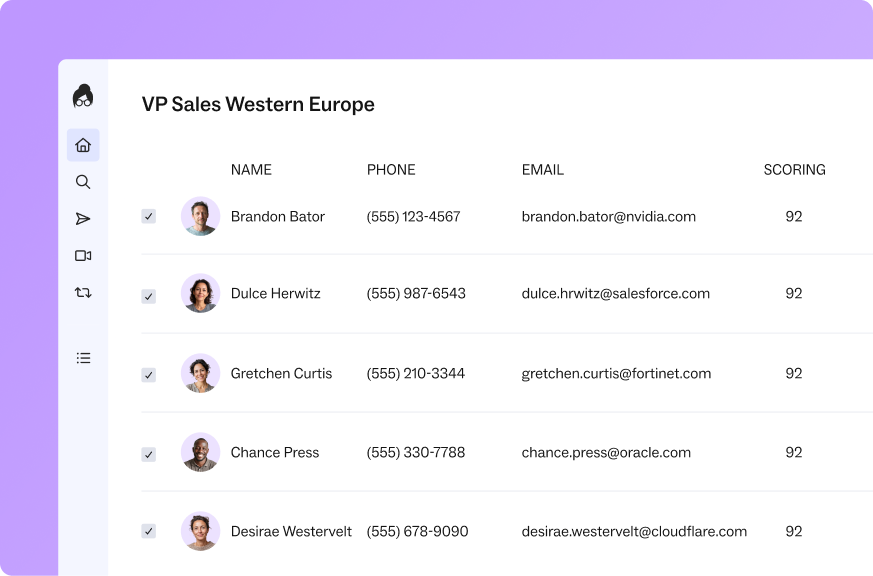
Lusha helps B2B teams discover high-intent leads and engage them automatically with AI-powered email workflows. You can either upload an existing list of prospects or create one directly on Lusha using ICP criteria.
Once identified, each lead is enriched with accurate, up-to-date data, enabling personalized messaging tailored to their buying stage. This ensures conversations keep moving forward even when your reps are busy.
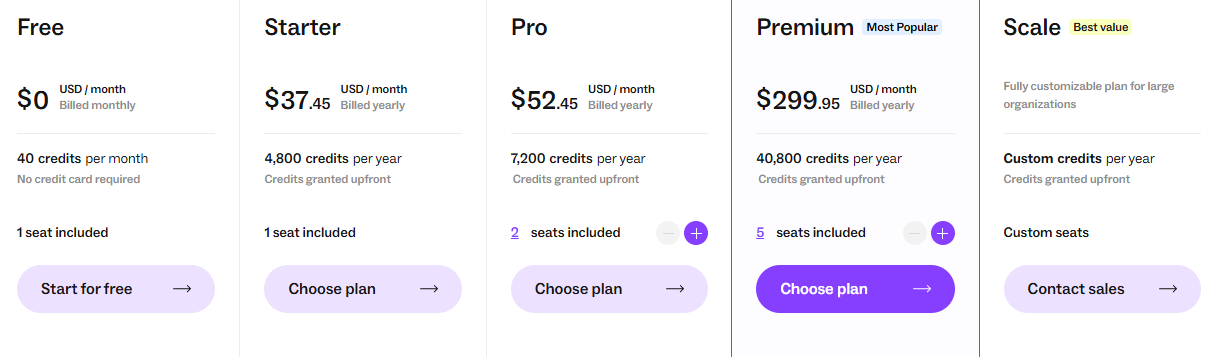
Lusha offers a forever-free plan with 40 credits per month. Paid plans are based on issued credits and the number of users, starting at $37.45/month.
Best for: Teams that want to track a wide range of buying signals.
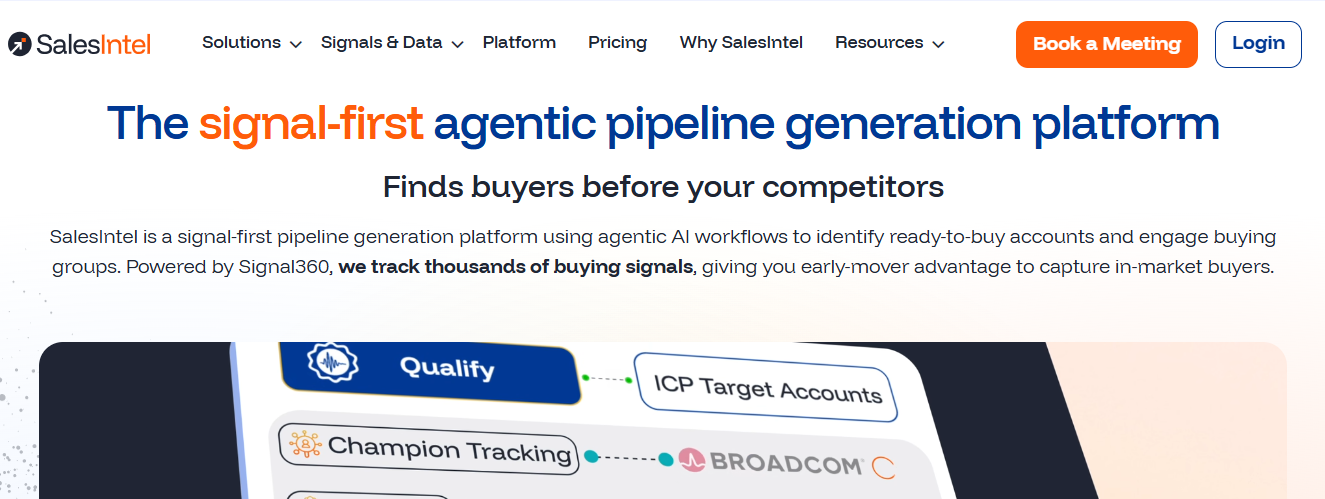
SalesIntel gathers thousands of buying signals and combines them to identify accounts with a very strong intent to buy. It does not rely on oversimplified signals that may not show real interest. Instead, it uses multiple first- and second-party signals, such as website visits, funding announcements, competitor activity, and leadership changes, to score accounts.
SalesIntel also captures signals across the entire customer journey, including predictive signals, helping your team know which accounts are ready to buy now and which will be ready soon. This gives your sales team a first-mover advantage for soon-to-be-ready buyers.
SalesIntel's pricing is custom and requires a demo to get a quote. Marketplace reviews suggest the median cost is around $17,500 annually, with some plans reaching $42,000 per year.
Best for: Outbound teams that want highly personalized campaigns with minimal human oversight.
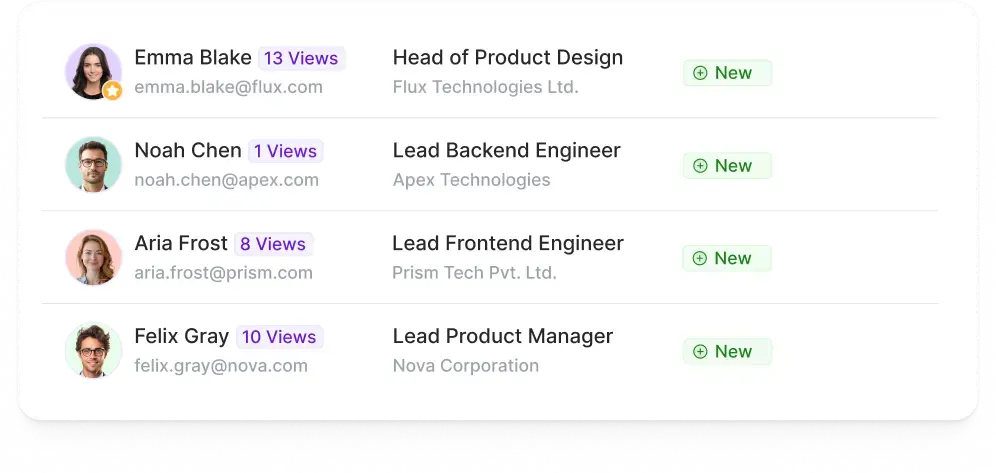
Artisan's AI-led platform automates most outbound activities, from identifying leads to crafting personalized messages for each prospect. It also supports inbound lead qualification and routing, plus a meeting assistant that schedules appointments, takes notes, and sends post-meeting summaries.
The system is designed to be mostly hands-free, so your team only steps in for meetings, while post-meeting engagement continues automatically.
Artisan pricing is customized for each account. Online reviews indicate a median cost of $26,000/year, potentially rising to $57,000/year for advanced plans. Contact Artisan directly for a tailored quote.
Best for: Teams that need accurate contact data for ICP accounts.
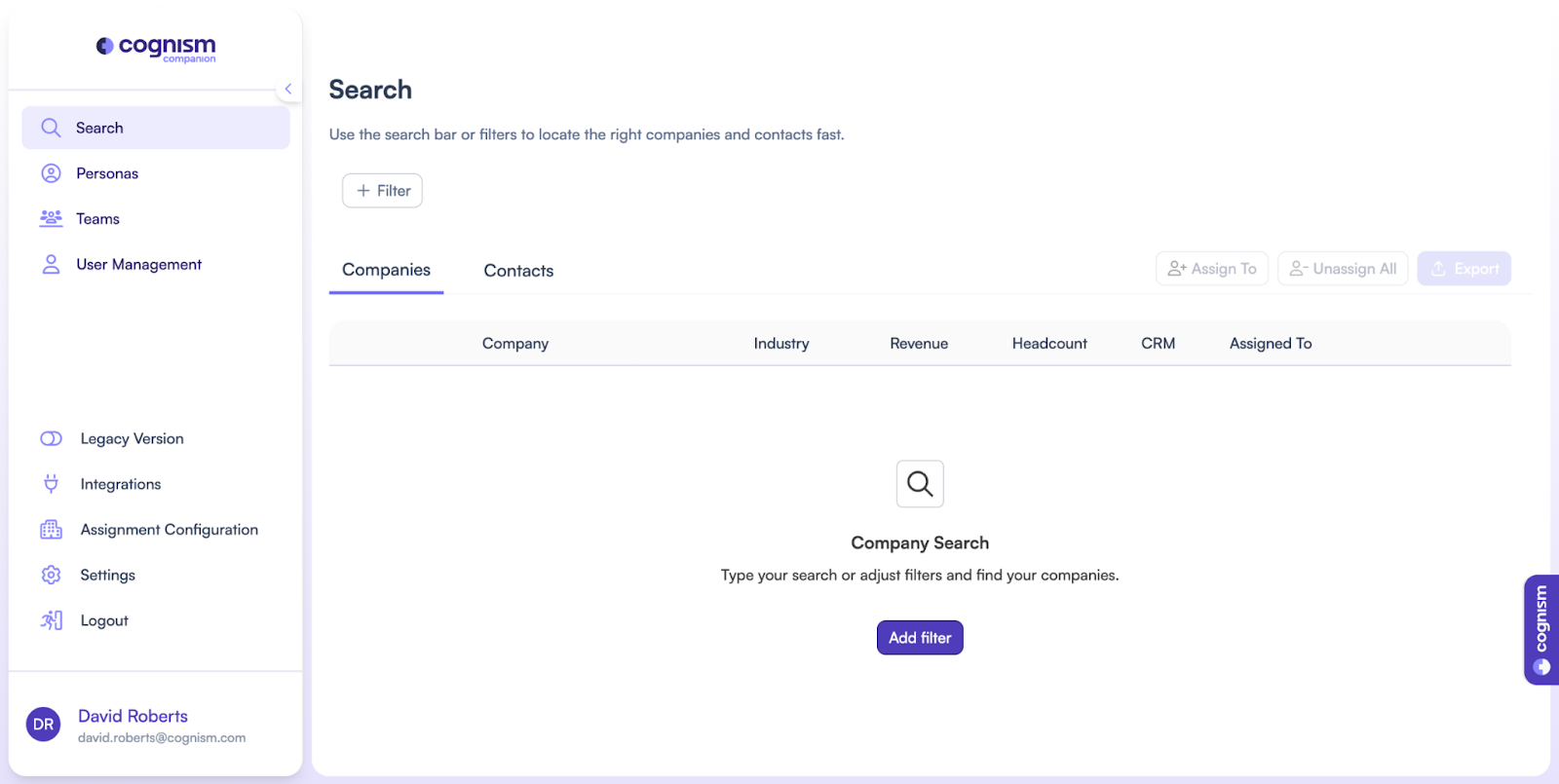
Cognism helps B2B teams find reliable, up-to-date contact information for ICP accounts. Simply define your ICP criteria in Cognism, and the platform surfaces accounts that meet those specifications. It then identifies individual contacts within these companies and provides email addresses, phone numbers, and LinkedIn profiles.
Cognism also tracks third-party intent signals, helping teams prioritize which ICP accounts to focus on.
Cognism offers two paid plans: Grow and Elevate. The Grow plan allows you to build enriched prospect lists, while Elevate also provides engagement recommendations. Pricing is custom, with reports suggesting it can reach up to $38,000 annually.
Best for: Teams that want access to the largest professional B2B database.
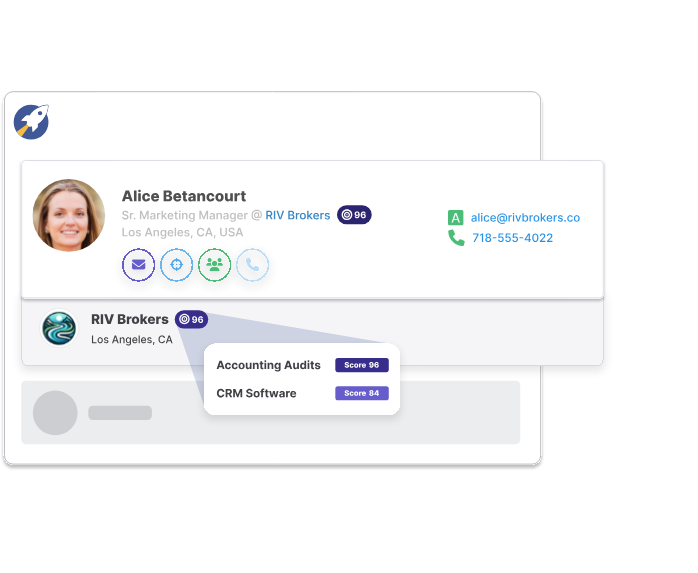
RocketReach boasts one of the broadest B2B data coverages, with 700M professional profiles and 60M companies worldwide. This allows teams to quickly build comprehensive prospect lists that meet their ICP criteria. You can also capture inbound leads from your website, forms, or other sources directly into the RocketReach platform.
RocketReach enriches every prospect with real-time insights, including news, technographics, and intent signals. Using AI recommendations, it suggests optimal engagement strategies and can even automate personalized outreach. This lets teams set up complete workflows from identification to engagement with just a few clicks.
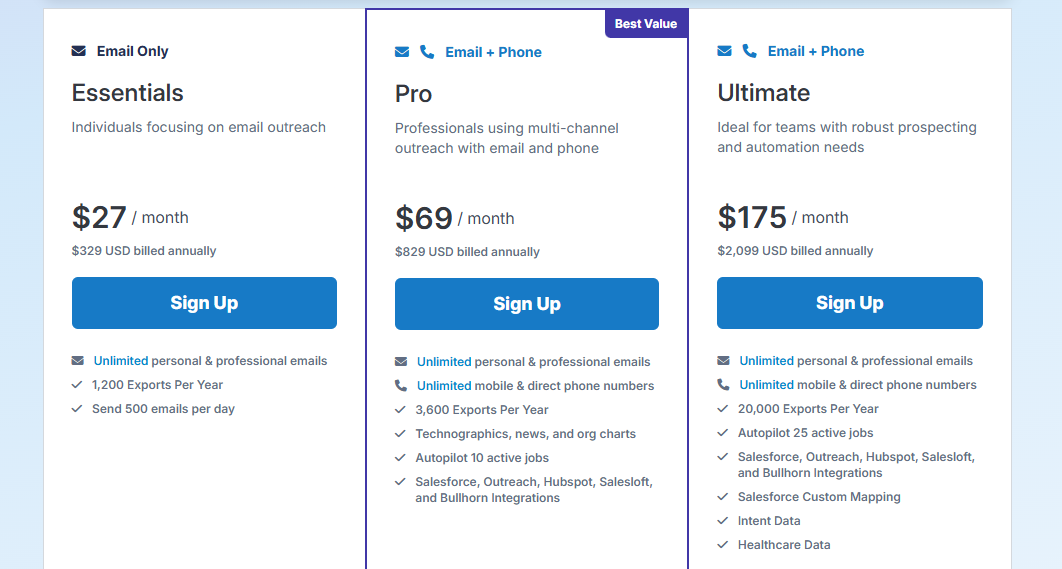
RocketReach offers three paid plans: Essentials, Pro, and Ultimate, starting at $27/month, with pricing that scales with usage volume.
Best for: Outreach teams that need a comprehensive email outbound platform.
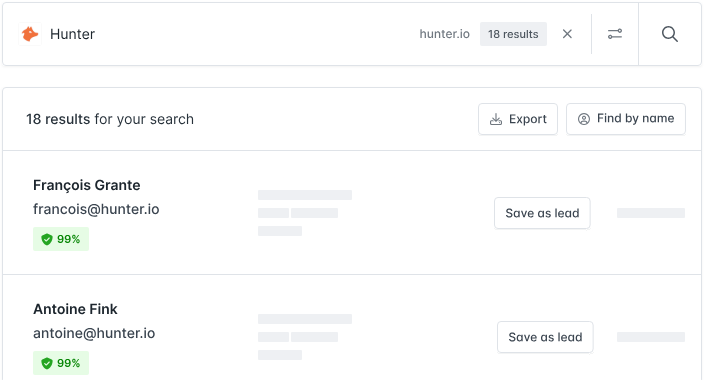
Hunter is well known as a go-to email verification tool for B2B outbound teams, but it also functions as a full email outreach platform. The tool helps you find leads, discover verified email addresses, and send outreach messages, all from the same platform within minutes.
Teams can also use Hunter to run engagement email sequences and capture and analyze buying signals from identified leads.
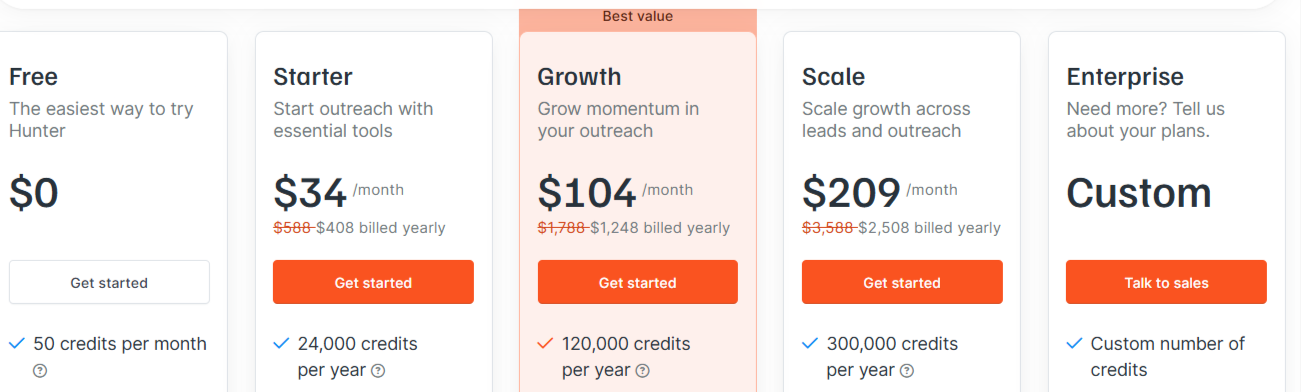
Hunter offers a free plan with 50 credits per month and five paid plans: Starter, Growth, Scale, and Enterprise. Pricing starts at $34/month and varies based on monthly credits, number of connected emails, and plan features.
Best for: Teams that want a simple, autonomous GTM platform.
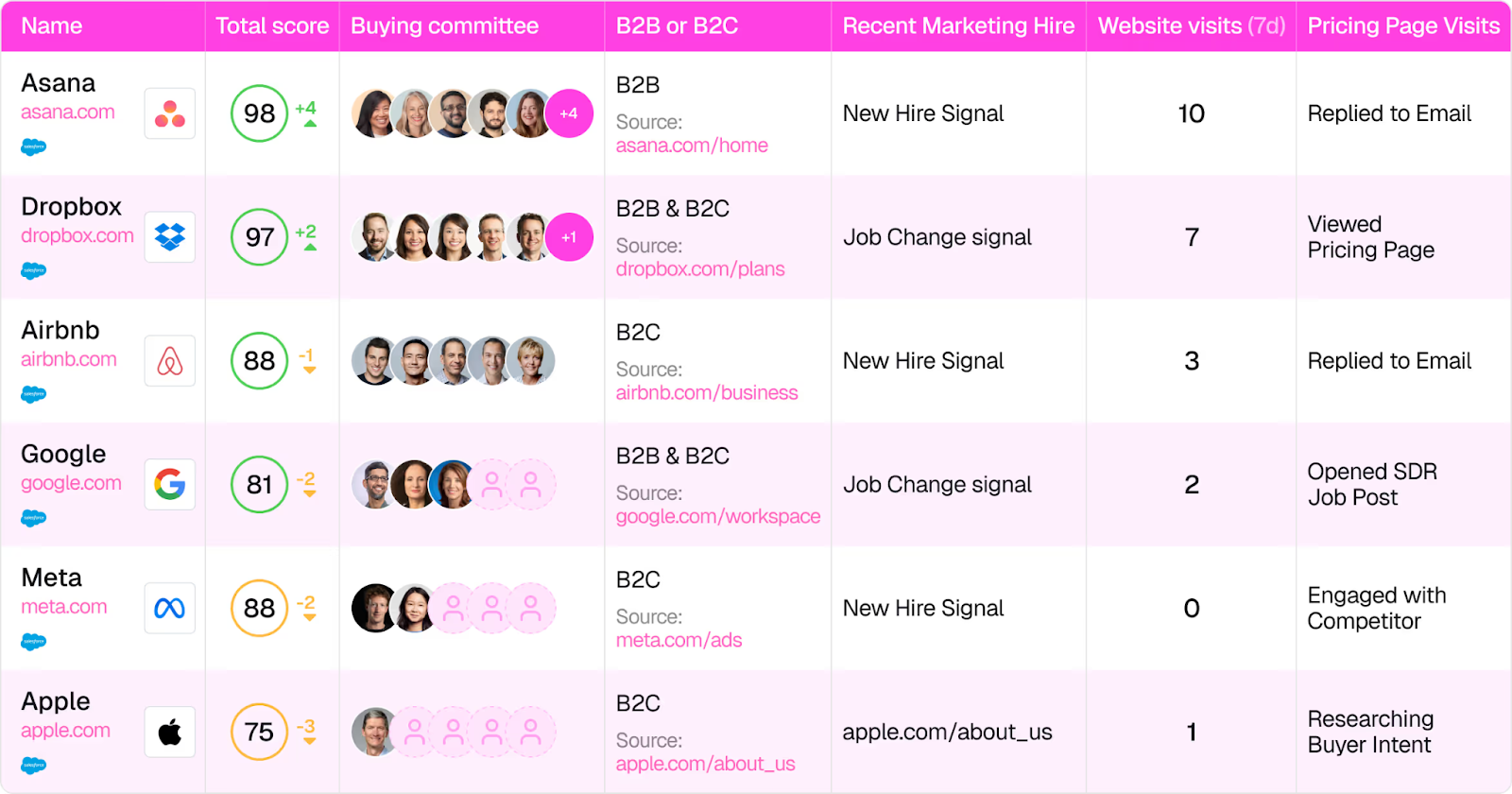
Warmly streamlines the entire GTM process, from capturing leads to engagement, with a bit of human oversight. Leads entering your website, filling out forms, or showing intent signals like competitor research are automatically captured, scored, and routed to your CRM via Warmly's TAM agent.
Warmly also uses inbound AI agents to engage ICP leads already on your website. Once leads are scored, the platform can deploy AI-driven outreach and engagement messages, ensuring conversions continue even when your sales reps are busy.
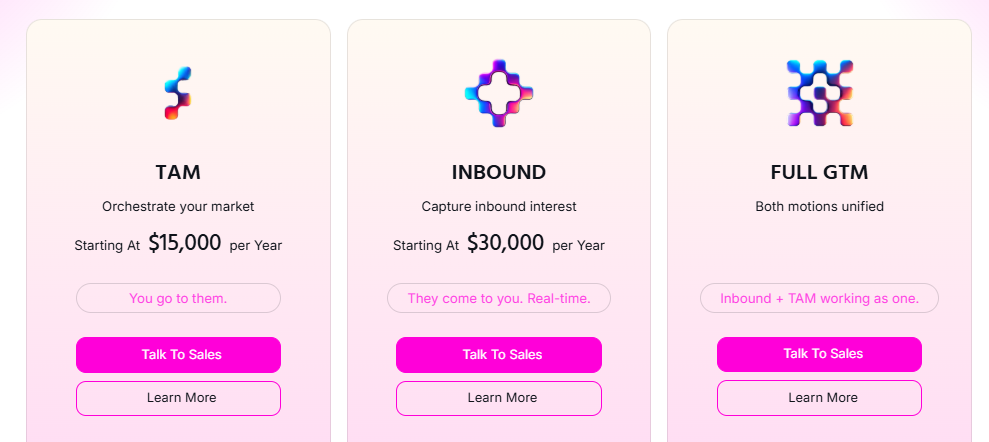
Warmly's pricing is custom, starting around $15,000 per year. You'll need to contact Warmly’s sales team for a personalized quote based on your team's size and requirements.
Best for: Teams that need a simple B2B lead generation tool.
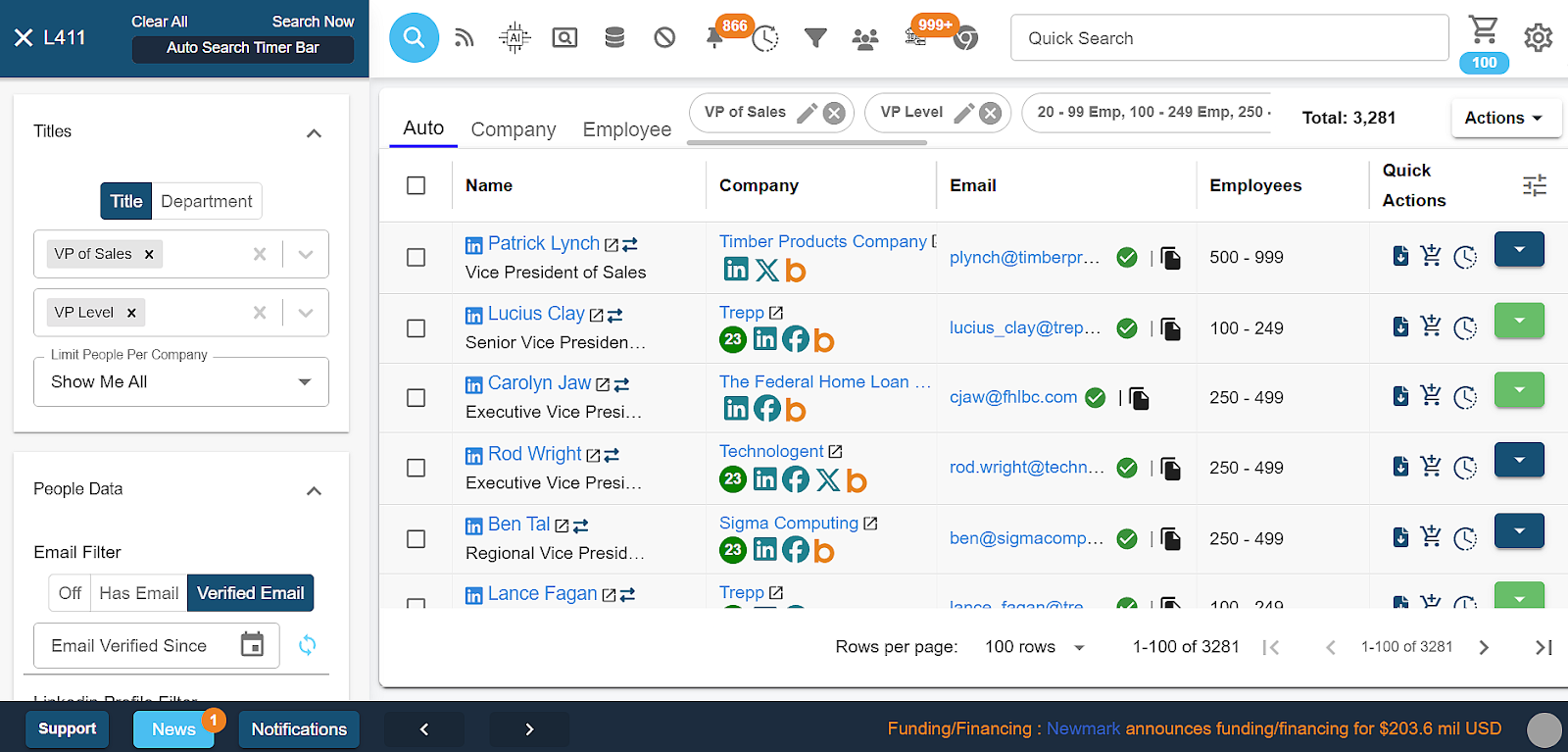
Lead411 provides B2B teams with a real-time B2B database to generate leads with accurate, verified direct dials, email addresses, company data, intent data, and more.
Unlike many GTM tools, it does not offer outreach or engagement recommendations. But it focuses solely on lead generation and highlighting buying signals. On the platform, teams can also specify buying signals and set up alerts for when any lead meets those criteria, enabling fast follow-up.
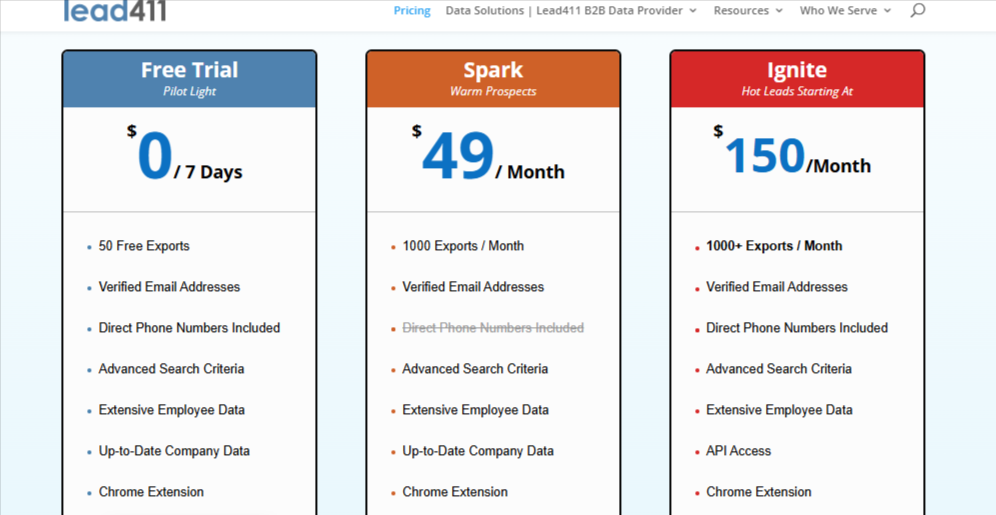
Lead411 does not use a credit-based pricing model. Pricing is per plan rather than per surfaced lead or contact. Two paid plans are available: Spark ($49/month) and Ignite ($150/month).
UpLead can seem like a solid choice until you encounter its limitations. First, the lack of real behavioral signals means that high-fit, high-intent leads can go unrecognized, leaving potential revenue on the table.
Also, scaling with UpLead can get expensive due to its credit-based pricing. Once you need to generate 1,000+ leads per month, costs will skyrocket, and you may start considering migrating to a more flexible solution.
RB2B, on the other hand, offers a scalable alternative. Instead of pulling leads from static lists, it identifies the actual people visiting your website in real time, along with the companies they work for. This allows your team to prioritize buyers already showing interest through signals like repeat visits, pricing page views, and product research.
You can also start with a free plan, and even at higher lead volumes, the pricing remains a fraction of what UpLead charges. With accurate person-level identification and website behavior tracking, RB2B ensures you capture the leads that matter most and prioritize outreach effectively.
So, start with RB2B today and scale your lead generation with confidence.
Yes. RB2B is a more affordable alternative to UpLead, offering a freemium plan with up to 150 free identifications per month. Its paid plans also cost a fraction of UpLead's for the same number of leads, making it budget-friendly for small and growing teams.
Yes. Several UpLead alternatives can identify website visitors, with RB2B standing out as a person-level website visitor identification tool. It unmasks the actual individuals visiting your site, not just the companies, removing guesswork from outreach and giving your team more confidence in conversions.
Alert your reps, start automated outreach, and add to lead score in under five minutes.

